Health February 4, 2026
How to Read Medication Guides for Overdose Warnings and Antidotes: A Step-by-Step Guide
Reading your medication guides properly could save your life if you or someone else overdoses. But where do you even start? Let's break it down.
Where to find overdose information in your medication guide
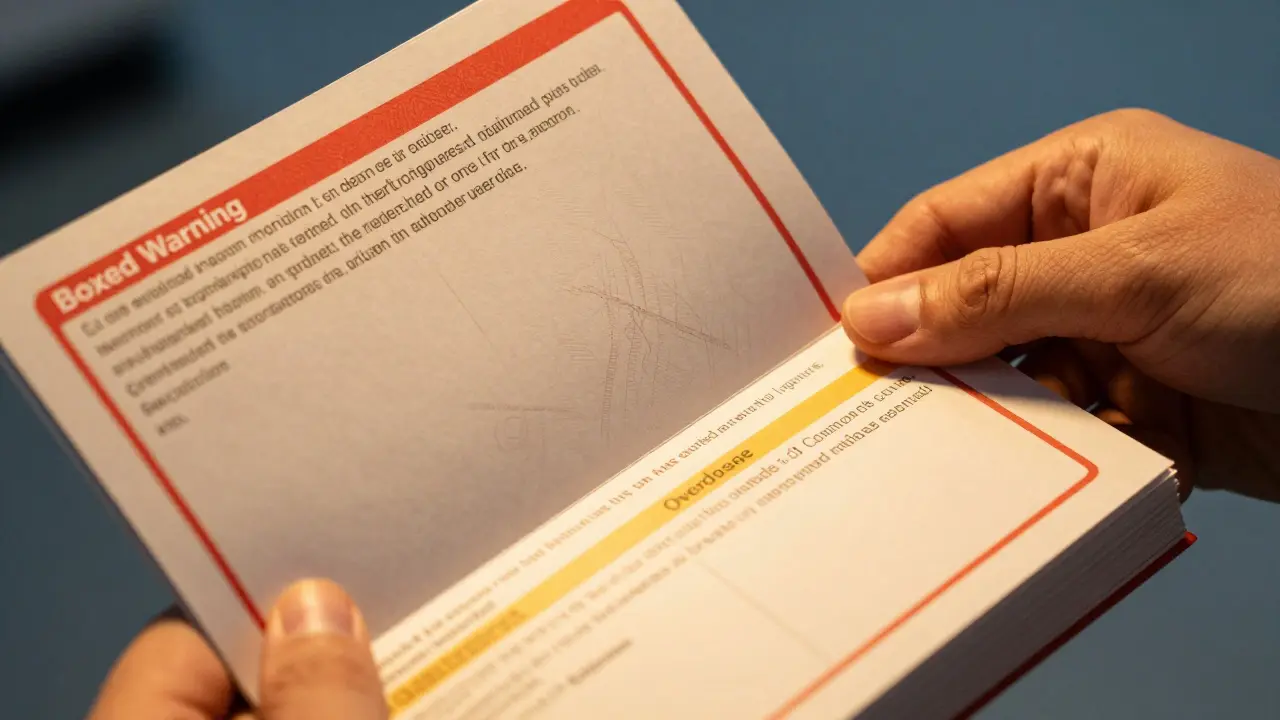
First, flip to the section titled Overdosage Section. FDA Labeling Requirements mandate that all prescription medications include this section in a standardized location. It's usually near the end of the guide, after 'Warnings and Precautions' but before 'Storage Instructions.' If you can't find it, check the table of contents. Some guides also have a Boxed Warning at the very beginning-a red border around text-that highlights the most serious risks, including overdose dangers.
What to find in the Overdosage section
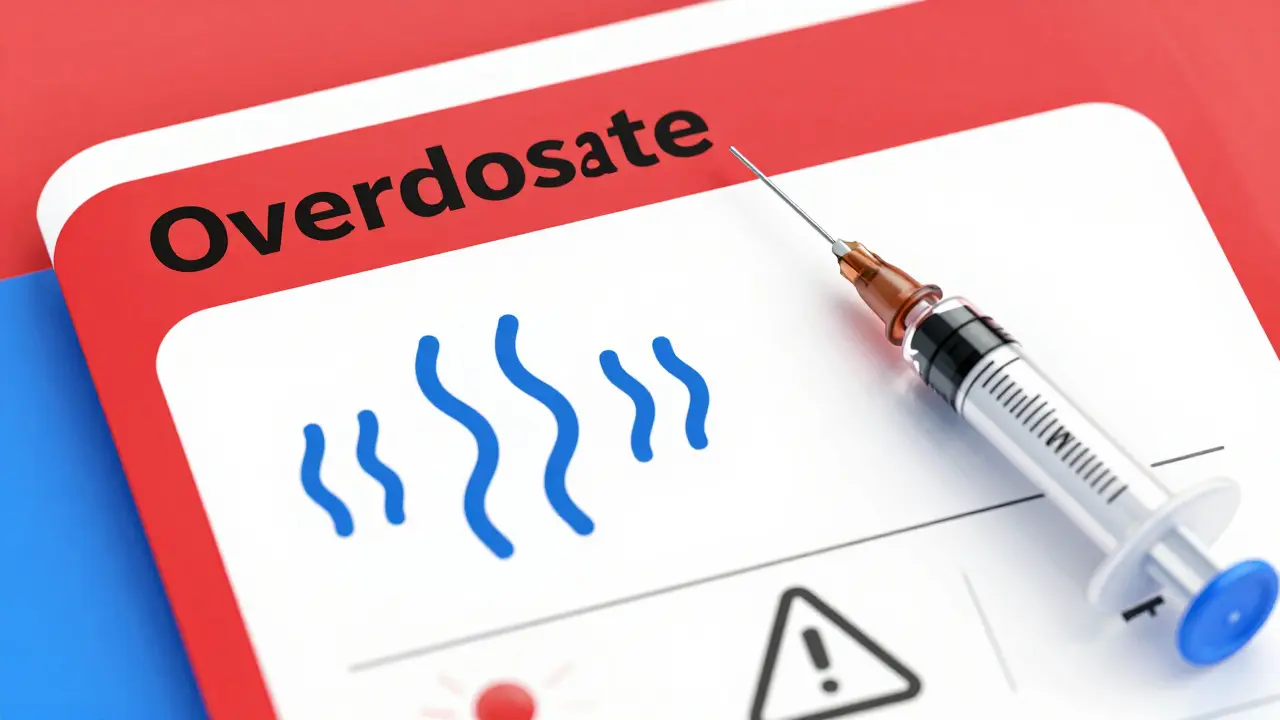
In the Overdosage section, look for three key things: symptoms of overdose, recommended treatments, and antidotes. For example, opioid medications like oxycodone will list symptoms such as slow breathing, extreme drowsiness, or unresponsiveness. They'll also mention that naloxone is the antidote. But not all drugs have specific antidotes. Some, like certain antidepressants, might only say 'seek immediate medical help' without naming a specific treatment. Always note the specific dose amounts mentioned-like 'Taking more than 400 mg in 24 hours may cause serious harm.' This helps you understand how much is too much.
Understanding specific warnings
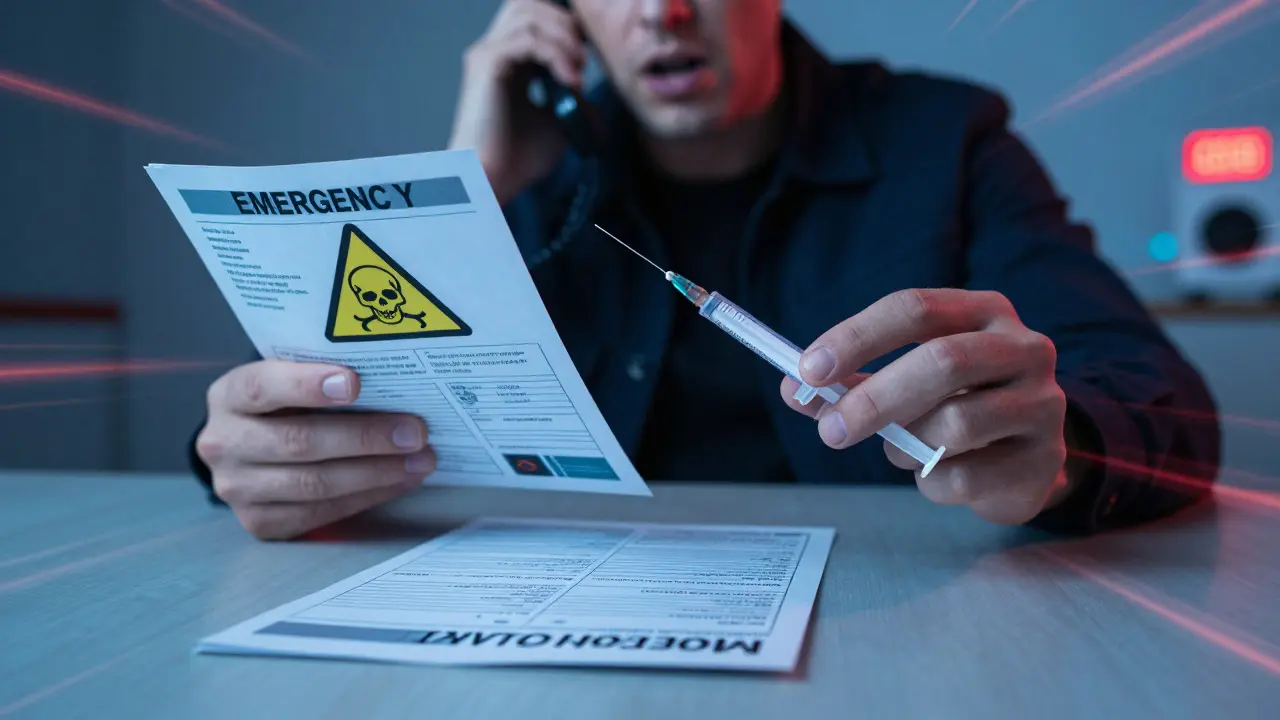
Pay close attention to phrases like 'Call 911 immediately' or 'Do not induce vomiting.' These are critical instructions. For instance, if your medication guide says 'Overdose can cause seizures,' it means you need emergency care right away. Some guides use technical terms like 'respiratory depression' which simply means trouble breathing. If you don't understand a term, ask your pharmacist. They can explain it in plain language. Also, check for symbols like a skull and crossbones near a warning-these indicate high-risk situations.
Antidotes explained
Antidotes are medications that reverse overdose effects. Naloxone is the most common antidote for opioids, but it's not universal. For example, benzodiazepine overdoses don't have a direct antidote-treatment involves breathing support. Your medication guide will state if an antidote exists. If it does, it'll say something like 'Naloxone may be administered by healthcare professionals.' Remember: never self-administer antidotes without medical guidance. Always call emergency services first. The Naloxone section in your guide will detail how it works, but it's designed for trained professionals, not self-use.
Common mistakes when reading medication guides
Many people skip the 'Warnings and Precautions' section, which often contains critical overdose details before the Overdosage section. Another mistake is ignoring symbols like a skull and crossbones near a warning. Technical terms like 'respiratory depression' might confuse you-this means trouble breathing. Always ask your pharmacist to explain unclear terms. Also, don't assume all medications have antidotes. For example, benzodiazepine overdoses require breathing support, not a specific antidote. Failing to check the 'How to Use' section might miss prevention tips like 'Do not take more than prescribed.'
What to do if you suspect an overdose
If you spot overdose symptoms while reading your guide, act fast. Call 911 right away, even if the guide says 'seek medical help.' Don't wait. If naloxone is available and the overdose involves opioids, follow the instructions in your guide or on the naloxone package. Keep the person awake and breathing until help arrives. Never try to treat an overdose at home without professional advice. Your medication guide might say 'call 911 immediately'-that's your cue to act without delay.
Where is the Overdosage section in a medication guide?
The Overdosage section is typically near the end of the medication guide, after 'Warnings and Precautions' but before 'Storage Instructions' or 'How to Use.' Some guides list it as 'Overdose' or 'Overdosage' in the table of contents. If you're unsure, check the index or ask your pharmacist for help.
Do all medications have antidotes listed?
No. Some medications, like opioids, list naloxone as an antidote. Others, such as certain antidepressants or benzodiazepines, may not have a specific antidote and instead say 'seek immediate medical attention.' Always check the Overdosage section for details-your guide will clearly state if an antidote exists.
What should I do if I can't find the Overdosage section?
If you can't find the Overdosage section, check the table of contents or index. Some guides combine overdose information under 'Warnings and Precautions.' If you're still unsure, contact your pharmacist or healthcare provider-they can point you to the right section or explain the risks. Never ignore potential overdose symptoms just because you can't find the section immediately.
How do I know if a warning applies to me?
Check the 'Indications and Usage' section to confirm the medication matches your prescription. Then review 'Warnings and Precautions' for any personal risk factors, like allergies or other medications you take. Overdose warnings usually apply to all users, but your specific situation might change the risk level. Always discuss your full medical history with your doctor before starting a new medication.
Is naloxone safe to use at home?
Naloxone is designed for emergency use by trained individuals, including bystanders. Most naloxone kits come with clear instructions for nasal spray or injection. However, it's not a substitute for calling 911. Always call emergency services first, then use naloxone if available. Your medication guide may mention naloxone, but the actual product packaging will have specific usage steps.
Write a comment
Items marked with * are required.


11 Comments
Georgeana Chantie February 4, 2026 AT 20:52
Yeah, but most people don't even look at the Overdosage section. They just take the pill and hope. 😒
Carol Woulfe February 6, 2026 AT 09:28
The government doesn't want you to know about antidotes. They'd rather you die so they can profit from emergency care. 😈
Brendan Ferguson February 6, 2026 AT 09:47
I'm a pharmacist and can confirm that the Overdosage section is usually after Warnings. For opioids, naloxone is key, but some synthetic opioids need multiple doses. Always have a plan. 😊
jan civil February 7, 2026 AT 21:02
Check the 'How to Use' section for prevention tips. Simple but crucial. 👍
Jennifer Aronson February 9, 2026 AT 02:30
It's important to note that not all medications have specific antidotes. For example, benzodiazepines require respiratory support rather than an antidote. Always consult your pharmacist for clarification. 😊
Kate Gile February 9, 2026 AT 11:23
This guide is so helpful! I'm sharing it with my family. Knowing the signs of overdose could save a life. 💪
Gregory Rodriguez February 10, 2026 AT 23:53
Oh, another 'step-by-step' guide that's 10 pages long. Just call 911 and don't panic-easy peasy. 😂
Johanna Pan February 12, 2026 AT 10:02
I learned that naloxone is for opioids only. Not all drugs have antidotes. Its important to know! 😊
Jenna Elliott February 12, 2026 AT 20:43
Overdose is serious Read the guide Call 911 No excuses
Elliot Alejo February 13, 2026 AT 19:33
I've used naloxone before. It's a lifesaver for opioid overdoses but always call 911 first. No exceptions.
lance black February 14, 2026 AT 07:46
Always check the Overdosage section.