Health January 9, 2026
Meal Planning for Weight Loss: Free Templates and Shopping Lists That Actually Work
Most people trying to lose weight aren’t failing because they don’t know what to eat. They’re failing because they don’t plan ahead. You walk into the grocery store hungry, grab whatever looks good, come home, and suddenly you’ve eaten half your day’s calories before dinner. By the time you sit down to cook, you’re too tired to make anything healthy. That’s not laziness. That’s a system that doesn’t work.
Meal planning for weight loss isn’t about starving yourself or eating bland chicken and broccoli every day. It’s about creating a simple, repeatable structure so you don’t have to think so hard. Studies show people who plan their meals eat 150-200 fewer calories a day than those who don’t. That’s about 1 pound lost every 3 weeks-just from planning. And the best part? You don’t need an app, a coach, or a fancy diet. You just need a template and a shopping list.
Why Most Meal Plans Fail (And How to Avoid It)
Let’s be honest: most meal plans look great on paper. You print out a 7-day schedule with exact portions, calorie counts, and ingredient lists. You stick it on the fridge. Day one goes fine. Day two, you’re late from work. Day three, your kid has soccer practice. By day four, the plan is buried under junk mail. Why? Because rigid plans don’t fit real life.
The biggest mistake people make is trying to plan every single meal for the whole week in advance. That’s overwhelming. It’s also unnecessary. You don’t need to know what you’re eating at 7:15 p.m. on Thursday night. You just need to know what ingredients you’ll have on hand so you can throw something together without thinking.
Successful planners don’t follow a script. They follow a system. They build a small library of go-to meals-breakfasts, lunches, dinners, snacks-that they know work for them. Then they plan around those. No guesswork. No last-minute takeout. Just assemble, cook, eat.
And here’s the secret: your shopping list is more important than your meal schedule. If you don’t have the right food in the house, you won’t eat the right food. That’s why 37% less food waste happens when people use a categorized grocery list. You buy what you need. You don’t buy what’s on sale. You don’t buy snacks you didn’t plan for. You walk out with what’s on the list-and you stick to it.
The 5-Step Meal Planning System That Works
This isn’t rocket science. It’s five simple steps, tested by thousands of people who lost weight without giving up food they love.
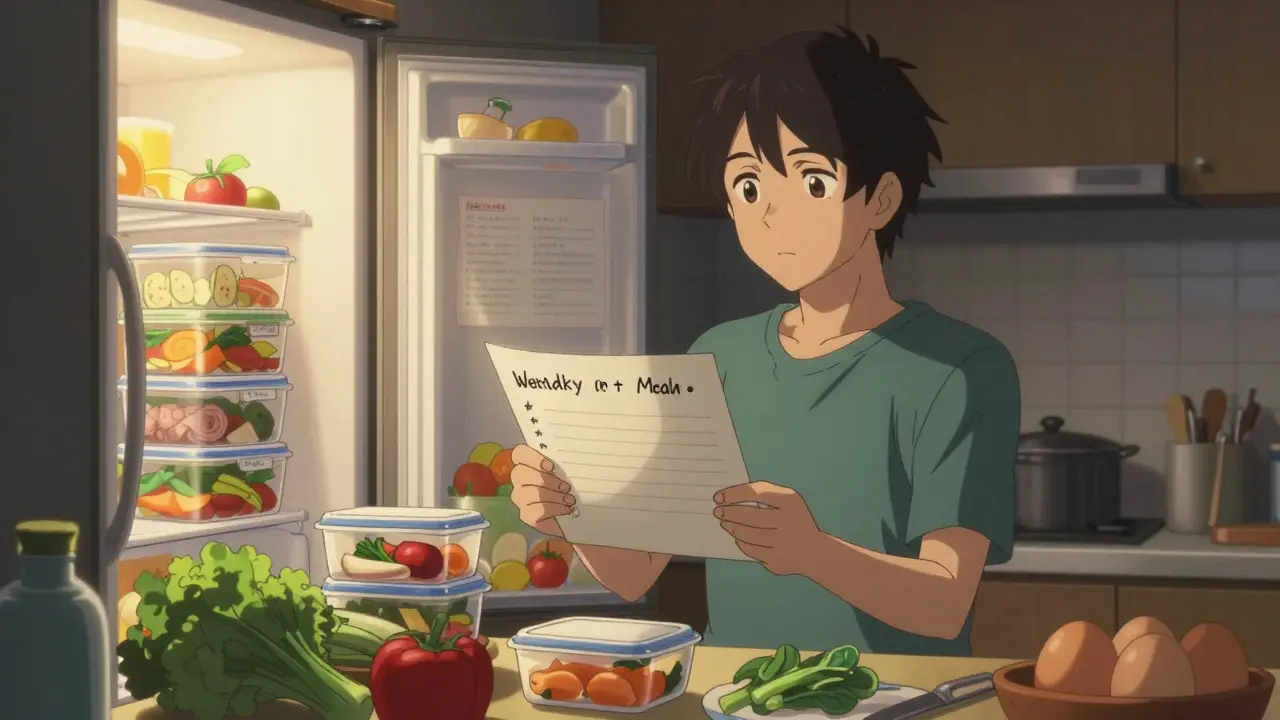
- Check your pantry first. Before you make a list, look in your fridge, freezer, and cupboard. What do you already have? Leftover roasted chicken? A bag of frozen broccoli? A jar of salsa? Write it down. These become your starting ingredients. You don’t need to buy everything fresh. Saving even $10-$15 a week adds up fast.
- Pick 3-4 meals you’ll actually cook. Don’t pick recipes you’ve never made. Pick ones you’ve made before and liked. A simple stir-fry with tofu and veggies. A bowl with beans, rice, and salsa. Scrambled eggs with spinach and avocado. That’s it. You don’t need 20 recipes. You need 4 that you can make in 20 minutes.
- Break your calories into chunks. Aim for 400 calories at breakfast, 500-600 at lunch, 600 at dinner, and 150-200 for snacks. That’s around 1,700-1,800 calories a day-enough to lose weight without feeling hungry. If you’re more active, go up to 2,000. If you’re sedentary, drop to 1,500. No need to count every gram. Just use your hand as a guide: palm for protein, fist for veggies, cup for carbs, thumb for fats.
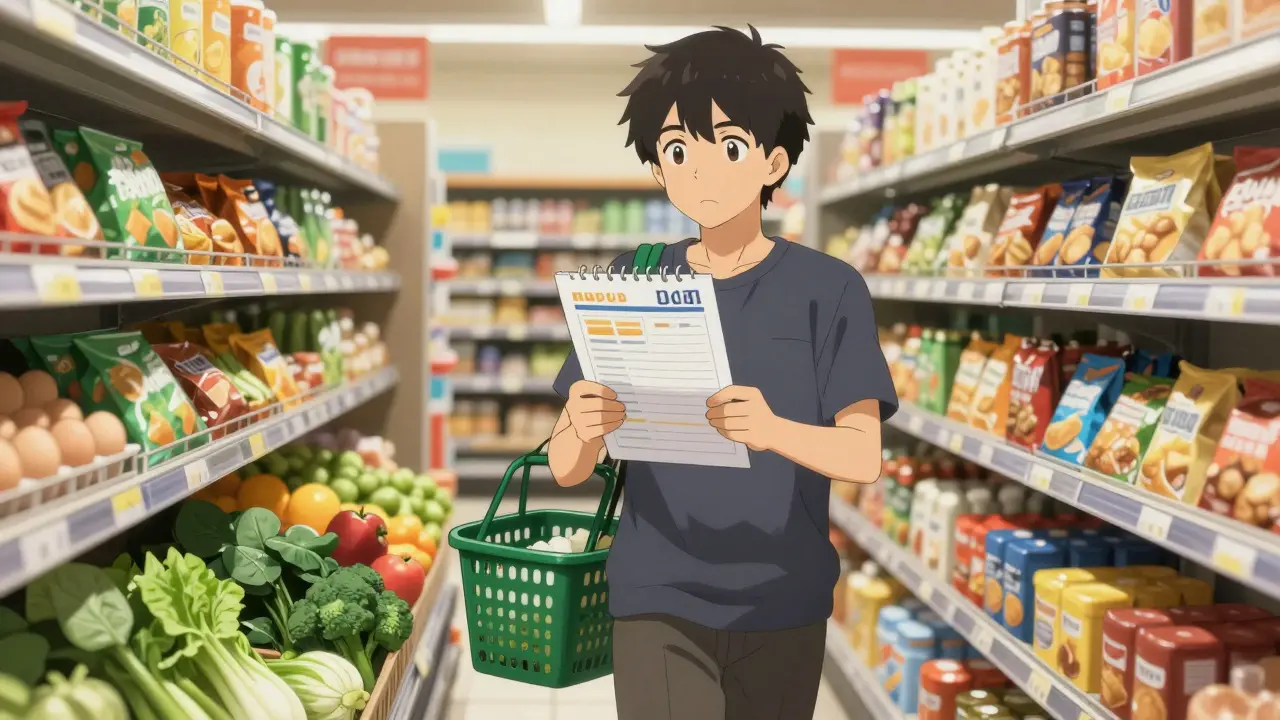
- Build your shopping list by store section. Group your items like a real grocery store: produce, dairy, meat, pantry, frozen. This isn’t just for organization-it cuts shopping time by almost 13 minutes per trip. And it reduces impulse buys. You walk down the snack aisle? You don’t see chips because you’re not looking for them. You’re looking for spinach and eggs.
- Prep once, eat twice. Cook a big batch of grains or roast a tray of veggies on Sunday. Store them in clear containers. When you’re tired at 6 p.m., you don’t need to start from scratch. Just add protein, toss in a sauce, and you’re done.
This system takes about 90 minutes once a week. That’s less than an episode of your favorite show. And the payoff? Less stress, less spending, and steady weight loss.
Free Printable Templates You Can Use Today
You don’t need to pay for a meal planner. The government gives you everything you need for free.
Nutrition.gov offers a simple weekly meal planner that breaks down meals by food group. It’s clean, no-nonsense, and based on the Mediterranean diet-proven to help with long-term weight loss. You can print it, fill it out by hand, and stick it on your fridge. No apps. No login. Just paper and a pen.
MyPlate.gov has a matching grocery list template that aligns with their meal planner. It’s designed to help you fill half your plate with fruits and vegetables, a quarter with lean protein, and a quarter with whole grains. It doesn’t tell you what to eat. It tells you what to buy.
Both templates are designed for flexibility. You can swap chicken for beans. Swap brown rice for quinoa. Swap apples for pears. That’s the point. It’s not about following rules. It’s about building habits.
If you prefer digital, Notion’s free meal planning template (updated in 2023) lets you drag and drop meals, track your pantry, and auto-generate shopping lists. It’s not perfect, but it’s free, works on your phone, and syncs across devices. If you’re already using Notion for other things, it’s worth trying.
Shopping Lists That Actually Save You Money and Time
A shopping list isn’t just a reminder. It’s a tool to stop waste, save cash, and avoid temptation.
Here’s what a real weight-loss shopping list looks like:
- Produce: Spinach, broccoli, bell peppers, carrots, onions, apples, bananas, berries
- Protein: Eggs, canned tuna, chicken breast, tofu, lentils, Greek yogurt
- Grains: Brown rice, oats, whole wheat bread, quinoa
- Fats: Olive oil, avocado, almonds, peanut butter
- Frozen: Frozen berries, frozen veggies, plain chicken breasts
- Pantry: Canned tomatoes, spices, broth, salsa, mustard
Notice what’s missing? No chips. No cookies. No sugary yogurt. No bottled dressings. Those aren’t on the list because they don’t fit the plan. And if they’re not on the list, they’re not in the house.
Organizing your list by section saves time. You don’t zigzag through the store. You go produce → dairy → meat → pantry → frozen. Done. And you’ll notice something else: you spend less. A 2023 Consumer Reports study found people who used categorized lists saved an average of $42 a week on groceries. Why? Because they bought less junk and used what they already had.
What to Do When Life Gets in the Way
Plans break. That’s normal.
Maybe you worked late. Maybe your kid got sick. Maybe you just didn’t feel like cooking. What then?
Don’t throw the whole plan out. Have a backup.
Keep a list of 3 emergency meals in your phone or on your fridge:
- Scrambled eggs + spinach + whole wheat toast
- Canned beans + rice + salsa + avocado
- Pre-cooked chicken + frozen veggies + microwaveable brown rice
These take 10 minutes. They’re filling. They’re healthy. And they keep you from ordering pizza.
Also, don’t stress about snacks. If you’re hungry between meals, it’s not a failure. It’s a signal. Have a handful of almonds. A piece of fruit. A cup of Greek yogurt. Plan for snacks. Don’t ignore them. Skipping snacks leads to overeating later.
And if you miss a day? No problem. Just reset the next day. Weight loss isn’t about perfection. It’s about consistency over time.
Real People, Real Results
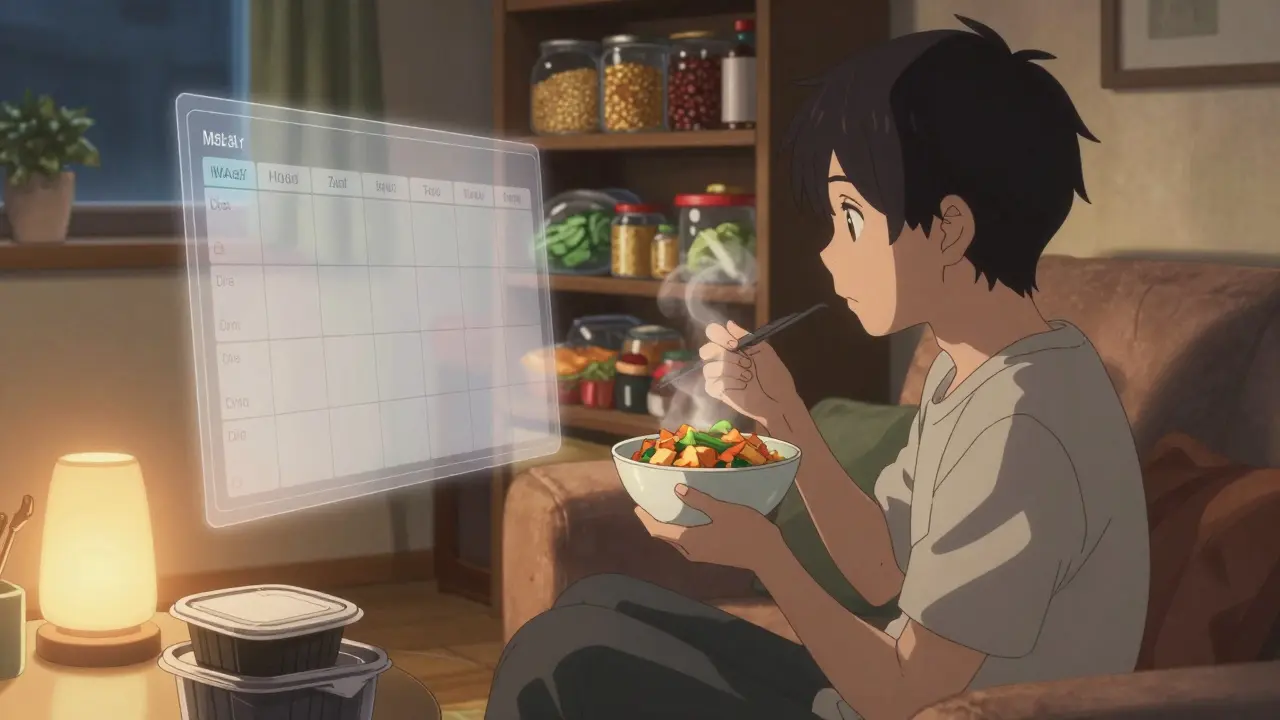
Reddit user u/HealthyHabitJenny used a printable 101Planners template for 3 months. She lost 18 pounds. Her grocery bill dropped by $47 a week. Why? She stopped buying random snacks. She started cooking the same 5 meals over and over. She didn’t need variety. She needed reliability.
Another user, u/MealPrepMaster89, lost 72 pounds over 11 months using a simple template with macro tracking. He didn’t count every calorie. He just stuck to his list. He cooked in batches. He ate the same breakfast every day-oatmeal with berries and peanut butter. He didn’t get bored. He got results.
Meanwhile, people who bought expensive apps or paid meal plans often quit within 3 weeks. Why? They were too complicated. Too rigid. Too expensive. The best plan is the one you’ll actually use.
What Not to Do
Don’t buy a meal plan that promises you’ll lose 20 pounds in 2 weeks. That’s not a plan. That’s a scam.
Don’t try to plan 7 different meals for 7 days. Start with 3. Master those. Then add one more.
Don’t ignore your snacks. Hunger is the #1 reason people quit diets.
Don’t wait for Monday to start. Start tonight. Look in your fridge. Make a list. Buy what you need. Cook one meal. That’s it.
Don’t think you need to eat perfectly. You just need to eat consistently.
Final Thought: It’s Not About the Template. It’s About the Habit.
The template is just a tool. The real change happens when you stop thinking about food as a problem to solve and start thinking about it as a routine to build.
You don’t need to be a chef. You don’t need to be perfect. You just need to show up. Every week. With a list. With ingredients. With a plan to cook something simple.
That’s how people lose weight without feeling deprived. That’s how they keep it off. Not because they followed a diet. But because they built a system that fits their life.
Start small. Use a free template. Make a list. Cook one meal. Repeat. In 4 weeks, you won’t recognize how much easier it’s become. And you’ll be lighter, too.