Health January 13, 2026
Medication Safety Basics: How to Use Prescription Drugs Responsibly
Every year, over 1.3 million people in the U.S. end up in the emergency room because of something gone wrong with their medications. That’s not a rare accident-it’s a preventable problem. You’re not alone if you’ve ever looked at a pill bottle and wondered: Is this the right one? When do I take it? What happens if I miss a dose? Medication safety isn’t just for hospitals or doctors. It’s something every person taking prescription drugs needs to know.
What Medication Safety Really Means
Medication safety means making sure the right drug gets to the right person, in the right dose, at the right time, for the right reason. Sounds simple, right? But mistakes happen all the time-because of confusing labels, missed doses, or not knowing how a new pill interacts with what you’re already taking. The World Health Organization calls this one of the biggest global health risks. Their campaign, Medication Without Harm, found that over 1 in 20 patients in hospitals suffer harm from medication errors. And it’s not just hospitals. Most errors happen at home. You might think, “I’m careful-I’ve been taking this for years.” But even long-term users make mistakes. A 2022 CDC survey showed that 45% of adults had at least one medication-related issue in the past year. The most common? Missing doses, taking the wrong dose, or accidentally taking two pills by mistake.The 5 Rights of Safe Medication Use
Healthcare professionals use a simple checklist called the “5 Rights” to avoid errors. You can use it too:- Right patient-Is this medicine really for you? Check your name on the bottle.
- Right drug-Does the pill look like the last one you got? If it’s a different color or shape, ask the pharmacist.
- Right dose-Is it 5 mg or 50 mg? Don’t guess. Read the label twice.
- Right route-Is it meant to be swallowed, injected, or applied to the skin? Never crush pills unless told it’s safe.
- Right time-Take it with food? On an empty stomach? At night? Timing matters.
Know Your Medications
You don’t need to be a doctor to understand what’s in your medicine cabinet. Start by making a list of everything you take:- All prescription drugs
- All over-the-counter pills (like ibuprofen or antacids)
- Vitamins, herbs, and supplements (even “natural” ones)
Watch Out for High-Risk Drugs
Some medications are more dangerous if used wrong. These are called “high-alert medications.” They include:- Insulin
- Warfarin (blood thinner)
- Heparin (another blood thinner)
- Intravenous oxytocin (used in labor)
- Always check the dose with your pharmacist.
- Ask if you need regular blood tests to monitor the effect.
- Never change the dose without talking to your doctor.
How to Avoid Confusing Similar-Sounding Drugs
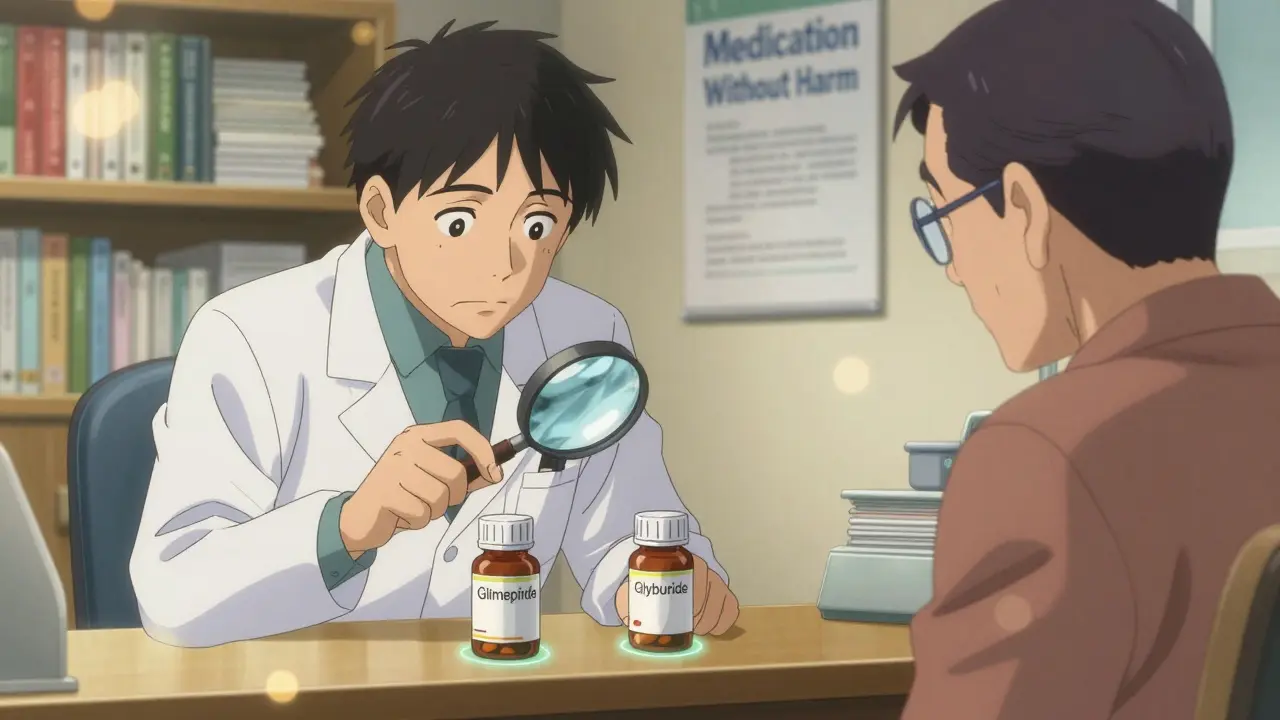
Ever heard of glimepiride and glyburide? They’re both diabetes pills. But they’re not the same. And because their names sound alike, patients often get the wrong one. This is called a “look-alike, sound-alike” error. The Institute for Safe Medication Practices says 62% of pharmacy dispensing errors involve this kind of mix-up. Here’s how to protect yourself:- Always check the name on the bottle. Is it spelled exactly like your prescription?
- Notice the shape, color, and markings on the pill. If it’s different from last time, ask why.
- Use Tall Man Lettering in your notes: write predniSONE instead of prednisone to distinguish it from predniSOLONE.
Use Tools to Stay on Track
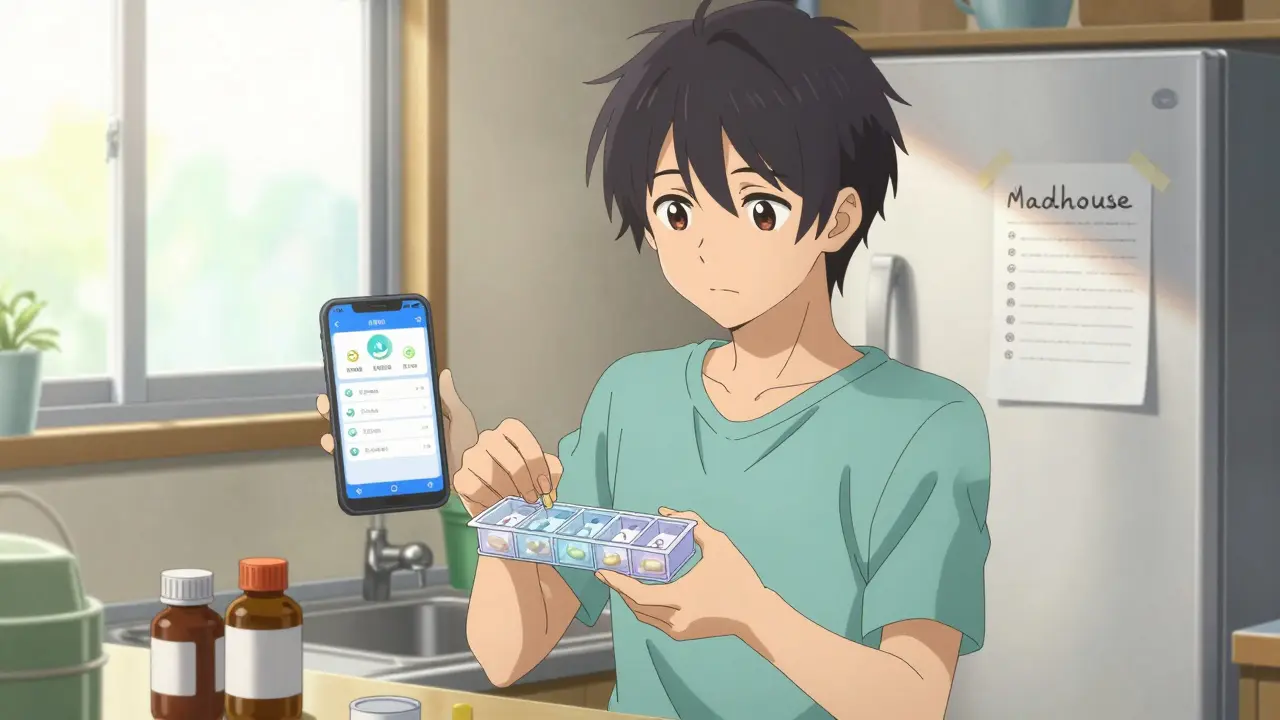
Managing multiple medications is hard. Especially if you’re taking five or more pills a day. Studies show people on five or more drugs make 3.2 times more mistakes than those on one or two. Here are proven tools that help:- Pill organizers-Weekly or monthly boxes with labeled compartments. Studies show they reduce errors by 35% in older adults.
- Smartphone reminders-Set alarms for each dose. Apps like Medisafe or MyTherapy can even alert you if you miss a dose.
- Medication lists-Keep one in your wallet and another on your phone. Update it after every doctor visit.
Never Skip or Stop Medication Without Talking to Your Doctor
Some people stop taking antibiotics when they feel better. Others skip their blood pressure pill because they feel fine. That’s dangerous. The FDA says 23% of antibiotic treatments fail because people stop too early. That’s how superbugs develop. For chronic conditions like high blood pressure or diabetes, skipping doses can lead to strokes, heart attacks, or kidney damage. If you’re having side effects, don’t quit cold turkey. Call your doctor. There might be a better option. Or a lower dose. Or a different time to take it.Ask the Right Questions
The FDA recommends asking your provider these eight questions for every new prescription:- What’s the name of the medicine?
- What’s it supposed to do?
- How and when should I take it?
- How long should I take it?
- What should I avoid while taking it (food, alcohol, other drugs)?
- What are the possible side effects?
- What should I do if I miss a dose?
- What does it look like? (So I know if I get the wrong one.)
Keep Your Medicine Cabinet Clean
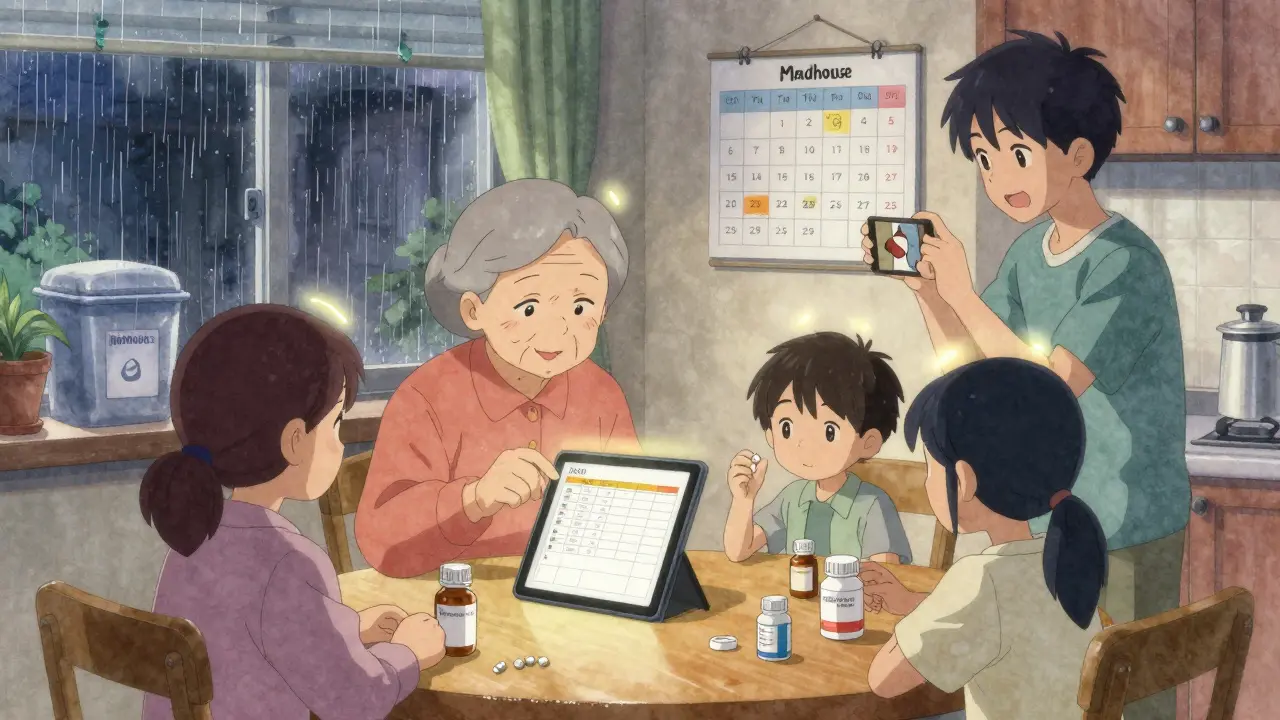
Expired medications aren’t just useless-they’re dangerous. The Illinois Department of Public Health says 38% of accidental poisonings in children happen because of old pills left in cabinets. Do this twice a year:- Take everything out of your medicine cabinet.
- Check expiration dates. Toss anything expired.
- Discard pills that look discolored, smell odd, or are cracked.
- Don’t flush them. Use a drug take-back program or drop-off location.
Pharmacists Are Your Secret Weapon
Most people think pharmacists just hand out pills. They’re wrong. Pharmacists are medication experts. They know interactions, side effects, and dosing rules better than most doctors. The American Society of Health-System Pharmacists found that patients who talk to their pharmacist about a new prescription have 27% fewer errors. Next time you pick up a new medicine, don’t just walk out. Ask:- “Is this safe with my other meds?”
- “Are there cheaper alternatives?”
- “What’s the most common side effect I should watch for?”
What to Do If You Think Something’s Wrong
If you feel worse after starting a new drug-if you get dizzy, break out in a rash, or have trouble breathing-don’t wait. Call your doctor or go to urgent care. Also, if you notice:- The pill looks different than before
- The bottle has the wrong name
- The instructions don’t match what your doctor said
Final Thought: Safety Is a Habit
Medication safety isn’t a one-time task. It’s a daily habit. Like brushing your teeth. Like checking the stove before you leave the house. Start small. Make a list. Ask one question at your next appointment. Use a pill organizer. Check expiration dates. The goal isn’t perfection. It’s prevention. One mistake can change your life. But with a few simple steps, you can avoid most of them.What should I do if I take the wrong medication by accident?
If you realize you took the wrong pill, don’t panic. Call your pharmacist or poison control immediately (1-800-222-1222 in the U.S.). Have the pill bottle ready so they can check the name, dose, and ingredients. Don’t wait for symptoms to appear. Even if you feel fine, some reactions take hours to show up.
Can I split pills to save money?
Only if the pill is scored (has a line down the middle) and your doctor or pharmacist says it’s safe. Some pills, like extended-release tablets or capsules, shouldn’t be split. Splitting them can change how the drug works, leading to too much or too little medicine in your system. Always ask before splitting.
Why do I need to know my medications’ purposes?
Knowing why you take each medicine helps you stick to the plan. If you don’t understand that your statin lowers cholesterol to prevent a heart attack, you’re more likely to skip it when you feel fine. It also helps doctors spot problems-if you say you’re taking “something for blood pressure” but your list shows five different drugs, they can check for overlaps or errors.
Is it safe to take leftover antibiotics for a new infection?
No. Antibiotics are prescribed for specific infections, bacteria, and doses. Taking an old prescription for a new illness can lead to antibiotic resistance, worsen your condition, or cause dangerous side effects. Always get a new prescription if you’re sick.
How often should I update my medication list?
Update it every time you see a doctor, get a new prescription, or stop a medication. Also review it every six months. Many people forget about supplements or over-the-counter drugs they started taking casually. These can interact with prescriptions in dangerous ways.
Write a comment
Items marked with * are required.




11 Comments
laura Drever January 14, 2026 AT 06:25
lol who has time for all this? i just swallow the little pills and hope for the best
Randall Little January 14, 2026 AT 20:49
Let me get this straight-you’re telling me the CDC says 45% of adults mess up their meds, and yet we’re still surprised when someone ends up in the ER? This isn’t a safety issue-it’s a systemic failure wrapped in a pill bottle. And don’t even get me started on how pharmacies still print labels in 6-point font. I’m not old, I’m just not blind.
Adam Rivera January 16, 2026 AT 09:36
This is actually really helpful. I’ve been taking three different meds for years and never wrote down why I was on them. Just started a Notes app list-simple, but I already caught I was double-dosing on ibuprofen. Thanks for the nudge. Also, pharmacists are legit heroes. Mine remembered my dog’s name last time. That’s dedication.
lucy cooke January 18, 2026 AT 08:48
Medication safety? How quaint. In a world where capitalism turns every bodily function into a marketable condition, and Big Pharma funds your doctor’s ‘continuing education,’ safety is a luxury for those who can afford to read the fine print. I take my pills like a ritual-surrendering to the system while whispering, ‘I hope this works.’ The 5 Rights? More like the 5 Illusions. The real right is the right to question. And yet, we’re told to trust the label. Trust the doctor. Trust the bottle. But who trusts the pharmacist when they’re overworked and underpaid? We’re not patients-we’re data points with pulse rates.
Alan Lin January 18, 2026 AT 22:21
Let me be clear: this post is not just informative-it’s essential. Every single point here is backed by evidence, and yet, the majority of the population treats medication like a lottery ticket. You don’t gamble with your life. You don’t guess with your insulin. You don’t skip doses because you ‘feel fine.’ This isn’t advice. It’s survival protocol. If you’re reading this and thinking, ‘I don’t need this,’ then you’re already one mistake away from a tragedy. Print this. Laminate it. Hang it above your medicine cabinet. And then-finally-start treating your health with the gravity it deserves.
Pankaj Singh January 19, 2026 AT 20:58
Typical American overreaction. In India, we take pills without labels, without instructions, and without fear. You people turn medicine into a religion. One pill too many? Emergency room. One pill too few? You’re a villain. Wake up. Your obsession with ‘safety’ is just fear dressed in clinical language. We survive on less. You survive on anxiety.
Robin Williams January 20, 2026 AT 08:02
bro i just started using medisafe and holy crap it’s a game changer. i used to forget my blood pressure pill and then panic for 3 days thinking i was gonna die. now it pings me like a good friend. also-i started writing down why i take each med. turns out i’ve been taking that ‘vitamin’ for anxiety that’s just melatonin. whoops. thanks for the reminder to be less dumb.
Anny Kaettano January 20, 2026 AT 17:36
As a clinical pharmacist, I can’t emphasize this enough: the ‘teach-back’ method is the single most underutilized tool in patient safety. When providers ask patients to repeat instructions in their own words, adherence jumps. Why? Because it shifts the burden from ‘you forgot’ to ‘I didn’t explain well.’ And let’s not forget-polypharmacy isn’t just about quantity, it’s about cognitive load. If you’re managing five meds, you’re not just taking pills-you’re running a complex system with no manual. Your pill organizer? It’s your OS. Your list? Your backup drive. Don’t underestimate the infrastructure of your own health.
Kimberly Mitchell January 22, 2026 AT 07:57
It’s 2024 and we still need a 12-point guide to not die from a pill? This isn’t education-it’s institutional negligence. If your doctor can’t explain your medication in 30 seconds, they shouldn’t be prescribing it. And why are we still using paper lists? QR codes. Digital wallets. Blockchain ledgers for meds. We’re living in the future and still writing things down on napkins. This post is a band-aid on a hemorrhage.
Angel Molano January 23, 2026 AT 04:34
Stop taking meds you don’t need. That’s it. That’s the whole post.
Vinaypriy Wane January 24, 2026 AT 09:07
I appreciate the effort here... truly. But let’s be honest: most people don’t have access to pharmacists who have time to talk. Or to pill organizers. Or to stable internet for apps. This is beautiful advice... for those who can afford it. For the rest of us? We’re just trying to survive. Maybe the real issue isn’t patient error-it’s systemic inequality. And until we fix that, no checklist will save us.