Health January 11, 2026
Patient Support Groups: Sharing Experiences with Generic Medications
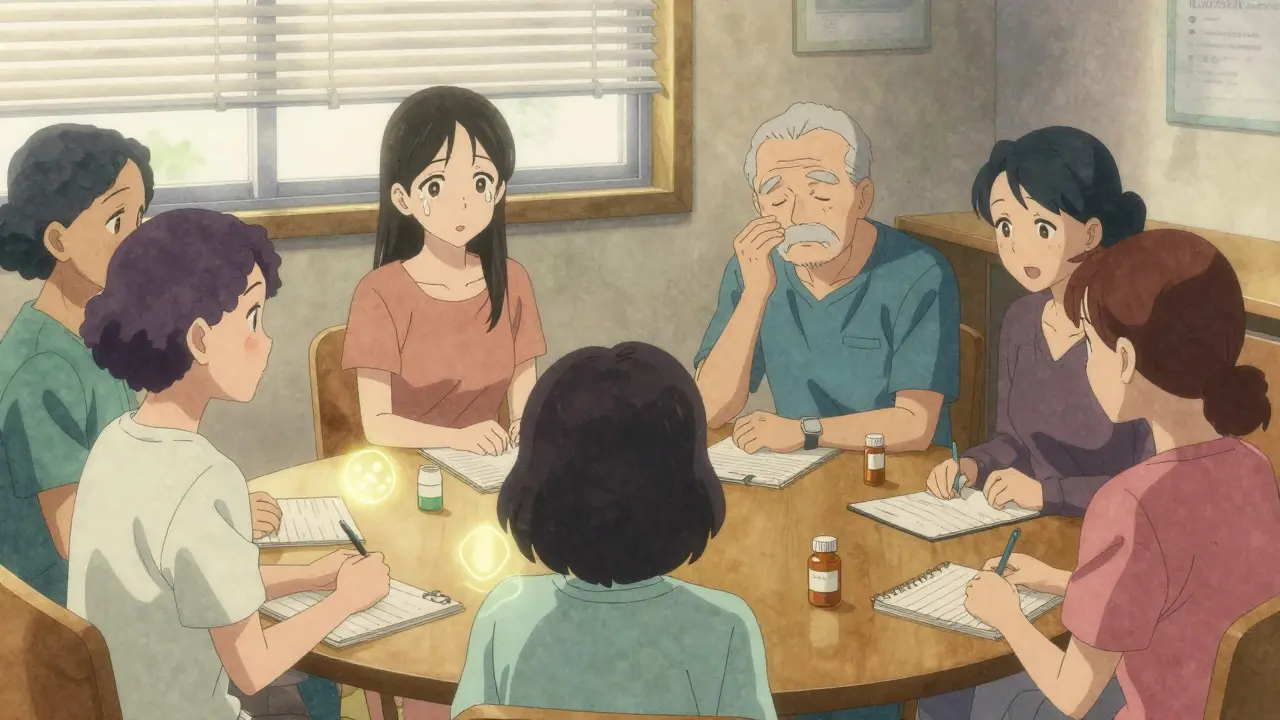
Switching from a brand-name drug to a generic can feel like stepping into unknown territory. You’ve taken the same medication for years. The pill looks different now-smaller, cheaper, maybe even a different color. Suddenly, you’re wondering: Is this really the same? You’re not alone. Millions of people feel this way, and many turn to patient support groups to find answers-not from a brochure, but from someone who’s been there.
Why Do People Doubt Generics?
It’s not about being stubborn. It’s about trust. When your doctor says, "This generic is just as good," you believe them. But then you start feeling different. A headache. A little more fatigue. Maybe your blood pressure didn’t drop as fast as before. You check the label: same active ingredient. Same dose. So why do you feel off? That’s where the gap opens up. Science says generics are bioequivalent-they must deliver 80% to 125% of the same amount of medicine into your bloodstream as the brand name. The FDA requires this. But science doesn’t always explain how you feel. That’s where real stories matter. In Facebook groups like "Generic Medication Users United," with over 14,000 members, new users often post: "I switched to generic lisinopril and now I’m dizzy all day. Am I imagining this?" Within hours, replies flood in. One woman shares she had the same thing after switching to generic metformin. She waited two weeks. Then it vanished. Another says her pharmacist checked her blood levels-no difference. Slowly, fear turns into understanding.How Support Groups Work
These aren’t random chat rooms. The best ones have structure. Many are run by community health centers, pharmacies, or nonprofits like the Generic Drug Patient Alliance. They use simple rules: no speculation. No pushing products. Just shared experiences backed by facts. Here’s how it usually goes:- New member joins and shares their concern.
- Someone else responds with their story-"I felt the same with my generic statin. Took me 10 days to adjust."
- A pharmacist or nurse moderates the thread and adds: "The FDA requires generics to be within 5% of the brand’s absorption rate. What you’re feeling could be your body adapting."
- Another member posts a link to a 2019 JAMA study showing no difference in heart attack rates between brand and generic statins.
- Someone else adds: "I saved $210 a month. I’m not skipping doses anymore."
The Numbers Don’t Lie
Data backs this up. A University of Chicago study found that patients in structured support groups were 27% more confident in generics after three months. Those who shared their experiences regularly ended up using generics 5.3% more often than those who didn’t. And it’s not just about confidence. Real health outcomes improve. The FDA found that patients on generics had 15% to 20% higher adherence rates than those on brand-name drugs. Why? Because generics cost less. A $4 co-pay versus a $40 one makes a huge difference when you’re taking pills every day for years. One case from Howard’s Pharmacy showed a diabetes support group helped members switch from expensive insulin analogs to biosimilar alternatives. On average, each member saved $327 a month. That’s not just money-it’s peace of mind.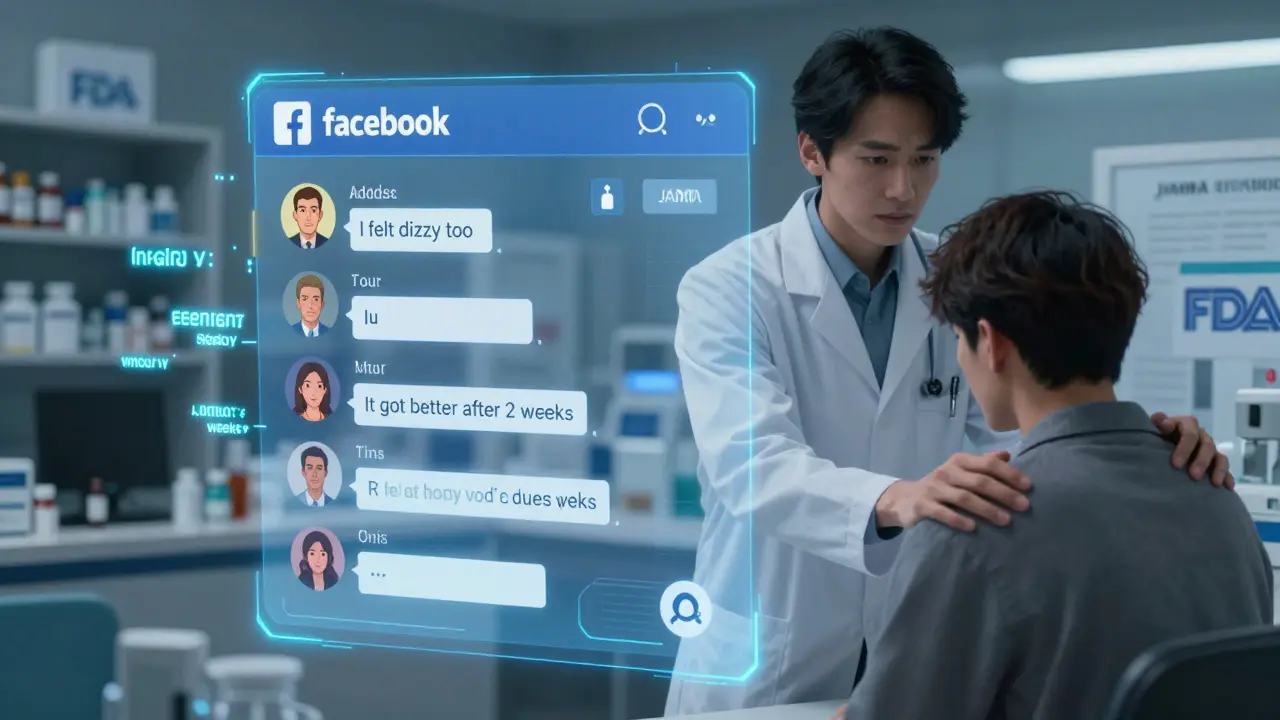
Where Things Go Wrong
Not all groups are created equal. On Reddit, only about 22% of generic medication threads have any healthcare professional involvement. That’s a problem. In 2019, an unmoderated Facebook group blamed a spike in seizures on generic epilepsy meds. Turns out, the patients had stopped taking their meds entirely because they thought the generic wasn’t working. The real cause? Disease progression-not the drug. Seventeen people stopped their medication because of misinformation. That’s why the best groups have safeguards:- Pharmacists verify every medical claim.
- Members are encouraged to cross-check stories with peer-reviewed studies.
- "Buddy systems" pair new members with experienced ones who’ve been through the switch.
Who Benefits the Most?
It’s not just people with chronic conditions-though they benefit the most. Hypertension, diabetes, cholesterol, thyroid disorders, depression-these are all conditions where taking the same pill every day matters. Missing doses because you can’t afford it? That’s what generics fix. Medicare beneficiaries are the most active in these groups-58% participate. Why? Because they’re often on fixed incomes. They feel the cost difference most. Meanwhile, commercially insured patients are the least likely to join-only 33%. They might not realize how much they’re paying. Or they assume their insurance covers the brand name. But even with insurance, brand-name drugs can cost three to ten times more. And sometimes, the copay isn’t covered at all.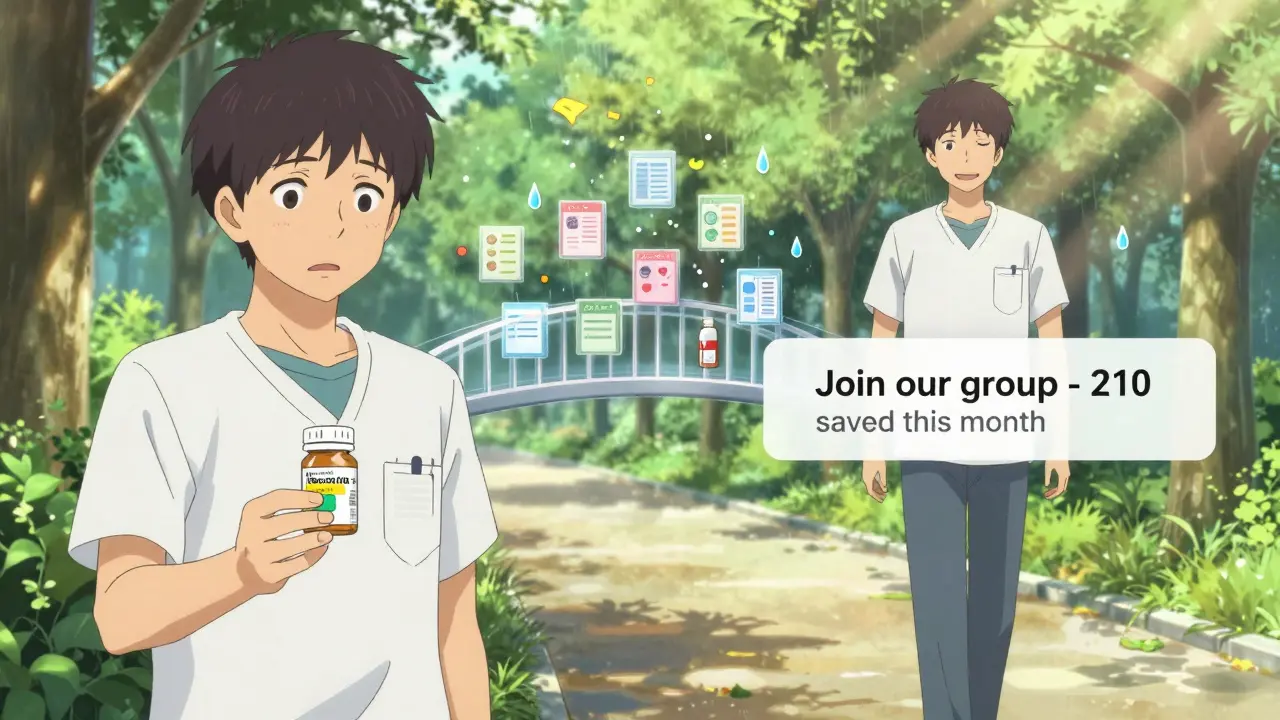
What’s Changing Now
The FDA launched its Patient Experience Metrics program in 2023. That means patient stories from support groups are now being formally reviewed when new generic drugs are approved. For the first time, real-world feedback is part of the regulatory process. The American College of Physicians is rolling out free toolkits for clinics to help them refer patients to verified support groups. And by mid-2024, the Association for Accessible Medicines will launch a public directory of certified groups-so you can find one near you. Even pharmacy benefit managers are starting to connect their apps to these groups. Imagine getting a text: "Your generic prescription is ready. Join our group to hear how others adjusted." That’s the future.What You Can Do Today
If you’re switching to a generic and feeling unsure:- Ask your pharmacist if they know of a local or online support group for your medication.
- Search Facebook or PatientsLikeMe for your condition + "generic support."
- Look for groups with pharmacist moderation or links to FDA or JAMA studies.
- Give it at least two weeks before deciding it’s not working. Your body needs time to adjust.
- Share your story-even if it’s just one post. Someone else needs to hear it.
Why This Matters
Every year, Americans spend $325 billion on prescription drugs. Generics save $313 billion of that. That’s money that goes back into food, rent, transportation-things people actually need. But savings only happen if people take the pills. And people only take them if they trust them. Patient support groups don’t replace doctors. They don’t replace science. They bridge the space between the two. They turn cold facts into human stories. And sometimes, that’s all it takes to keep someone alive.Are generic medications really as effective as brand-name drugs?
Yes. The FDA requires generics to have the same active ingredient, strength, dosage form, and route of administration as the brand-name version. They must also prove they deliver the same amount of medicine into your bloodstream-within 80% to 125% of the brand. Over 47 clinical trials reviewed by JAMA Internal Medicine in 2019 found no meaningful difference in effectiveness for heart medications, antidepressants, and blood pressure drugs.
Why do I feel different after switching to a generic?
It’s common, and usually temporary. The inactive ingredients (fillers, dyes, coatings) in generics can be different, which may affect how quickly your body absorbs the drug. Some people notice a slight change in how they feel for the first week or two. This is often the nocebo effect-expecting to feel worse makes you notice small changes more. Most people report feeling back to normal within 10-14 days. If symptoms persist, talk to your doctor or pharmacist.
Can patient support groups give me medical advice?
No. Support groups are for sharing experiences, not replacing medical advice. Never stop or change your medication based on a post. But they can help you understand what others have gone through, recognize normal side effects, and know when to call your doctor. The best groups include verified pharmacists or nurses who can clarify medical claims.
How do I find a trustworthy patient support group?
Look for groups connected to hospitals, pharmacies, or nonprofits like the Association for Accessible Medicines. Check if they have healthcare professionals moderating discussions. Avoid groups that promote fear, sell supplements, or claim generics are "inferior." Reliable groups link to FDA guidelines, peer-reviewed studies, or official drug databases. A new verified directory launching in Q2 2024 will help you find approved groups.
Do support groups really help people take their meds more often?
Yes. Studies show patients in these groups have 15% to 20% higher adherence rates. Why? Because they feel less alone. When you hear someone say, "I felt the same, but it got better," it reduces fear. When you see real cost savings, it removes a major barrier. And when you know your story helps someone else, you’re more likely to stick with your treatment.
Is it safe to switch from a brand-name drug to a generic?
For most medications, yes. The FDA approves generics after rigorous testing. Exceptions exist for drugs with a narrow therapeutic index-like warfarin, levothyroxine, or some epilepsy drugs-where tiny changes in blood levels matter. Even then, switching is usually safe if done under medical supervision. Always talk to your doctor before switching, but don’t assume brand-name is safer. For 90% of prescriptions, generics are a safe, effective, and affordable choice.
Write a comment
Items marked with * are required.





11 Comments
Eileen Reilly January 13, 2026 AT 08:13
so i switched to generic lisinopril and felt like a zombie for 3 days?? like my brain was wrapped in saran wrap and someone kept hitting me with a sleepy sock. i thought i was dying. turned out? my body just needed to chill the f*** out. now i feel better than i have in years. also saved $180/month. win win.
Monica Puglia January 15, 2026 AT 06:29
same with my generic metformin 😅 i was terrified at first-like, what if it’s not the same?? but after two weeks, the brain fog lifted and i actually started walking again. i didn’t realize how tired i was until i wasn’t tired anymore. also-huge shoutout to the pharmacist who sent me a link to the jama study. it helped so much 💙
Cecelia Alta January 15, 2026 AT 12:35
okay but let’s be real-this whole ‘generics are fine’ thing is corporate propaganda wrapped in a FDA stamp. i’ve seen people go from fine to full-on hallucinating after switching. and no, it’s not ‘nocebo’-it’s the fillers. they use cheap talc and dyes that should be banned in food, let alone medicine. why are we okay with this? why is this even legal? someone needs to sue the hell out of someone.
steve ker January 16, 2026 AT 16:44
generics work if you’re not a delicate flower. if you need brand name you’re weak. end of story.
Rebekah Cobbson January 17, 2026 AT 04:53
to everyone who’s scared-your feelings are valid. you’re not crazy. it’s not all in your head. but it’s also usually temporary. i’ve been running support groups for 7 years. the people who stick with it for 14 days? 90% say they’re back to normal. don’t quit too soon. and if you’re still off? talk to your pharmacist. they’re the real MVPs.
Bryan Wolfe January 17, 2026 AT 07:02
YESSSSS!!! I switched to generic atorvastatin last year and thought I was going to die-headaches, weird muscle twitches, felt like I’d been hit by a truck. But I waited. Two weeks. And then-POOF. The fog lifted. I didn’t even realize how bad I felt until I didn’t feel that way anymore. And now I’m saving $200/month. That’s a whole month of groceries. Or a massage. Or a Netflix subscription without guilt. 🙌
Sumit Sharma January 18, 2026 AT 17:41
the FDA bioequivalence threshold of 80-125% is statistically absurd for drugs with narrow therapeutic indices. you cannot equate pharmacokinetic variance with clinical equivalence. studies show increased hospitalization rates in elderly populations on generics for anticoagulants and antiepileptics. the data is not as clean as the marketing suggests. this is not a debate-it’s a pharmacokinetic risk stratification issue.
Jay Powers January 19, 2026 AT 02:14
my grandma switched to generic levothyroxine and felt off for a month. we thought it was the meds. turns out the pharmacy switched brands twice in 3 weeks. same generic, different manufacturer. her body just kept readjusting. once they locked her on one brand? she was fine. so maybe it’s not the generic. maybe it’s the changing fillers. just saying.
Lawrence Jung January 20, 2026 AT 15:37
we live in a society that equates cost-efficiency with moral virtue. but what if the real cost isn't money? what if it's the erosion of trust in our own bodies? we’ve been conditioned to believe that if something is cheaper, it’s better. but is that truth-or just capitalism wearing a stethoscope?
Alice Elanora Shepherd January 20, 2026 AT 15:48
For anyone reading this: if you’re switching to a generic, please ask your pharmacist for the manufacturer’s name. Many generics are identical across brands-but some have different inactive ingredients that can trigger reactions. I’ve seen patients react to corn starch, lactose, or even dye in the pill coating. It’s not the active ingredient-it’s the filler. Keep a log. Give it 14 days. If it persists? Ask for a different generic brand. Not all generics are created equal.
Christina Widodo January 22, 2026 AT 05:36
Wait-so if I feel worse, it’s not the drug… it’s my brain? But if I feel better, it’s the drug? That’s a weird double standard. Also, how do we know which studies are real? I saw a post that said a 2022 study proved generics cause depression-but then someone said that study was retracted. This is so confusing.