Health February 23, 2026
Questions to Ask Before Taking Any Supplement with Medicines
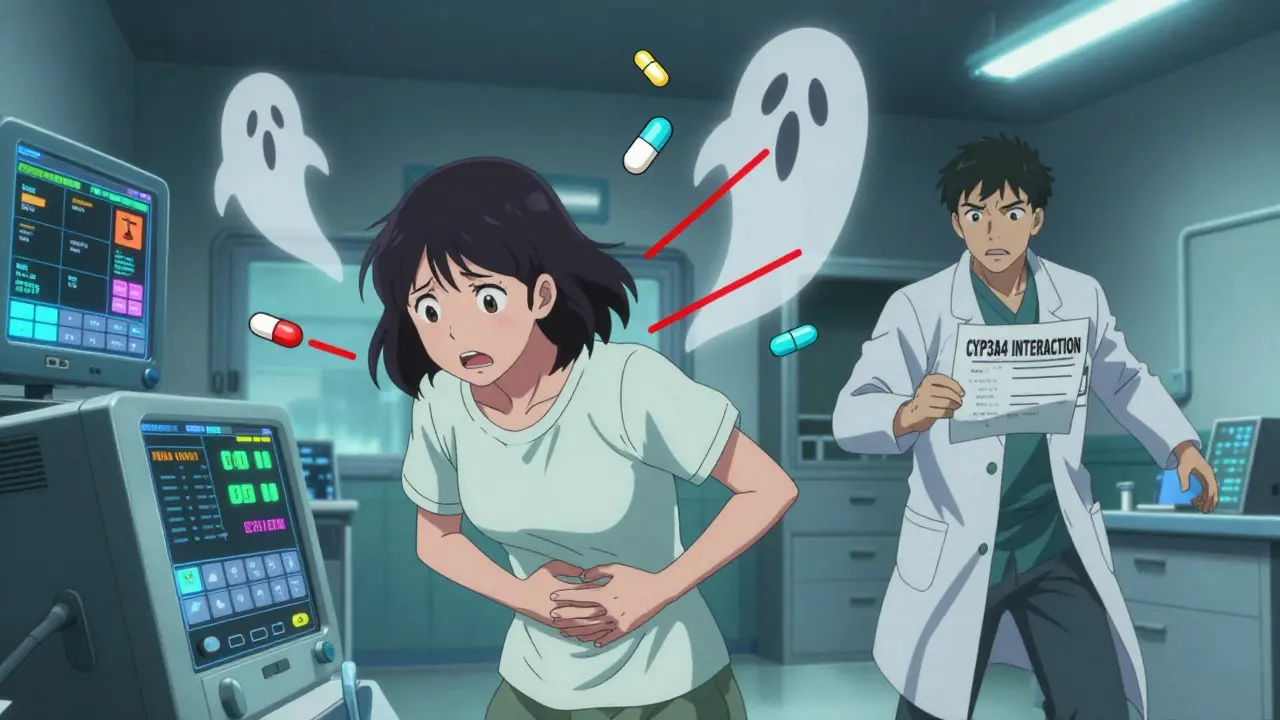
Every year, tens of thousands of people end up in emergency rooms because they took a supplement with their medicine - and didn’t realize it could be dangerous. You might think, "It’s natural, so it’s safe." But that’s one of the most dangerous myths out there. Supplement and medication interactions aren’t rare. They’re common, often invisible, and sometimes deadly.
Take St. John’s wort. It’s sold as a natural mood booster. But if you’re on birth control, it can make you pregnant. If you’re on an HIV med like indinavir, it can let the virus bounce back. If you’re on cyclosporine after a transplant, it can trigger organ rejection. Studies show it cuts drug levels by 30% to 80%. And most people have no idea.
The FDA doesn’t test supplements before they hit the shelf. Unlike pills you get from a pharmacy, supplements don’t need approval for safety or effectiveness. There are over 85,000 different supplement products in the U.S. right now. Only 27% of people talk to their doctor before taking them with their meds. That’s a recipe for trouble.
Why Supplements Can Be Riskier Than You Think
Supplements don’t just sit there. They interact with your body’s systems - sometimes in ways that change how your medicine works. There are two main ways this happens:
- Pharmacokinetic interactions: These change how your body absorbs, breaks down, or gets rid of a drug. For example, St. John’s wort turns on enzymes in your liver (CYP3A4 and P-glycoprotein) that speed up the breakdown of many drugs. That means less of the drug stays in your system. It’s like your body suddenly has a faster trash chute.
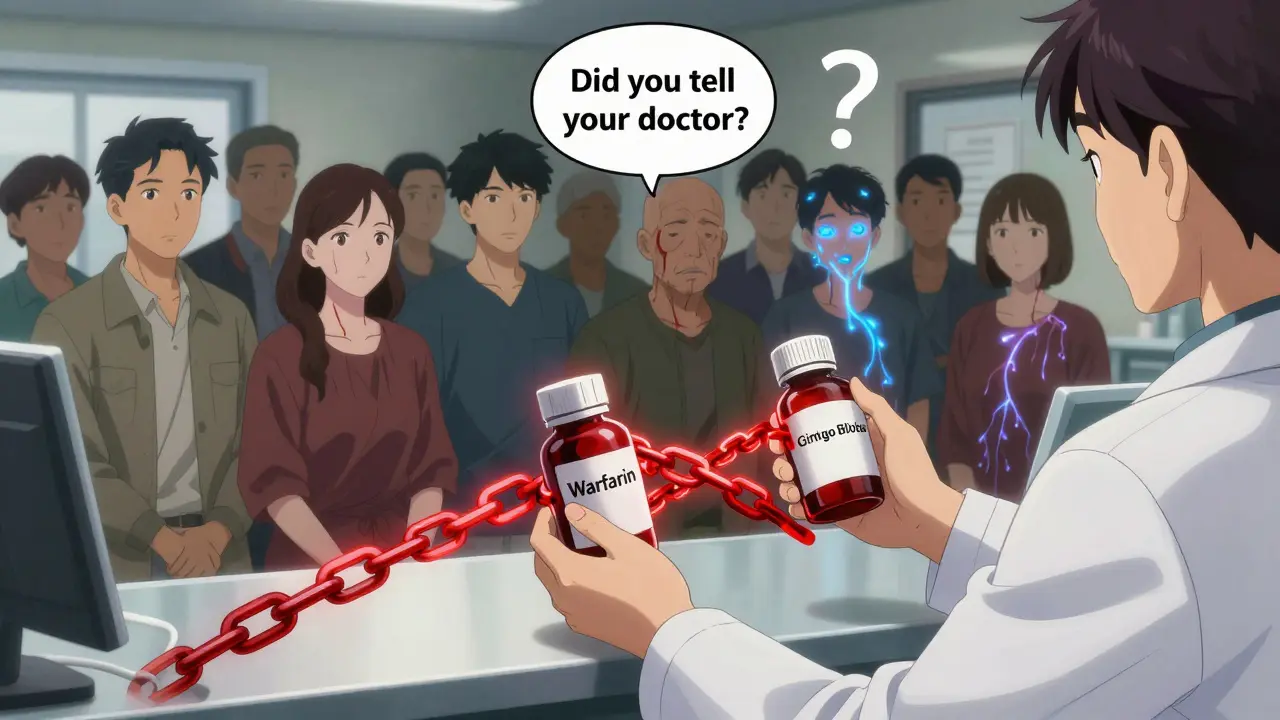
- Pharmacodynamic interactions: These happen when two substances have similar or opposing effects. Take vitamin E at high doses (over 400 IU/day) with warfarin. Both thin the blood. Together, they can make your blood too thin, leading to dangerous bleeding. Ginkgo biloba does the same thing - and it’s even worse when combined with aspirin or NSAIDs.
It’s not just one or two risky supplements. There are clear tiers of risk:
- High-risk: St. John’s wort, goldenseal. These are red flags. Avoid them completely if you’re on any prescription medication.
- Moderate-risk: Ginkgo biloba, Asian ginseng. These can be okay - but only if your doctor knows you’re taking them and monitors you.
- Low-risk: Milk thistle, American ginseng, cranberry (in normal amounts). These have fewer known issues - but "fewer" doesn’t mean "none."
Seven Critical Questions to Ask Before Taking Any Supplement
Don’t wait for your doctor to bring it up. They rarely do. A 2022 study found doctors spend just 1.2 minutes discussing supplements during a typical 15-minute visit. You need to take charge. Here are the seven questions you must ask yourself - and if possible, write them down and bring them to your pharmacist or doctor.
- Does this supplement affect how my body processes my medication? Specifically, does it interfere with the CYP3A4 enzyme or P-glycoprotein? If you’re taking any heart drug, antidepressant, HIV med, transplant drug, or birth control - this is your #1 question. St. John’s wort is the biggest offender here.
- Could this make my medication less effective? If you’re on thyroid meds, antivirals, or chemotherapy, even a small drop in drug levels can mean treatment failure. St. John’s wort cuts digoxin levels by 25%. That’s enough to make your heart condition worse.
- Could this make my medication too strong? Vitamin E, ginkgo, garlic, and fish oil all thin the blood. If you’re on warfarin or aspirin, adding these can push your INR into dangerous territory. One study found 73% of warfarin users who took ginkgo needed their dose changed.
- Has this supplement been studied with my specific medication? Only about 15% of supplements have real clinical data on interactions. If you can’t find a study, assume it’s unknown - and avoid it.
- What should I be monitoring? If you’re on warfarin, you need regular INR checks. If you’re on HIV meds, you need viral load tests. If you’re on immunosuppressants, your drug levels need to be tracked. Ask your doctor: "What tests should I get if I start this supplement?"
- Is there a safer alternative? American ginseng has fewer interactions than Asian ginseng. Milk thistle is often safer than turmeric for liver support. Cranberry juice (in moderation) is fine. But don’t assume "natural" means "safe."
- What symptoms mean I’m having a bad reaction? Watch for: unusual bleeding, bruising, dizziness, rapid heartbeat, confusion, muscle stiffness, or a sudden change in how you feel. These could be signs of serotonin syndrome (from mixing St. John’s wort with SSRIs) or dangerous bleeding (from ginkgo + warfarin). Don’t ignore them.
Real Stories Behind the Numbers
On Drugs.com, over 1,200 users have reported problems with St. John’s wort. One woman wrote: "I didn’t realize it would make my birth control fail. I got pregnant because no one told me." On Reddit, dozens describe serotonin syndrome - a life-threatening reaction from mixing St. John’s wort with fluoxetine (Prozac). Symptoms? Confusion, shaking, fever, fast heartbeat. One user said they ended up in the ER after taking both for "better mood."
But it’s not all bad. Some people do well. A small group of cancer patients report that milk thistle helped reduce chemo side effects - without affecting the treatment’s power. But here’s the catch: every single one of them was under medical supervision. They had their liver enzymes and drug levels checked regularly.
The problem isn’t supplements. It’s the assumption that they’re harmless. The FDA can’t force supplement makers to prove safety. Labels often lie - a 2022 government report found 70% of supplement labels had wrong ingredient amounts. That means you don’t even know how much you’re taking.
Who’s at Highest Risk?
If you’re taking any of these, you’re in the danger zone:
- Immunosuppressants: After a transplant, your body needs precise drug levels. A 10% drop can mean rejection.
- Anticoagulants: Warfarin, rivaroxaban, apixaban. Even small changes can cause bleeding or clots.
- Cancer drugs: Many chemo drugs are broken down by the same liver enzymes that supplements affect.
- HIV meds: St. John’s wort can cause viral rebound - meaning the virus comes back.
- Hormonal birth control: The risk of pregnancy is real. And it’s not just St. John’s wort - some herbal teas and extracts can do it too.
And if you’re over 65? You’re even more vulnerable. Older adults often take multiple medications and supplements. Their bodies process drugs slower. That makes interactions more likely - and more dangerous.
What’s Changing? What Should You Do Now?
The system is slowly waking up. In January 2024, Epic Systems - the biggest electronic health record platform in the U.S. - started requiring doctors to document supplement use. Pharmacists are now routinely screening for interactions during medication reviews. But doctors? Only 32% are documenting it in records.
The CDC wants to cut supplement-related ER visits by 25% by 2026. That’s a goal. But it won’t happen unless you act.
Here’s what you need to do today:
- Make a list of every supplement you take - including vitamins, herbs, teas, and probiotics.
- Write down every medication - prescription, over-the-counter, and even eye drops or patches.
- Go to your pharmacist. Ask: "Do any of these interact?" Pharmacists are trained for this. They have tools doctors don’t always use.
- If you’re on a high-risk medication (like warfarin or HIV drugs), don’t start any new supplement without talking to your doctor first.
- Don’t trust Amazon reviews or Instagram influencers. They’re not medical experts.
Supplements aren’t evil. But they’re not harmless either. They’re powerful. And if you’re taking them with medicine, you’re playing with fire - unless you know exactly what you’re doing.
Can I take vitamin D with my blood pressure medicine?
Yes, vitamin D generally doesn’t interfere with most blood pressure medications. But if you’re taking thiazide diuretics (like hydrochlorothiazide), high doses of vitamin D can raise calcium levels, which might affect your heart or kidneys. Talk to your doctor before taking more than 2,000 IU per day.
Is it safe to take melatonin with antidepressants?
It can be, but it’s risky. Melatonin may increase the sedative effect of some antidepressants, especially SSRIs or tricyclics. It can also worsen depression symptoms in rare cases. If you’re on antidepressants, don’t start melatonin without checking with your doctor first.
Why doesn’t my doctor ask about supplements?
Most doctors don’t have the time, training, or tools to screen for supplement interactions. A 2022 study found they spend less than two minutes on the topic per visit. They assume you’ll tell them - but most people don’t think supplements count as "medicine." That’s why you need to bring it up.
Can I trust supplement labels?
Not always. A 2022 government report found 70% of supplement labels had inaccurate ingredient amounts. Some had way more than listed - others had none at all. Look for third-party testing seals like USP, NSF, or ConsumerLab. They don’t guarantee safety, but they do verify what’s in the bottle.
What should I do if I already took a supplement with my medicine?
Stop taking the supplement immediately. Don’t wait for symptoms. Call your pharmacist or doctor. If you’re on a high-risk drug like warfarin, cyclosporine, or an HIV med, get checked. Symptoms like unusual bruising, dizziness, rapid heartbeat, or confusion need urgent attention. Better safe than sorry.
Write a comment
Items marked with * are required.





15 Comments
Steven Pam February 23, 2026 AT 18:17
This is the kind of post that should be mandatory reading before anyone touches a supplement. I’ve seen too many people think 'natural = safe' and end up in the ER. Seriously, if you’re on meds, treat supplements like prescription drugs. They’re just as powerful - and just as dangerous if misused.
Natanya Green February 25, 2026 AT 09:07
OMG YES!!! I took ginkgo with my blood thinner and almost ended up in the hospital!! My INR spiked to 8.2!!! My pharmacist almost had a heart attack!! I didn’t even think about it!! Now I have a sticky note on my pill organizer that says 'NO HERBS WITHOUT DOCTOR' and I’m not even kidding. This needs to be on every pharmacy shelf!!
John Smith February 26, 2026 AT 12:14
Natural my ass. The supplement industry is a pyramid scheme run by people who think 'herbal' means 'immune to science'. St. John’s wort? It’s basically a chemical weapon disguised as a mood enhancer. And don’t get me started on the FDA’s 'regulation' - it’s a joke. The only thing they regulate is how many times you can say 'all natural' on a label.
Brandice Valentino February 27, 2026 AT 10:42
i mean like... i took ashwagandha with my thyroid med and nothing happened? so maybe the fear is overblown? like i dont think everyone needs to be this paranoid? just... listen to your body? maybe?
Larry Zerpa February 28, 2026 AT 06:02
You're all missing the real issue. The FDA doesn't regulate supplements because they're complicit with the supplement industry. The same lobbyists who blocked regulation are now funding 'educational campaigns' about 'safe use'. This isn't about safety - it's about profit. The real danger isn't the supplement. It's the system that lets this happen.
Gwen Vincent February 28, 2026 AT 08:48
I really appreciate how thorough this is. I used to think supplements were harmless until my mom had a bad reaction to turmeric with her blood pressure med. Now I always check with my pharmacist. They know way more than doctors about interactions. Seriously, go talk to them - they’re not just there to hand you pills.
Christina VanOsdol February 28, 2026 AT 13:28
I’m so glad this exists. 🙌 I used to be one of those people who popped 12 supplements a day like candy. Then I got hospitalized for serotonin syndrome after mixing St. John’s wort with my SSRI. 😵💫 I still have nightmares. Please - if you’re on ANY psych med, DO NOT TOUCH St. John’s wort. I’m not exaggerating. This isn’t a 'maybe'. It’s a 'you will regret it'.
Shalini Gautam March 1, 2026 AT 10:10
In India, we’ve been using herbs for thousands of years. But you're right - modern meds change everything. My uncle took ashwagandha with his diabetes pill and his sugar crashed. He’s fine now, but he learned. Knowledge matters more than tradition. We need to adapt old wisdom to new science.
Nandini Wagh March 2, 2026 AT 15:08
Funny how people panic about supplements but don’t blink at taking 5 different painkillers at once. I’ve seen people take 4 Advils, a muscle relaxer, and a sleep aid - no questions asked. But if you mention turmeric? 'Oh my god, that’s dangerous!' Selective outrage is exhausting.
Khaya Street March 4, 2026 AT 06:52
I appreciate the effort, but let’s be real - most people don’t care. They’ll keep buying 'natural energy boosters' from Amazon because the reviews say 'life-changing'. This post won’t change a single person’s behavior. The market is too big, the profits too high. Awareness doesn’t equal action.
Holley T March 4, 2026 AT 19:33
I’ve spent the last six months researching this topic because my dad had a stroke after taking garlic supplements with his anticoagulants. He didn’t tell his doctor because he thought it was 'just garlic'. Turns out, garlic thins blood like aspirin - but without the dosage control. We had to restructure his entire medication regimen. I now have a spreadsheet with every supplement he’s ever taken, every med, every interaction, every lab value. It’s not paranoia - it’s survival. If you’re on anything chronic, you owe it to yourself to do the same.
Kenzie Goode March 4, 2026 AT 21:24
I used to think supplements were my little secret wellness hack. Then I found out my 'natural' melatonin had 10x the labeled dose. And it was laced with a synthetic sedative. That’s not a supplement - that’s a drug. The labels are lies. The system is broken. I don’t trust anything anymore. I only use USP-certified stuff now. Even then... I’m still scared.
Christopher Brown March 5, 2026 AT 23:03
Americans are so gullible. You’ll spend $50 on a 'miracle' supplement but won’t pay $10 for a blood test. You want safety? Get tested. Track your levels. Know your numbers. Stop relying on Instagram gurus who don’t know what CYP3A4 means.
Sanjaykumar Rabari March 7, 2026 AT 02:16
I think this is all a government scam. The FDA doesn't regulate supplements because they want you to get sick so they can sell you more drugs. Big Pharma owns the supplements too. The truth is hidden. They don't want you to know what's really in those pills. The truth is out there. Don't trust anyone.
Brooke Exley March 7, 2026 AT 21:43
You’re not alone if you’ve been scared to talk about supplements with your doctor. I used to feel silly bringing it up - like I was wasting their time. Then I started saying, 'I need your help to make sure I’m not hurting myself.' And guess what? They listened. One even gave me a handout with interaction charts. You’re not being annoying - you’re being smart. Keep asking. Keep advocating. Your life matters more than their 15-minute window.