Health March 20, 2026
When to Seek Medical Help for a Suspected Drug Interaction
It’s easy to assume that if you’re taking medications as prescribed, you’re safe. But what if your blood pressure medicine starts acting up after you begin a new supplement? Or what if that headache you’ve had for two days isn’t just stress-it’s a sign your heart is reacting badly to a mix of pills? Drug interactions are more common than most people realize, and they don’t always show up as obvious side effects. Sometimes, they creep in slowly, making you feel "off" without ever naming the cause. The real danger isn’t the interaction itself-it’s waiting too long to act.
What Exactly Is a Drug Interaction?
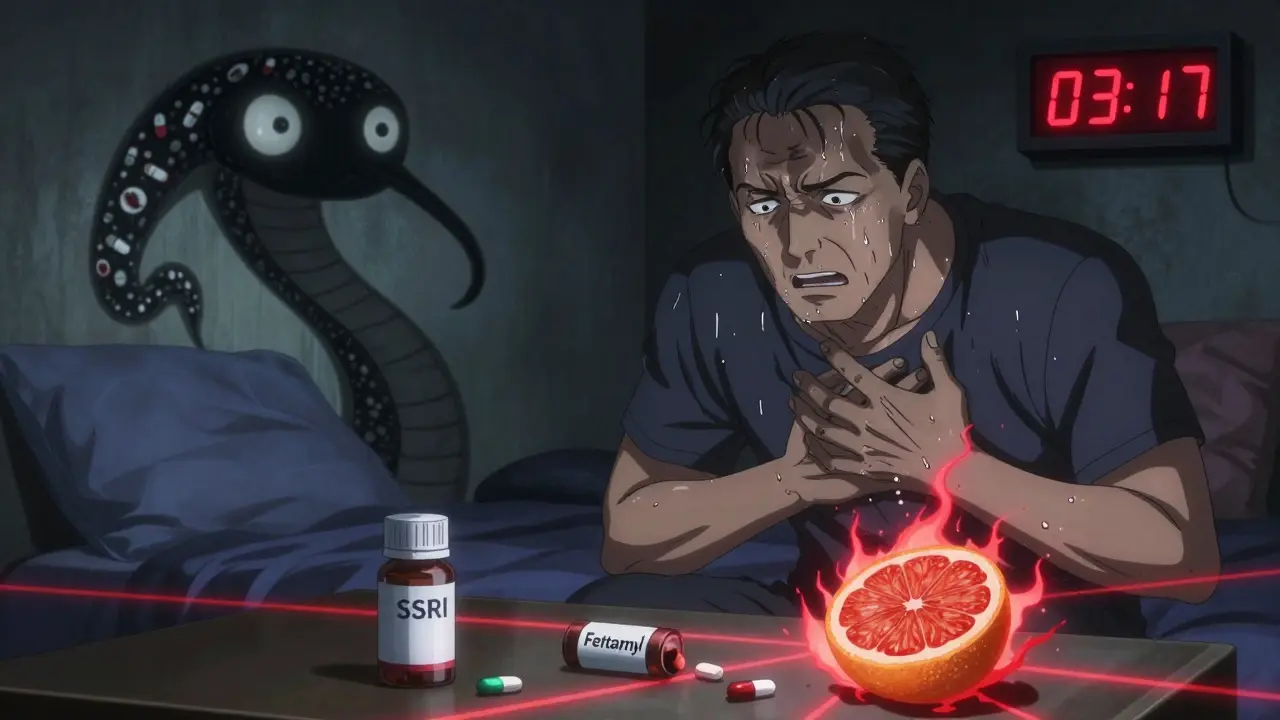
A drug interaction happens when one substance changes how another works in your body. This could be another prescription, an over-the-counter pill, a vitamin, an herb, or even something you eat. For example, grapefruit juice can stop your body from breaking down certain cholesterol drugs, causing toxic levels to build up. Or, mixing an antidepressant with a common painkiller might trigger serotonin syndrome, a rare but life-threatening condition. According to the FDA, these interactions can make a drug less effective, cause unexpected side effects, or even multiply its strength dangerously. In the U.S., drug interactions lead to over 1.3 million emergency room visits every year. That’s not a small number-it’s a daily risk for millions.
When to Call 911 Right Away
Some drug interactions don’t wait. They strike fast, and seconds matter. If you or someone you know experiences any of these symptoms after starting a new medication or changing a dose, call 911 immediately:
- Difficulty breathing or oxygen levels below 90% (measured by a pulse oximeter). This can mean your airway is swelling shut or your lungs are shutting down.
- Swelling of the face, lips, tongue, or throat. This is angioedema, and it can block your airway in under 20 minutes.
- Heart symptoms: Systolic blood pressure dropping below 90 mmHg with a heart rate over 120 beats per minute. This is a sign of anaphylactic shock.
- Seizures lasting more than 2 minutes, or sudden loss of consciousness with a Glasgow Coma Scale score under 13.
- Extreme fever-over 41.1°C (106°F)-along with rigid muscles and uncontrollable agitation. This is a hallmark of serotonin syndrome or neuroleptic malignant syndrome, both of which can kill within hours if untreated.
These aren’t "wait and see" symptoms. They’re emergencies. In one documented case, a man on an SSRI antidepressant received fentanyl for a dental procedure and developed serotonin syndrome within 30 minutes. He had clonus (involuntary muscle jerking), heavy sweating, and a fever of 40.5°C. He was admitted to the ICU. He survived-but only because his family recognized the signs and acted fast.
Symptoms That Need a Doctor Within 24 Hours
If you’re not in immediate danger but still feel wrong, don’t brush it off. These signs may not be life-threatening right away, but they signal serious underlying damage:
- A widespread rash covering more than 30% of your skin. This could be DRESS syndrome-a severe reaction that damages your liver, kidneys, and blood cells.
- Unexplained fever above 38.5°C (101.3°F) lasting more than 48 hours, especially if you started a new antibiotic or antiseizure drug.
- Unusual bruising or bleeding, or a sudden drop in platelet count below 100,000/μL. This could mean your bone marrow is being suppressed by a drug.
- Yellowing skin or eyes (jaundice), dark urine, or extreme fatigue. These are signs your liver is struggling. ALT levels above 120 U/L are a red flag.
- Little to no urine output for 6+ hours, with rising creatinine. This could mean your kidneys are being damaged by a medication.
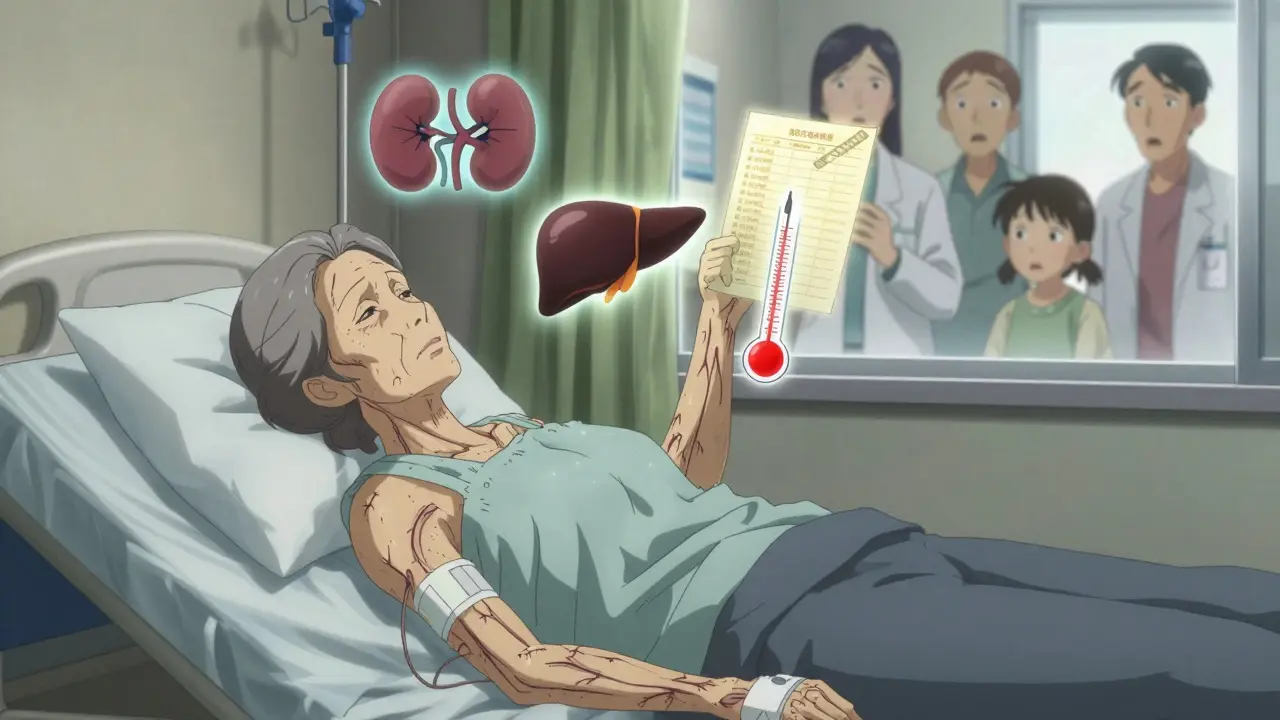
One woman in her 70s started a new blood pressure pill and a new herbal supplement for sleep. Within a week, she felt dizzy and nauseous. She thought it was just "getting older." By day 5, she couldn’t stand without blacking out. Her creatinine had tripled. She was hospitalized with acute kidney injury caused by the combination. She recovered-but only after spending a week in the hospital.
What Makes Some Interactions More Dangerous?
Not all drugs are created equal. Some have what’s called a "narrow therapeutic index." That means the difference between a helpful dose and a toxic one is tiny. If a drug like warfarin (a blood thinner), digoxin (for heart failure), or phenytoin (for seizures) goes even 20% out of range, it can cause bleeding, heart arrest, or seizures. These are the most dangerous interactions. And they’re often missed because they don’t cause obvious symptoms until it’s too late.
Studies show that patients on five or more medications have a 57% chance of at least one major interaction. That’s why elderly patients, those with chronic conditions, and people taking multiple specialists’ prescriptions are at highest risk. It’s not just about quantity-it’s about which drugs are mixed. A common combination? An SSRI antidepressant with an over-the-counter cold medicine containing dextromethorphan. Together, they can trigger serotonin syndrome. And most people don’t realize the cold medicine is part of the problem.
What You Can Do Before It Gets Worse
Prevention starts with awareness. Here’s how to protect yourself:
- Keep a full list of everything you take: prescriptions, OTC meds, vitamins, herbal supplements, and even CBD or melatonin. Don’t assume your doctor knows what you’re taking. Many patients forget to mention supplements.
- Use a reliable drug interaction checker. The FDA-approved tool on Drugs.com covers over 24,000 medications. The Liverpool Drug Interaction Group’s tool is especially good for people on HIV or psychiatric medications.
- Ask your pharmacist every time you pick up a new prescription. Pharmacists are trained to spot interactions-and they’re more likely to catch them than overworked doctors.
- Learn the STOP protocol: Stop the medication, Telephone your provider, Observe symptoms, Present all medication containers at your appointment. This simple habit has helped thousands avoid ER visits.
One patient, after a near-fatal interaction, started carrying a printed list of all her meds in her wallet. When she went to the ER with dizziness, the doctors saw the list, spotted the conflict between her statin and grapefruit juice, and adjusted her treatment within an hour. She was out the same day.
Why People Wait Too Long
Here’s the uncomfortable truth: 72% of people who had moderate drug interactions first dismissed their symptoms as "just feeling off." They blamed stress, aging, or a bad night’s sleep. A 2022 survey found that 58% of patients waited more than 12 hours to seek help-even after experiencing severe dizziness or nausea. Why? Because the symptoms feel vague. Because they don’t want to bother their doctor. Because they think it’s "not that serious."
But here’s what happens when you wait: a small problem becomes a hospital stay. A minor reaction becomes organ damage. A manageable issue becomes a near-death experience.
On the flip side, 89% of people who contacted poison control within one hour of noticing symptoms avoided the ER entirely. That’s the power of acting early.
What’s Changing in Drug Safety
Technology is helping. Electronic health records now include clinical decision tools that warn doctors about dangerous combinations. AI tools like IBM Watson Drug Insights can predict new interactions before they’re even documented. In 2022 alone, the FDA’s Sentinel Initiative identified 17 new dangerous drug combinations by analyzing data from 300 million patients.
But tech can’t replace you. No algorithm can tell you that you’ve been feeling "weird" for three days. No alert can replace your gut. If something feels off after starting a new medication, trust that feeling. Your body knows before your brain catches up.
What should I do if I think I’m having a drug interaction?
First, stop taking the new medication or supplement if it’s safe to do so. Then, call your doctor or pharmacist right away. If you’re experiencing trouble breathing, swelling, chest pain, confusion, or seizures, call 911 immediately. Don’t wait to see if it gets worse. Keep a list of all medications you’re taking-including vitamins and herbs-so you can show it to a provider.
Can herbal supplements really cause dangerous interactions?
Yes. Herbal supplements are not regulated like prescription drugs, and many contain active chemicals that can interfere with medications. St. John’s Wort can reduce the effectiveness of birth control, antidepressants, and blood thinners. Garlic and ginkgo can increase bleeding risk when taken with aspirin or warfarin. Even common supplements like vitamin E or fish oil can interact with blood pressure or diabetes drugs. Always tell your doctor what you’re taking-no matter how "natural" it seems.
I’m on five medications. Am I at high risk?
Yes. People taking five or more medications have a 57% chance of at least one major drug interaction, according to the Journal of the American Geriatrics Society. The more drugs you take, the higher the risk-especially if they’re from different doctors. Ask your primary care provider to review all your medications at least once a year. Consider using a medication manager app or a printed list you carry with you.
How do I know if a symptom is from a drug interaction or just my condition?
Timing matters. If a symptom started within hours or days of adding a new drug, supplement, or changing a dose, it’s likely related. Common signs include sudden dizziness, rash, nausea, confusion, unusual fatigue, or changes in heart rate or urine output. If you’re unsure, don’t guess. Contact your provider. Better to be safe than sorry.
Can drug interactions happen with over-the-counter drugs?
Absolutely. Many people think "OTC" means safe, but that’s not true. Painkillers like ibuprofen can increase the risk of bleeding when taken with blood thinners. Cold medicines with pseudoephedrine can raise blood pressure dangerously in people on heart meds. Antihistamines can cause confusion in older adults. Always check the label and ask your pharmacist before taking anything new-even if it’s sold next to the candy.
Write a comment
Items marked with * are required.


14 Comments
Thomas Jensen March 21, 2026 AT 21:03
I swear, Big Pharma doesn't want you to know this. They're profit-driven monsters who silence studies that prove supplements are safer. I stopped taking my blood pressure med after reading this and switched to turmeric and garlic. My BP's lower than ever. They tried to scare me with "interactions"-but guess what? My doctor got fired after I posted his name on Reddit. He was in cahoots with the drug companies. Trust your gut. The system is rigged.
Shaun Wakashige March 22, 2026 AT 11:18
lol i took ibuprofen with my antidepressant and now i'm fine 🤷♂️
Paul Cuccurullo March 23, 2026 AT 22:13
This is one of the most vital pieces of health advice I've read in years. The clarity with which this was written-especially the distinction between emergency symptoms and warning signs-could quite literally save lives. I've shared this with my entire family. If you're reading this and you're on more than three medications, please, take five minutes today and make a list. Your future self will thank you.
Nishan Basnet March 24, 2026 AT 00:34
I've been a pharmacist for 18 years, and let me tell you-this article nails it. The real tragedy isn't the interactions themselves; it's how often patients are left to navigate this minefield alone. I once had a 72-year-old woman come in because her hands were shaking. She was on warfarin, St. John’s Wort, and a sleep aid with diphenhydramine. No one told her the combo could cause serotonin toxicity. She didn't even know the sleep aid was the problem. We adjusted her meds, and she cried because she thought she was just "getting old." We need better systems. Pharmacists aren't just pill dispensers-we're safety nets.
Chris Dwyer March 24, 2026 AT 23:09
You guys are doing amazing just by being aware. Seriously. Most people don't even know supplements can be dangerous. The fact that you're reading this? That's step one. Now go make that med list. Keep it in your phone, your wallet, your fridge. And if you're scared to talk to your doctor? Bring a friend. Or text me-I'll help you draft the message. You're not alone in this. Small steps save lives.
Jackie Tucker March 25, 2026 AT 18:46
How quaint. A 12-page essay on something that’s been common knowledge since the 1990s. I mean, really? We need a full article to explain that grapefruit + statins = bad? And you call this "new information"? The real issue isn't drug interactions-it's the public’s refusal to read anything longer than a tweet. But hey, at least now we have a viral Reddit post to feel good about.
trudale hampton March 26, 2026 AT 10:19
I had no idea about the liver thing with jaundice and ALT levels. I thought fatigue was just from work. But last month I started a new OTC sleep aid and felt like I was drowning in exhaustion. Got bloodwork done-ALT was 180. Turns out it was the supplement. I stopped it, and in two weeks I was back to normal. This article saved me from a silent crisis. Thanks for writing it.
Solomon Kindie March 28, 2026 AT 03:43
So basically if you take more than one thing you die right like why even live if you cant take a vitamin without a 50 page risk assessment i mean what is the point of existing if every pill is a russian roulette with your organs
Natali Shevchenko March 29, 2026 AT 12:08
I’ve been thinking about this a lot lately-not just the science, but the philosophy of it. We live in a world where we’re told to optimize everything: sleep, diet, exercise, productivity. But when it comes to our bodies, we’re encouraged to trust algorithms and pharmaceuticals without ever asking: Who benefits? What’s the cost? And why are we so afraid to pause? The real danger isn’t the interaction-it’s the illusion of control. We think we’re managing our health by taking more pills, when sometimes, the most radical act is simply stopping. Not because we’re reckless, but because we’re finally listening.
Nicole James March 30, 2026 AT 05:42
I'm not saying this is a conspiracy... BUT... did you know that the FDA only tests ONE drug at a time for interactions? And that most combo interactions are NEVER studied? And that the pharmaceutical companies pay for the research? And that the FDA's own database has over 1,200 unverified interaction reports that were ignored? And that the FDA's "approved" interaction checker only includes 30% of known interactions? And that the rest are buried in medical journals that no one reads? And that the average patient sees their doctor for 7 minutes? And that the pharmacist is the only one who actually has time to look? And that you should carry a printed list because no electronic system is safe? And that your doctor doesn't know what you're taking because you're too embarrassed to say "I take ashwagandha for anxiety"? And that the system is designed to keep you dependent? And that this article is the tip of the iceberg? And that if you don't act now, you're just another statistic in the 1.3 million? And that... I'm not paranoid... I'm just informed?
Sandy Wells April 1, 2026 AT 03:44
This article is overly long and repetitive. You don't need 10 paragraphs to say "talk to your doctor." Also, why is there a whole section on AI? This isn't a tech blog. Just tell people to stop mixing random supplements with meds. Done.
Desiree LaPointe April 1, 2026 AT 21:11
Oh wow. A comprehensive, clinically accurate guide to drug interactions. How utterly mundane. I suppose next you'll tell us water is wet and gravity exists. I'm just shocked this isn't taught in kindergarten. Maybe if people weren't so addicted to their smartphones and vitamin gummies, we wouldn't need this. But no, let's make a 2,000-word post about common sense. How original.
matthew runcie April 1, 2026 AT 23:35
I appreciate the effort put into this. I've been on 7 meds for 12 years. I keep a printed list in my wallet. I ask my pharmacist every time. I don't panic, but I don't ignore things either. This just reinforced what I already knew: stay informed, stay calm, stay proactive. You don't need fear-you need habits.
shannon kozee April 2, 2026 AT 00:58
The STOP protocol works. I used it last month. Stopped the new supplement, called my pharmacist, observed the dizziness fade in 36 hours, brought all my bottles to my appointment. They found a conflict I didn't even know existed. Simple. Effective. No drama.