
Health March 31, 2026
Auditory Processing Disorder: Understanding Listening Challenges and Finding Support
You walk into a busy café. The clatter of cups, chatter, and music create a wall of sound. For most people, focusing on their friend's voice is automatic. But for those with Auditory Processing Disorder is a neurological condition where the brain has difficulty processing and interpreting auditory information despite normal peripheral hearing function. Also known as Central Auditory Processing Disorder, it creates a disconnect between the ear and the brain. This means your ears work fine, but the message gets garbled before it reaches understanding.
This confusion often leads to frustration. You might think you're being distracted or rude when, in reality, your brain is struggling to filter the noise. It is estimated that APD affects approximately 3%-5% of school-aged children, yet many adults remain undiagnosed until workplace struggles become undeniable. Unlike hearing loss, there is no cure, but understanding the mechanics opens doors to effective management.
Key Takeaways at a Glance
- APD involves the brain's interpretation of sound, not the physical health of the ear.
- Symptoms often include trouble hearing speech in noisy places or remembering verbal instructions.
- Diagnosis requires specialized testing by an audiologist, distinct from standard hearing checks.
- Strategies like FM systems and environmental changes significantly improve daily functioning.
- Early intervention helps mitigate academic and social impacts effectively.
What Exactly Is Auditory Processing Disorder?
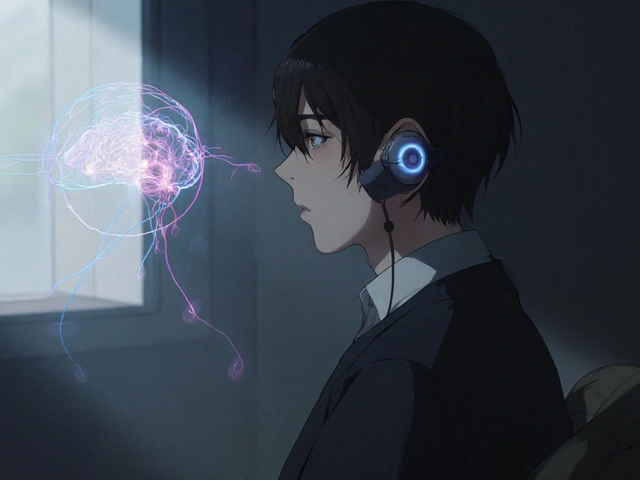
To grasp the core issue, imagine your auditory system is like a sophisticated telephone line. In typical hearing, the signal travels clearly from the ear to the brain. With APD represents a disconnect between the auditory nerve and the brain's auditory cortex, causing disruptions in how sound is processed at the neural level. The ear receives the sound waves perfectly, but the brain's software stumbles during decoding.
This condition was formally recognized in medical literature in the 1970s. By 2005, the American Speech-Language-Hearing Association established official diagnostic criteria to distinguish it from other conditions. It is crucial to note that APD is not a learning disorder or an attention deficit condition, although it frequently overlaps with them. Research indicates that about 40-50% of children with learning disabilities also show signs of auditory processing difficulties.
The disorder manifests through specific, measurable difficulties. These deficits fall into seven core areas defined by professionals:
- Auditory discrimination: Struggling to tell similar sounds apart, like 'bat' versus 'pat'.
- Sound localization: Difficulty determining where a sound is coming from.
- Auditory pattern recognition: Trouble identifying pitch or rhythm sequences.
- Temporal aspects: Issues processing timing elements, such as gap detection between sounds.
- Competing signals: Major difficulty understanding speech when background noise exists.
- Degraded signals: Struggling with distorted speech quality.
- Auditory memory: Trouble retaining spoken information long enough to use it.
Individuals with APD typically demonstrate significant impairment in at least two of these areas. Statistics from the NHS suggest that 78% of diagnosed children specifically struggle with understanding speech in noisy environments. This explains why a quiet library feels manageable while a bustling classroom becomes overwhelming.
| Condition | Primary Cause | Hearing Test Result | Common Symptom |
|---|---|---|---|
| APD | Neural processing issue | Normal sensitivity | Trouble in noise |
| Hearing Loss | Ear structure damage | Elevated thresholds | Mumbling volume |
| ADHD | Attention regulation | Normal sensitivity | Difficulty focusing anywhere |
Recognizing the Warning Signs
Spotting APD early can prevent unnecessary academic anxiety. Symptoms often emerge during school years when listening demands spike. However, adults notice it too, especially in complex meeting environments.
Common signs include frequent mishearing instructions. A student might write down 'cite a paragraph' instead of 'write a paragraph', costing points on assignments. Socially, peers might think someone is being rude because they ask questions to be repeated constantly. This isn't disinterest; it's a literal inability to catch the signal initially.
Data from the Hearing Health Foundation reports that 82% of adults with APD describe workplace difficulties. Meetings with background noise become particularly draining. Furthermore, untreated APD increases risks for anxiety disorders by 2.3 times and depression by 1.8 times compared to neurotypical peers by adolescence.
It is vital to differentiate APD from Attention Deficit Hyperactivity Disorder. While 30-40% of APD cases co-occur with ADHD, the root cause differs. Children with APD exhibit attention difficulties in listening situations due to auditory overload, whereas ADHD involves primary attention regulation problems across all contexts.

The Diagnostic Journey
Finding answers requires professional guidance. Standard hearing tests won't catch APD because peripheral hearing sensitivity remains normal. You need comprehensive evaluation by a certified audiologist using specialized assessments.
Diagnostic protocols typically involve specific tests:
- Dichotic Digits Test: Measures the ability to process different sounds in each ear simultaneously.
- Pitch Pattern Sequence Test: Evaluates pitch pattern recognition skills.
- Random Gap Detection Test: Measures temporal resolution or timing perception.
Abnormal results are generally defined as performance falling at least 2 standard deviations below age-normed expectations. This rigorous standard helps avoid overdiagnosis. In fact, experts note that many children referred for testing actually have language or cognitive deficits rather than APD itself.
In the UK, the NHS acknowledges diagnostic challenges, stating it is not always clear what causes APD. Genetic factors play a role, with children having a parent diagnosed with APD showing a 50% higher likelihood of developing the condition. Risk factors also include chronic ear infections during critical development periods, premature birth, and head trauma.
Effective Support and Management Strategies
Once diagnosed, there is no pharmaceutical treatment available. However, multimodal approaches yield strong results. Evidence-based interventions include auditory training programs like Earobics, which showed 40-60% improvement in auditory discrimination in trials.
Environmental modifications are often the quickest win. Classroom sound-field amplification systems can reduce background noise by 15-20 decibels, creating a clearer acoustic space. Preferential seating-staying within 3-6 feet of the speaker-is another low-cost strategy with high impact.
Assistive technology also plays a massive role. Personal Sound Amplification Products (PSAPs) and AI-powered speech enhancement software are driving market growth, projected to reach $1.2 billion globally by 2027. These tools help bridge the gap between the chaotic environment and the listener.
At-home strategies matter just as much. Reducing background noise is key; maintain a signal-to-noise ratio of +15 dB where possible. Teaching self-advocacy skills empowers individuals to request accommodations. Speech-language pathology services focusing on metacognitive strategies show 70% effectiveness in improving academic outcomes.

Living Successfully with APD
The prognosis is generally positive with intervention. Longitudinal data suggests that 80% of children develop effective compensatory strategies allowing academic success. However, 45% continue to experience workplace listening challenges in adulthood without ongoing support.
Success stories often highlight the power of specific accommodations. One parent reported their child's reading scores improved from the 45th to the 89th percentile after implementing visual supports and preferential seating. The goal isn't necessarily to 'fix' the brain wiring but to equip the individual with tools to navigate a loud world.
Frequently Asked Questions
Can you grow out of Auditory Processing Disorder?
APD does not typically disappear on its own. While some children develop coping mechanisms that mask symptoms as they mature, the underlying processing deficit often persists. Early intervention is critical to minimize long-term academic and social impacts, though many adults continue to require strategic support in noisy environments.
How is APD different from hearing loss?
The key difference lies in the location of the problem. Hearing loss involves damage to the ear structures, meaning sound waves aren't transmitted well. In APD, the ear works normally, but the brain struggles to interpret the signals received. Standard hearing tests will usually come back normal for someone with APD.
Is Auditory Processing Disorder covered by insurance?
Coverage varies significantly. In the United States, Medicaid covers evaluation in 38 states for children under 21. Costs range widely, from $500 to $2,500 depending on geography. In the UK, NHS pathways exist but wait times can vary, sometimes necessitating private assessment for faster intervention options.
Can adults get diagnosed with APD?
Yes, absolutely. While symptoms often emerge in childhood, many adults discover their diagnosis later in life when workplace demands exceed their coping strategies. Head trauma can also lead to adult-onset APD, accounting for about 15% of cases.
Does APD affect reading and writing?
Indirectly, yes. Because APD disrupts phonological awareness-the ability to identify sounds in words-it often intersects with dyslexia. Research shows APD co-occurs in 25-35% of dyslexia cases, impacting literacy development and spelling accuracy alongside spoken comprehension.
What helps children with APD in the classroom?
Preferential seating near the teacher, FM systems that amplify the teacher's voice directly, and providing written copies of verbal instructions are highly effective. Under regulations like IDEA or Section 504 in the US, or similar frameworks elsewhere, 75% of children qualify for accommodations, though only about 35% currently receive appropriate interventions.
Write a comment
Items marked with * are required.





8 Comments
Julian Soro April 1, 2026 AT 01:59
The distinction between hearing loss and processing issues is often misunderstood by general practitioners. Standard tests miss the neural disconnect completely. We should focus more on environmental accommodations in schools.
These adjustments help students retain information better during lectures.
It is crucial that educators receive specific training on this subject.
Owen Barnes April 2, 2026 AT 02:52
I work in special ed and see this offten. It is sad when kids get lazeled as difcult becuse they cant hear the teacher well enuff. We need more fundng for testing so parants know early on. It changess evrything for their school yeare.
Teachers shoud be trained to spot the signes soonr.
Russel Sarong April 2, 2026 AT 12:35
This is incredibly important!!! Everyone needs to know about this issue right now!!! My nephew struggles daily because of it!!! It is absolutely amazing how much noise affects him!!! Please share this widely!!!
Cara Duncan April 3, 2026 AT 00:19
So glad to see this topic discussed openly 😊. It really helps families understand the struggle 🏠. Keep spreading awareness 📢🙌.
We all need to learn more about these conditions ❤️.
Jenny Gardner April 3, 2026 AT 19:24
The data regarding co-occurrence with dyslexia is particularly alarming, given the impact on literacy rates globally.
Rocky Pabillore April 4, 2026 AT 17:33
One must realize that the average person lacks the neurological acumen to grasp these distinctions. It is often frustrating when laypeople conflate auditory sensitivity with simple distraction. The academic literature suggests a clear divide that most ignore entirely. I find myself compelled to point out the inadequacies of current diagnostic protocols. Furthermore, the statistical models cited rarely account for socioeconomic variables. This omission renders the clinical advice somewhat moot in lower income households. We must consider the cost barrier inherent in accessing specialized audiologists. Insurance coverage remains a contentious topic among policymakers today. It is disheartening to see such critical needs dismissed as behavioral issues. Children suffer the brunt of this misunderstanding during their formative years. Educators frequently lack the training required to identify these subtle deficits. Consequently, remediation strategies are delayed until significant harm is done. Perhaps society would benefit from a deeper dive into cognitive neuroscience principles. Until then, we remain stuck in a cycle of misdiagnosis and ineffective treatment plans. True progress requires a shift in how medical institutions prioritize sensory processing disorders. I suppose some might find this perspective too technical for casual reading.
Arun Kumar April 5, 2026 AT 04:49
You raise valid concerns about access. Many communities do face barriers with insurance. We should work together to improve support systems. Knowledge is power for everyone involved.
Let us strive for better understanding everywhere.
Cullen Zelenka April 6, 2026 AT 08:38
It is inspiring to see resources becoming available. There are always solutions waiting to be found. People are learning to advocate for themselves effectively. Progress happens slowly but surely over time.
We should remain hopeful for future advancements in this field.