
Health January 8, 2026
Consumer Language Guides: Making Generic Drug Information Accessible
Most people know they can save money by choosing a generic drug instead of a brand-name one. But too many still hesitate-because they’re not sure if it’s really the same. Generic drugs work just like brand-name ones. They’re not cheaper because they’re weaker. They’re cheaper because they don’t carry the cost of advertising, fancy packaging, or decades of research. The problem isn’t the medicine. It’s the message.
Why do people think generics are different?
You walk into the pharmacy and see two bottles: one says "Lipitor," the other says "atorvastatin." The prices are wildly different. The shapes and colors don’t match. The labels look nothing alike. Your brain jumps to conclusions: "If it looks different, it must be different." This isn’t just about looks. A 2020 FDA analysis found that 43% of Americans believe generic drugs are less effective than brand-name ones. That’s not because they’re misinformed-it’s because no one ever explained it clearly. Pharmacists are busy. Doctors are rushed. The only thing most people get is a printed sheet with tiny text and medical jargon like "bioequivalence" and "pharmacokinetics." Here’s the truth: every generic drug must contain the exact same active ingredient, in the exact same strength, as the brand-name version. If your brand-name pill has 20mg of esomeprazole, so does the generic. Same dose. Same way to take it. Same effect on your body.What "bioequivalence" really means
The FDA doesn’t just say "it’s the same." They prove it. Every generic must deliver between 80% and 125% of the active ingredient into your bloodstream compared to the brand-name drug. That’s not a guess. It’s a strict, science-backed range tested in real people. If a generic falls outside that range, it’s rejected. Not approved. Not sold. Think of it like this: if brand-name Tylenol gives you 100 units of pain relief, a generic acetaminophen pill must give you between 80 and 125 units. That’s a big enough range to account for normal body differences-not a flaw, but a normal variation. In fact, 98.7% of the 11,000 generic drugs approved between 2010 and 2020 met this standard.What’s different? (And why it doesn’t matter)
The only things that change between brand and generic are the inactive ingredients. That’s the dye that makes the pill blue instead of white. The filler that holds it together. The coating that lets it dissolve in your stomach instead of your mouth. These don’t affect how the medicine works. But they can cause confusion. Someone might say, "I switched to the generic and felt weird." Maybe the new pill has lactose, and they’re mildly sensitive. Or maybe the coating makes it taste bitter. That’s not the drug failing. That’s a minor physical difference-like switching from a cotton T-shirt to a polyester one. The function is the same. The feel is different.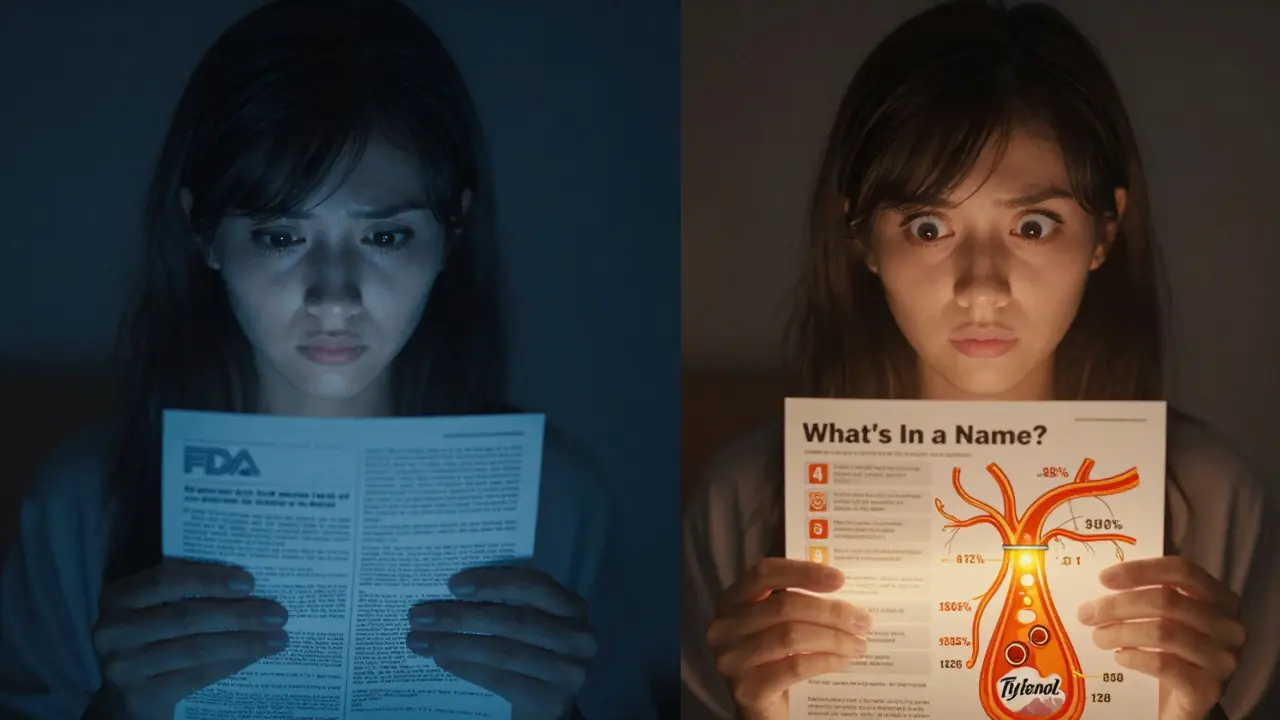
When generics aren’t exactly the same-and what to do
There are exceptions. A few drugs need extra care. These are called "narrow therapeutic index" drugs. That means the difference between a dose that works and one that’s dangerous is tiny. Examples: warfarin (blood thinner), levothyroxine (thyroid), phenytoin (seizure control), and digoxin (heart rhythm). For these, some doctors prefer patients stay on the same brand or generic version. Why? Because even tiny changes in how the body absorbs the drug can matter. But here’s the key: this isn’t because generics are bad. It’s because consistency matters more than cost. If you’re stable on a generic version of levothyroxine, keep taking it. If you switch to a different generic and feel off-tell your doctor. Don’t assume it’s broken. It might just need adjustment. The FDA now requires special language guides for these drugs. In 2023, they launched a $4.7 million initiative to create medication-specific guides for these cases. That’s progress.What makes a good language guide?
The best ones don’t just say "it’s the same." They show it. They use analogies. They answer the real questions people have. The FDA’s "What’s In a Name?" chart is a great example. It shows:- Chemical name: N-(4-hydroxyphenyl) acetamide
- Generic name: acetaminophen
- Brand name: Tylenol
Real stories from real people
On Reddit, a thread called "Generic drug confusion" got over 300 comments. The most popular response? "It’s like Kleenex and tissues. Same thing. Different name. Different price." Another common comment: "I switched from Nexium to esomeprazole and saved $200 a month. I didn’t notice a difference." But there are also stories of frustration. One woman stopped her generic levothyroxine after six months because she felt tired. Her doctor checked her levels-her dose just needed tweaking. The guide didn’t prepare her for that possibility. That’s the gap. A good guide doesn’t say "everything is perfect." It says: "Most of the time, it’s the same. Here’s when to watch for changes. Here’s what to do if something feels off."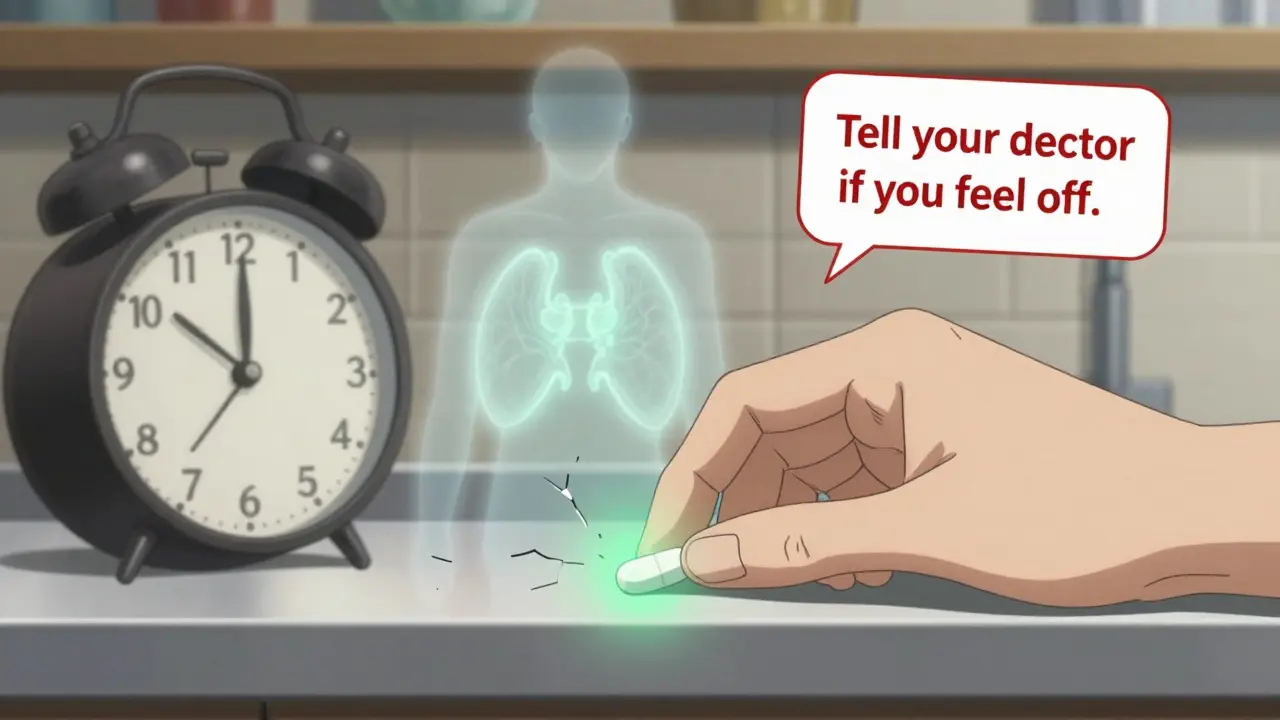
What’s changing in 2025 and beyond
By January 2025, every Medicare Part D plan must give patients generic drug education that meets NIH health literacy standards. That means no more tiny print. No more passive voice. No more "should be taken." Just clear, direct language: "Take this pill once a day." Pharmacies are training staff to spend just 90 seconds explaining generics using three key points:- Same active ingredient
- Same effect (80-125% blood level match)
- Same safety profile
What you can do today
You don’t need to wait for a perfect system. You can start now.- Ask your pharmacist: "Is this generic the same as the brand?" They’re trained to answer this now.
- Check the FDA’s website: www.fda.gov/genericdrugs. Updated quarterly. Free. No ads.
- Use the "teach-back" trick. After someone explains your medicine, say: "So, to make sure I got it right-you’re saying this pill works the same as the brand because...?"
- If you’re on a narrow therapeutic index drug, ask: "Should I stick with the same generic brand?"
- Don’t assume a change in how you feel means the drug failed. Talk to your doctor first.
Why this matters
Generic drugs saved the U.S. healthcare system $2 trillion between 2009 and 2019. In 2022, 90.9% of all prescriptions filled were generics. That’s over 6 billion pills. But people still pay more than they need to because they’re afraid. The problem isn’t the science. It’s the story. And that story is changing. Clear language. Real examples. Honest exceptions. That’s what works. Not marketing. Not jargon. Just truth, told simply.When you understand what’s in your pill, you don’t just save money. You take back control.
Are generic drugs as safe as brand-name drugs?
Yes. Generic drugs must meet the same strict safety and quality standards as brand-name drugs. The FDA requires them to have the same active ingredient, strength, dosage form, and route of administration. They’re tested in the same way, in the same facilities, under the same rules. The only difference is cost-not safety.
Why do generic pills look different from brand-name ones?
By law, generic drugs can’t look exactly like the brand-name version. That’s to avoid trademark infringement. So they change the color, shape, or coating. But those are just the inactive ingredients-they don’t affect how the medicine works. Think of it like buying a store-brand cereal: same ingredients, different box.
Can I switch between different generic brands?
For most drugs, yes. But for a few-like thyroid medicine (levothyroxine), blood thinners (warfarin), or seizure meds (phenytoin)-your body might react slightly differently to different versions. If you switch and feel off, tell your doctor. You may need to stick with one brand of generic to keep your levels stable.
What’s an "authorized generic"?
An authorized generic is the exact same drug as the brand-name version, but sold without the brand name. It’s made by the same company, in the same factory, with the same ingredients. These often have lower switch-back rates than regular generics because they’re identical in every way-including appearance.
Do generics take longer to work?
No. Generic drugs must reach the same level in your bloodstream as the brand-name version, within the FDA’s allowed range (80-125%). That means they start working at the same time. If you feel a delay, it’s likely due to other factors-like what you ate, your metabolism, or even stress-not the drug itself.
Where can I find reliable information about my generic drug?
Start with the FDA’s official site: www.fda.gov/genericdrugs. It’s updated quarterly, free, and written in plain language. Your pharmacist is also a trusted source-they’re trained to explain generics using the same three-point method now used nationwide. Avoid relying on drug company websites or social media posts-they often have a bias.
Write a comment
Items marked with * are required.





9 Comments
Kunal Majumder January 9, 2026 AT 13:37
Man, I switched my blood pressure med to generic last year and saved like $400. Felt exactly the same. People act like generics are some sketchy pharmacy hack, but nah - it’s the same damn pill in a different wrapper.
chandra tan January 9, 2026 AT 14:41
In India, we call brand-name drugs "luxury medicines." My aunt takes generic metformin - same as the branded one - and she’s been stable for 8 years. Why pay extra when the science doesn’t care about the logo?
Ted Conerly January 10, 2026 AT 07:15
Let’s cut through the noise: generics aren’t "almost as good." They’re legally required to be bioequivalent. The FDA doesn’t play games. If your generic doesn’t hit 80-125% of the brand’s blood concentration, it gets tossed. Period. The only reason people doubt it is because no one ever explained it without jargon. And now? They’re finally doing it right - with plain language, real analogies, and actual clarity. This isn’t marketing. It’s public health.
Mario Bros January 10, 2026 AT 09:57
My grandma used to refuse generics ‘cause she thought they were "weak." I showed her the FDA chart - same active ingredient, same dose, different color. She switched to generic lisinopril and now says, "Honey, I feel like I just won the lottery."
Save $300/month and keep your blood pressure in check? Sign me up.
anthony martinez January 11, 2026 AT 00:13
Interesting that you mention the 90-second pharmacist spiel. I’ve seen pharmacists say that exact script - word for word - to 12 different people in an hour. It’s effective, sure, but it’s also… robotic. Like a pre-recorded voicemail. The truth is, people need space to ask follow-ups. Not just a script.
Dwayne Dickson January 12, 2026 AT 12:59
While I appreciate the well-intentioned simplification, one must acknowledge that bioequivalence ranges of 80-125% represent a 45% variance in systemic exposure - a margin that, while statistically acceptable under regulatory frameworks, remains clinically non-trivial for patients on narrow therapeutic index agents. The FDA’s guidance, while commendable in its transparency, does not adequately address the pharmacodynamic heterogeneity observed in real-world polypharmacy populations. One might argue that the current paradigm prioritizes cost-efficiency over individualized pharmacokinetic fidelity.
Saumya Roy Chaudhuri January 14, 2026 AT 04:31
OMG I CANNOT BELIEVE PEOPLE STILL THINK GENERICS ARE WEAKER?? I switched from Nexium to esomeprazole and my acid reflux vanished - same as before, but now I can afford to eat out without crying over my bank account. And guess what? My pharmacist even gave me a LITTLE FLYER WITH A COMIC STRIP ABOUT IT. I WAS SO PROUD I SHOWED IT TO MY MOM. SHE STILL THINKS BRAND NAMES ARE "SACRED." 🤦♀️
Faith Edwards January 15, 2026 AT 17:46
How quaint. You speak of "clear language" and "plain English," as if the average American is incapable of understanding the nuanced pharmacological distinctions inherent in drug formulation. The fact that we must dumb down scientific rigor into TikTok-friendly analogies - comparing pills to cereal boxes - speaks volumes about the erosion of medical literacy in this country. If you cannot comprehend bioequivalence, perhaps you should not be making therapeutic decisions at all.
Jaqueline santos bau January 17, 2026 AT 16:58
My sister took generic levothyroxine and got SO tired. She cried for three days. I told her it was the generic, she said no, it was her soul. Then she switched back to Synthroid - and now she’s glowing. I’m not saying generics are bad - I’m saying some people’s bodies just… don’t vibe with them. And that’s okay. But don’t tell her she’s just being dramatic. She’s not. She’s a sensitive soul. And her thyroid? It’s a temple.