Health April 17, 2026
Handling Insurance Requirements for Generic Drug Substitution: A Practical Guide
You arrive at the pharmacy counter, hand over your prescription, and the pharmacist tells you that your insurance will only cover the generic version of your medication. If you've specifically requested the brand name-or if your doctor insisted on it-this can feel like a sudden wall. Navigating the gap between what your doctor wants, what your insurance pays for, and what the pharmacy dispenses is often a frustrating game of paperwork. But understanding the rules of generic substitution can help you get the medication you need without paying an arm and a leg.
Generic Substitution is
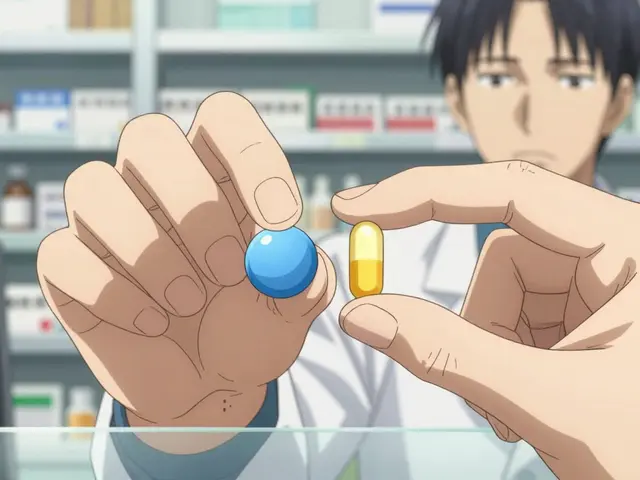
the practice where pharmacists or insurance companies replace a prescribed brand-name medication with a therapeutically equivalent generic version to reduce costs.
This system was largely shaped by the Hatch-Waxman Act of 1984, which allowed generic drugs to enter the market without repeating all the original clinical trials, provided they could prove they were "bioequivalent" to the original.
For most people, this is a win. Generics make up about 90% of prescriptions filled in the U.S., saving the healthcare system hundreds of billions of dollars every year. But for a small percentage of patients, a switch can lead to real issues, from minor side effects due to different inactive ingredients to significant health fluctuations in people taking narrow therapeutic index drugs.
How Insurance Companies Control Your Meds
Insurance companies don't just suggest generics; they often mandate them through a process called formulary management. A formulary is essentially a "shopping list" of drugs the insurer has agreed to cover. If a drug is on the generic tier, the insurer may refuse to pay for the brand name entirely, or they might apply a "mandatory generic" policy.
In a mandatory generic program, the insurer only pays the cost of the generic equivalent. If you insist on the brand name, you don't just pay a higher co-pay-you often pay the entire price difference between the two drugs. For example, some private insurers have seen brand-name claims average $72 while the generic equivalent costs only $27. That $45 gap comes directly out of your pocket.
Then there is the issue of "non-medical switching." This happens when an insurer removes a drug from their formulary or spikes the co-pay to force you onto a cheaper alternative, often without your doctor's input. This isn't about medical equivalence; it's about the bottom line.
The "Dispense as Written" Hurdle
You might think that if your doctor writes "Dispense as Written" (DAW) or "Brand Medically Necessary" on the script, the insurance company will simply comply. In reality, it's not that simple. While state laws often protect the pharmacist's right or duty to substitute, private insurance policies often override the doctor's preference for cost reasons.
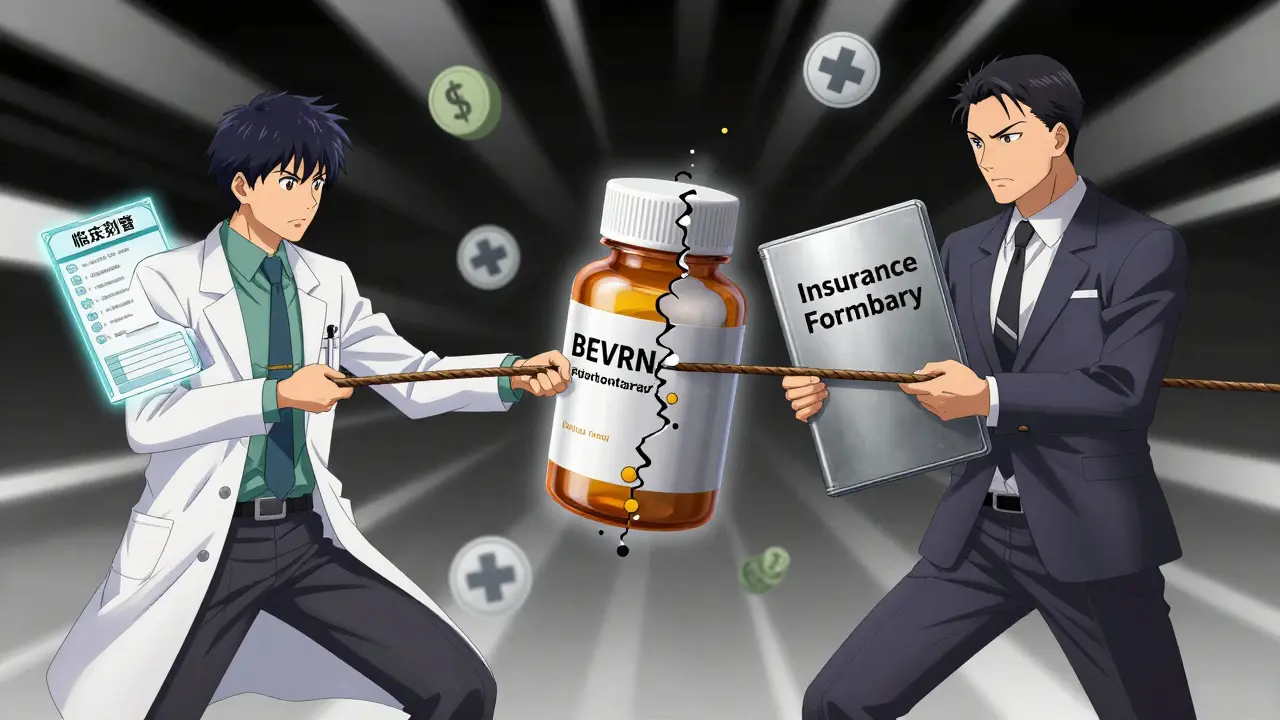
Some insurers explicitly state that even if a doctor writes "no substitution," the member will only be reimbursed for the lowest-priced equivalent. This creates a tug-of-war between the physician's clinical judgment and the insurer's financial policy. To bypass this, you usually need to move beyond a simple note on a prescription and enter the world of Prior Authorization.
| Attribute | Brand-Name Drug | Generic Drug |
|---|---|---|
| Active Ingredients | Original formulation | Identical to brand |
| Inactive Ingredients | Standardized | Can vary by manufacturer |
| FDA Requirement | Full clinical trials | Bioequivalence (ANDA) |
| Typical Cost | Higher (Patent protected) | Lower (Competitive market) |
| Insurance Coverage | Often requires Prior Auth | Standardly covered |
When a Generic Just Doesn't Work
Most of the time, the FDA's bioequivalence standards (where the drug's absorption must fall within a tight 80-125% range) ensure that generics work exactly like the brand. However, there are specific scenarios where substitution is risky:
- Narrow Therapeutic Index (NTI) Drugs: Medications like warfarin, lithium, or certain anti-epileptics have a very thin line between a dose that works and a dose that is toxic. Even a tiny variation in how a generic is absorbed can cause instability.
- Inactive Ingredient Sensitivity: While the active drug is the same, the fillers, dyes, and binders differ. A patient might be allergic to a specific dye used in one generic manufacturer's version but not in another.
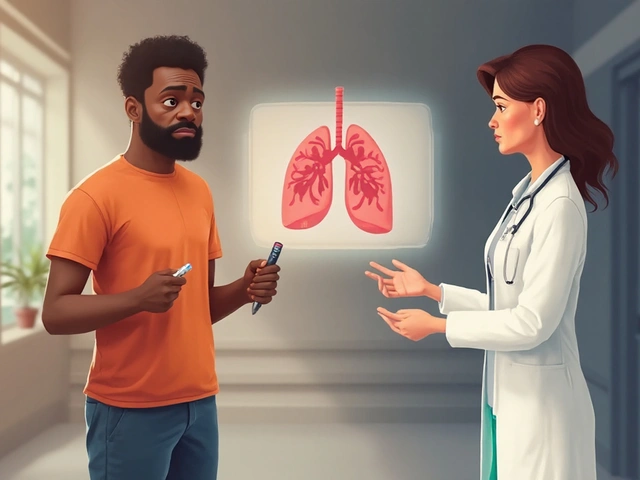
- Complex Delivery Systems: For things like prefilled inhalers or injectable pens, the device itself matters. If the generic device delivers the drug differently, the treatment may fail.
If you've experienced a "failure to thrive" on a generic-such as thyroid fluctuations after switching from Synthroid to levothyroxine-you have a legitimate medical case for requesting the brand name.
Step-by-Step: Getting Your Insurance to Pay for Brand Name
If you need the brand-name version for medical reasons, don't just argue with the pharmacist. You need to build a clinical paper trail that the insurance company cannot ignore.
- Document the Failure: Keep a log of your symptoms or lab results that show the generic isn't working. Insurance companies love data. If you can show that your cholesterol spiked or your blood pressure rose after switching to a generic, you have a much stronger case.
- Request a Prior Authorization (PA): Ask your doctor to submit a Prior Authorization request. This is a formal request to the insurer explaining why the cheaper alternative is inappropriate. For example, Blue Cross Blue Shield often requires specific ICD-10 codes to prove therapeutic failure.
- Use Specific Language: Ensure your doctor uses the phrase "Brand Medically Necessary" on the prescription. While not a guarantee for payment, it is a legal signal to the pharmacist and the insurer.
- Check the "Orange Book": If you're unsure if a generic is actually equivalent, pharmacists use the FDA's Approved Drug Products with Therapeutic Equivalence Evaluations, commonly known as the "Orange Book." Products rated 'A' are considered the gold standard for substitution.
The Biosimilar Complexity
It's important to distinguish between small-molecule generics and Biosimilars. Biosimilars are the "generics" of the biologic world (complex proteins made from living cells). Because they are so complex, they aren't exact copies; they are "highly similar."
Because of this, substitution rules for biosimilars are much stricter. In many states, a pharmacist cannot simply swap a brand biologic for a biosimilar without notifying the doctor within a few business days. This added layer of regulation exists because biologics often treat severe conditions like rheumatoid arthritis or cancer, where any variation in the drug can have significant consequences.
Will I pay more if I insist on a brand-name drug?
Yes, in most cases. If your insurance has a mandatory generic policy, you will likely pay the difference between the generic price and the brand price, even if you have a co-pay. The only way to avoid this is to get a successful Prior Authorization based on medical necessity.
Is a generic drug exactly the same as a brand-name drug?
The active ingredient, strength, and dosage form are identical. However, the inactive ingredients (fillers and binders) can differ. While these don't change how the drug works for 99% of people, some sensitive patients may react differently to different manufacturers.
What does "Dispense as Written" actually mean?
It is an instruction from the doctor to the pharmacist to provide the exact brand specified without substituting it for a generic. While this directs the pharmacy, it does not force the insurance company to pay for it.
How long does the Prior Authorization process take?
Depending on the insurer and the urgency of the request, it typically takes between 2 and 14 business days. It is best to start this process before your current medication runs out.
Can my doctor force the insurance to pay for a brand?
Your doctor cannot force them, but they can provide the clinical evidence needed to justify the cost. If the doctor can prove that you failed a trial of the generic or have a documented allergy to an inactive ingredient, the insurer is much more likely to approve the brand.
Next Steps for Patients and Caregivers
If you are currently struggling with a medication switch, start by reviewing your insurance company's specific formulary online. Look for the "preferred」 generics for your medication. If you're reacting poorly to a generic, don't just switch pharmacies-different pharmacies use different generic manufacturers. Try a different pharmacy first to see if a different generic version of the same drug works better for you.
For those on high-cost biologics, keep a close eye on the new biosimilar options entering the market. These often come with complex notification requirements and may offer a middle ground between expensive brands and standard generics.
Write a comment
Items marked with * are required.



15 Comments
Aaron McGrath April 17, 2026 AT 20:13
Stop playing defense with your health! If the generic isn't hitting the mark, you gotta attack the Prior Auth process with everything you've got. Get your MD to hammer home the therapeutic failure and don't let the insurance adjusters stonewall you with basic formulary jargon. It's all about the leverage. If you don't push for the brand name when the bioequivalence is off, you're just letting the PBM win. High-intensity advocacy is the only way to smash through these bureaucratic roadblocks. Get those ICD-10 codes locked in and force their hand. No one cares about your health more than you do, so stop waiting for the system to work and start making it work. Total aggression on the paperwork is the only play here. Go get it!
Olushola Adedoyin April 18, 2026 AT 14:31
They just want to put poison in our blood with these fake medicines!!
Tanya Rogers April 20, 2026 AT 00:27
The fascination with "bioequivalence" is quite quaint. One must wonder if the average consumer truly grasps that the pursuit of the cheapest possible option is a race to the bottom of human wellness. It is a systemic failure wrapped in the guise of cost-saving efficiency. I find it profoundly amusing that people believe a bureaucratic "Orange Book" validates the ontological essence of a medication.
Lynn Smith April 21, 2026 AT 09:09
I completely agree with the tip about trying different pharmacies. I had a really hard time with one generic version of my blood pressure meds, but then I switched to a different pharmacy chain and it worked much better. It's so helpful to know that the manufacturers can vary even for the same generic!
Quinton Bangerter April 22, 2026 AT 21:13
Of course, the FDA claims a 80-125% range is "tight." That's a massive window for anyone who actually understands pharmacology. It's a blatant scam to let manufacturers cut corners while pretending it's the same drug. The a-rated products in the Orange Book are just the ones that managed to trick the system most effectively. Don't trust the corporate script.
Valorie Darling April 24, 2026 AT 12:14
honestly just get a new doctor if yours cant even handle a simple prior auth for u... sounds like a skill issue imo
Venkatesh Venky April 24, 2026 AT 19:19
The mention of Narrow Therapeutic Index drugs is really important. I've seen so many people struggle with things like warfarin where the slightest change in the generic source causes the INR to go wild. We should all try to support each other in getting the right care. Maybe we can share a list of patient advocacy groups that help with insurance appeals to make this easier for everyone!
caesar simpkins April 26, 2026 AT 15:38
It is truly heartbreaking to see patients caught in this tug-of-war. Imagine the stress of watching your health decline just because a corporate spreadsheet decided your medication was too expensive! It's an absolute tragedy of our modern era.
Cynthia Didion April 27, 2026 AT 18:22
American healthcare is a joke. Only the best systems prioritize profit over patients.
Ms. Sara April 28, 2026 AT 07:17
For anyone feeling overwhelmed by the Prior Authorization process, remember that you can also request an "expedited" review if your health is in immediate danger. Don't be afraid to ask your doctor's office to mark the request as urgent. It's also helpful to ask the insurance company for the specific clinical criteria they use to approve the brand name so your doctor can address those points exactly in the letter.
Bob Collins April 28, 2026 AT 15:07
Fair point about the biosimilars. It's a bit of a different beast entirely compared to your standard pills. Just take it one step at a time and keep the records straight.
Akshata Kembhavi April 29, 2026 AT 05:15
It's interesting how this works in the US. In India, we have a huge generic industry and it's just the norm, but I guess the insurance side of things makes it way more complicated there.
anne camba April 29, 2026 AT 20:09
One must ponder... if the essence of a cure is tied to the brand, is the cure truly a chemical, or is it a psychological anchor...?
Arthur Luke April 30, 2026 AT 12:41
I wonder if there are apps that track these generic manufacturers' names so patients can log which specific company's version worked best for them. That would be a great way to avoid the trial-and-error phase when switching pharmacies.
Tokunbo Elegbe May 2, 2026 AT 03:28
This guide is very thorough... I appreciate the focus on documenting failures... It is the only way to ensure the insurance company takes the request seriously...!!!