Health January 17, 2026
How Insurers Decide Which Generic Drugs to Cover
When you pick up a prescription for a generic drug at the pharmacy, you might assume it’s automatically covered by your insurance. But that’s not always true. Behind the scenes, insurance companies use a detailed, rule-based system to decide which generics make it onto their formularies - and which ones don’t. This isn’t random. It’s a careful balancing act between cost, safety, and clinical need - and it affects what you pay, what your doctor can prescribe, and even whether your treatment works.
What Is a Formulary, Anyway?
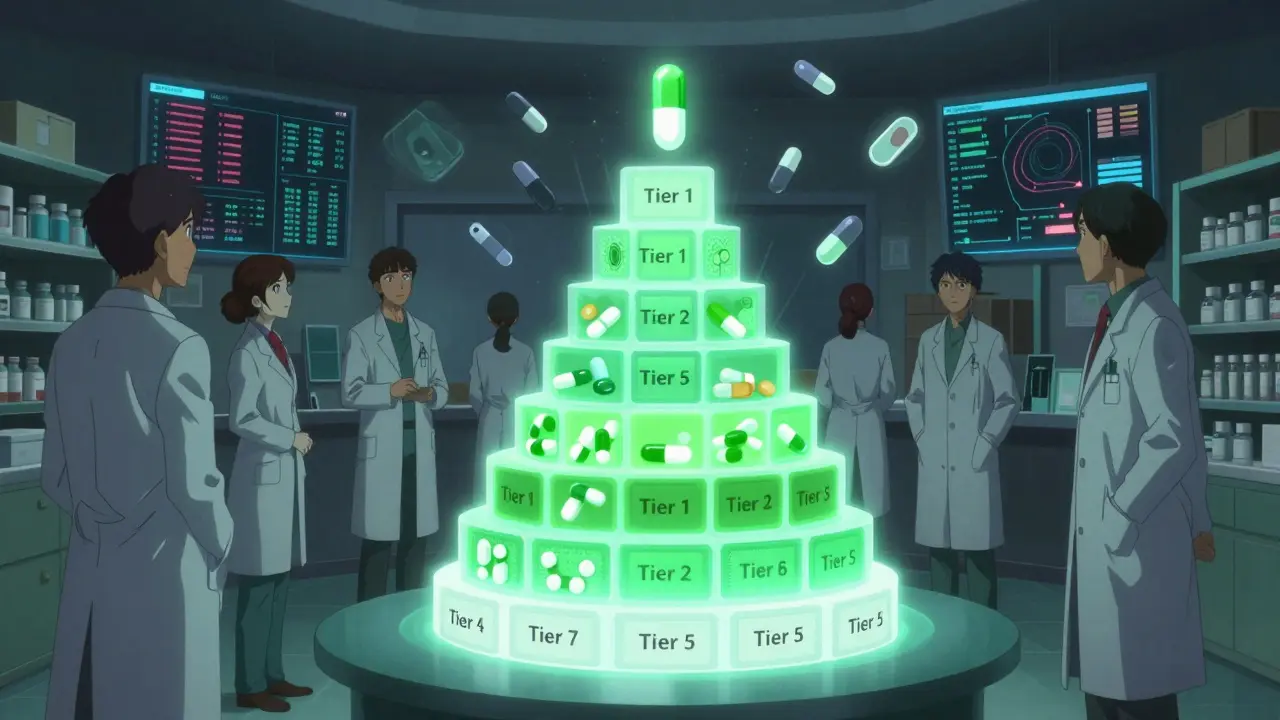
A formulary is a list of drugs your insurance plan agrees to cover. It’s not just a catalog. It’s a tiered system that determines how much you pay out of pocket. Most plans have three to five tiers. Generics almost always land in Tier 1 - the cheapest option. That means you might pay just $5 or $10 for a 30-day supply, compared to $50 or more for a brand-name drug on Tier 3 or 4.Medicare Part D plans, which cover over 50 million Americans, are required by law to use this structure. In fact, 92% of them put all generics in Tier 1. Private insurers like UnitedHealthcare, Cigna, and Humana follow the same pattern. The goal? Make sure patients can afford their meds without breaking the bank - for them or the insurer.
Who Decides What Gets Covered?
The real decision-makers aren’t in corporate boardrooms. They’re in Pharmacy & Therapeutics (P&T) committees. These are groups of doctors, pharmacists, and sometimes patient advocates who meet regularly to review drug data. They don’t pick drugs based on price alone. They look at three things:- Clinical effectiveness: Does the drug actually work? Studies, real-world outcomes, and side effect profiles matter more than marketing claims.
- Safety: Has this generic been used widely? Are there known risks? A drug with a long track record of safe use gets priority.
- Cost-effectiveness: If two generics do the same thing, the cheaper one wins - unless there’s a clinical reason not to.
Before any of that, the drug must be FDA-approved and prescribed by a licensed provider. But even then, it’s not guaranteed coverage. The P&T committee weighs evidence. For example, if a new generic for high blood pressure costs 20% less than an existing one but has no proven benefit, it might still get covered - because savings add up fast across millions of prescriptions.
Why Do Some Generics Get Rejected?
It’s not about quality. All FDA-approved generics must meet the same standards as brand-name drugs. But insurers don’t cover every version of a drug. Why?Some generics come from manufacturers with poor supply reliability. If a drug keeps running out, insurers avoid it - because patients can’t refill. Others might have formulation differences that affect absorption, even if they’re technically equivalent. A 2023 FDA report showed that 78% of current drug shortages are generic medications, which makes insurers cautious.
Also, if a drug is very new - even if it’s generic - insurers may wait to see how it performs in real patients. They don’t want to cover something that looks good on paper but causes unexpected side effects in practice. That’s why some generics sit on the sidelines for months or even years after approval.

How Do Insurers Save Money?
The math is simple: generics cost 80-85% less than brand-name drugs. From 2007 to 2019, Medicare Part D saved $1.67 trillion using generics and biosimilars. In 2019 alone, that added up to $141 billion in annual savings.Those savings don’t just help insurers. They lower premiums for everyone. They also mean patients pay less at the counter. In 2022, 82% of Medicare beneficiaries said they understood their generic drug costs clearly - compared to just 56% for specialty drugs.
Insurers push this further by creating preferred pharmacy networks. Starting in 2023, Medicare Part D plans must offer discounts through these networks, saving enrollees an average of $1,051 a year on generics. That’s not a bonus - it’s a requirement.
What Happens When Your Generic Isn’t Covered?
If your doctor prescribes a generic that’s not on your plan’s formulary, you have options. First, your pharmacist might switch you to a covered version automatically - if your plan allows therapeutic substitution. About 78% of commercial plans do this at checkout. But if you’ve had bad reactions to a certain generic before, you can fight back.You can file an exception request. You’ll need documentation: proof that the covered generic didn’t work for you, caused side effects, or requires a dose higher than your plan allows. Insurers have three business days to respond. If they don’t, your request is automatically approved - no appeal needed.
According to the Patient Advocate Foundation, 43% of patients get denied at first. But 78% eventually get coverage after submitting an exception. Reddit threads like “Generic drug not covered - what are my options?” show this is common - and solvable.
What’s Changing in 2026?
The rules are shifting. The Inflation Reduction Act capped Medicare Part D out-of-pocket costs at $2,000 per year starting in 2025. That means insurers can’t just push patients toward the cheapest drug anymore - they have to think about total cost of care.Also, the FDA is speeding up generic approvals. Under GDUFA III, approval times are dropping from 42 months to 10 months. That means more generics will hit the market faster, giving insurers more choices.
But new challenges are coming. AI-driven personalized generics are in development - drugs tailored to your genetics. Right now, 62% of P&T committee chairs say they’re unsure how to evaluate these. No one has a playbook yet.
And while 91% of prescriptions today have generic alternatives, that number is expected to hit 95% by 2027. More options mean more complexity - and more pressure on insurers to keep up.
What This Means for You
If you take generics, know your plan’s formulary. Check your insurer’s website - most list them online. Ask your pharmacist if there’s a cheaper, covered version. If you’ve had a bad experience with a generic, tell your doctor. They can help you request an exception.Don’t assume your medication is covered just because it’s generic. The system works - but only if you know how to use it.
Why do insurance companies prefer some generics over others?
Insurers prefer generics that are FDA-approved, cost-effective, and have a proven safety record. Even if two generics are chemically identical, one might be chosen because it’s cheaper, more reliably stocked, or has fewer reported side effects in real-world use. P&T committees evaluate all these factors before adding a drug to the formulary.
Can my doctor prescribe any generic drug I need?
Yes, your doctor can prescribe any FDA-approved generic. But your insurance may not cover it if it’s not on the formulary. That doesn’t mean the drug is unsafe - just that your plan hasn’t approved it for coverage. You can still get it, but you’ll pay full price unless you file an exception request.
Why does my pharmacy sometimes give me a different generic than what my doctor prescribed?
Many insurers allow or require pharmacists to substitute one generic for another if they’re considered therapeutically equivalent. This is called therapeutic substitution. It’s legal and common - but only if your plan permits it. About 78% of commercial plans allow this at checkout to reduce costs. If you’ve had issues with a specific generic before, ask your doctor to write “dispense as written” on the prescription.
What should I do if my generic drug isn’t covered?
Ask your doctor to file an exception request with your insurer. You’ll need to show that the covered alternatives didn’t work for you - either because they caused side effects, weren’t effective, or require a dose higher than your plan allows. Insurers must respond within three business days. If they don’t, your request is automatically approved.
Are all generic drugs the same quality?
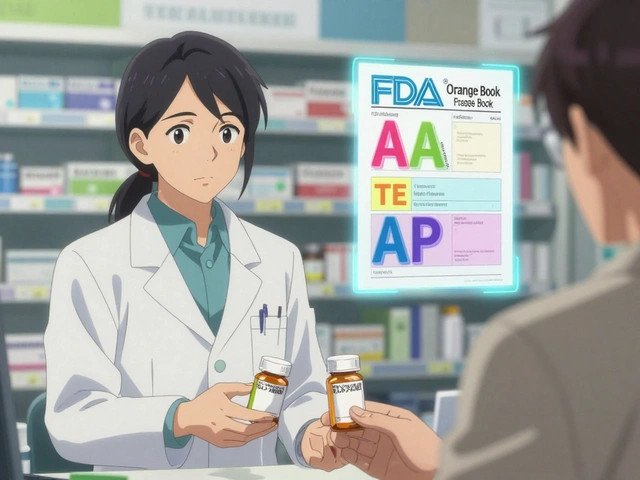
Yes. The FDA requires all generic drugs to have the same active ingredient, strength, dosage form, and route of administration as the brand-name drug. They must also meet the same strict manufacturing standards. The only differences are in inactive ingredients, which rarely affect how the drug works. Any variation in how you feel is more likely due to individual biology than drug quality.
How does the Inflation Reduction Act affect generic drug coverage?
The Inflation Reduction Act caps out-of-pocket drug costs at $2,000 per year for Medicare Part D enrollees starting in 2025. This means insurers can’t just push patients toward the cheapest generic - they have to manage total drug spending more carefully. As a result, they’re likely to favor high-volume generics that offer the biggest savings across large populations, rather than niche or expensive ones.
What Comes Next?
The system isn’t perfect. Some patients still face delays, confusion, or unexpected side effects. But the trend is clear: generics are the backbone of affordable care. As more complex drugs go generic - like insulin and inhalers - insurers will need to adapt. The key for patients is staying informed, asking questions, and knowing your rights to appeal.When you understand how insurers choose what to cover, you’re not just a passive recipient of care - you’re a participant in your own health journey.
Write a comment
Items marked with * are required.

15 Comments
Jake Moore January 19, 2026 AT 10:01
Just wanted to add that a lot of people don’t realize insurers often negotiate rebates with generic manufacturers behind the scenes. The price you see at the pharmacy isn’t always the real cost - the insurer gets money back after the fact. That’s why some cheaper generics still get skipped: the rebate on the slightly more expensive one is bigger. It’s not about what’s best for you, it’s about what’s best for their bottom line.
Joni O January 19, 2026 AT 11:43
my doc switched me to a generic for blood pressure last year and i had a weird headache for two weeks. told them, they said 'it's the same chemically' but i swear it felt different. finally got the other one covered after a month of fighting. don't let them gaslight you. you know your body.
Kristin Dailey January 21, 2026 AT 04:38
Stop complaining. Generics save lives and money. If you can't afford brand name, be grateful.
Robert Davis January 21, 2026 AT 21:12
Interesting how they gloss over the fact that most P&T committees are influenced by pharma reps who slip in 'educational grants' to members. You think they're making unbiased decisions? Nah. The same companies that make brand-name drugs own the generic divisions too. It’s all a game. The FDA approves, but the insurers? They're playing 4D chess with your prescriptions.
Ryan Otto January 22, 2026 AT 02:54
Let us not forget the systemic corruption. The 2023 FDA drug shortage report was quietly buried under press releases about 'affordable care.' The real reason generics are withheld? They're being stockpiled by private equity firms to drive up prices later. This isn't healthcare policy - it's financial engineering disguised as medicine.
Tyler Myers January 23, 2026 AT 11:27
They say 'all generics are equal' but tell that to the guy who switched from one generic Adderall to another and ended up in the ER. The inactive ingredients? They matter. The FDA doesn't test for how you feel after taking it - just if the pill dissolves in water. That's not science. That's a box-checking exercise.
kenneth pillet January 24, 2026 AT 03:02
My pharmacist swaps generics all the time. Last month it was metformin, this month it's lisinopril. I don't complain unless I feel off. Most times it's fine. Just ask if they switched it. They'll tell you. No drama.
Zoe Brooks January 25, 2026 AT 17:57
It’s wild how much power we give to these committees without even knowing they exist. We just show up at the pharmacy like it’s a vending machine. But if we started asking more questions - like, 'why this one and not that one?' - maybe they’d have to be more transparent. Knowledge is power, even in pill form 💭
Praseetha Pn January 26, 2026 AT 20:50
They don't want you to know this but the same generic you get in the US is made in the same factory as the one in India - but the US version costs 10x more because of 'distribution fees' and 'insurance markups.' Big Pharma owns the supply chain, the insurers, and even the P&T committees. You're not getting a deal - you're getting a rigged game with a pretty label.
Aysha Siera January 27, 2026 AT 01:05
2026 is coming and they’re already hiding the truth. AI generics? That’s just the first step. Soon they’ll be tracking your DNA through your prescriptions. They’ll say it’s for 'personalized medicine' - but really they’re building a database to deny you coverage if your genes 'don’t fit the profile.' Wake up.
Wendy Claughton January 28, 2026 AT 03:17
I just want to say thank you to everyone who fights the system - the doctors who file exceptions, the pharmacists who quietly help, the patients who speak up. It’s exhausting, but you’re changing things. One formulary at a time. ❤️
Jay Clarke January 30, 2026 AT 03:05
People act like this is about 'cost control' - but it's really about control. Period. They don't want you to have options. They want you to take what they give you, quietly, and never question why. The moment you start asking, you become a problem. And problems get labeled 'non-compliant.' That's not medicine. That's authoritarianism with a stethoscope.
rachel bellet January 31, 2026 AT 15:05
The data is clear: therapeutic substitution leads to increased non-adherence rates by 18-22% according to JAMA 2022. When patients are switched without clinical justification, they discontinue therapy. The cost savings are illusory - the downstream costs from hospitalizations and ER visits far exceed the $5 difference on the copay. This is not fiscal responsibility - it’s clinical negligence masked as efficiency.
Pat Dean January 31, 2026 AT 20:45
Why do you think they let you file exceptions? So you think you have a voice. But 78% get approved only after they’ve already worn you down. It’s a trap. They want you to burn out. Then you stop fighting. And then they can keep doing whatever they want. Don’t fall for the illusion of agency.
Eric Gebeke February 1, 2026 AT 00:16
My cousin’s daughter was on a generic for seizures. Switched to another one because 'it was cheaper.' Had a seizure in class. Now she’s on a brand-name, out-of-pocket, $1,200/month. Insurance won’t cover it unless she tries three cheaper ones first. That’s not healthcare. That’s cruelty dressed up as policy. Someone needs to be held accountable.