
Health August 10, 2026
How to Use a Medication Log to Prevent Overdose Errors: A Practical Guide
Imagine you are taking three different medications for chronic pain, anxiety, and sleep. You know the names of the pills, but do you remember exactly when you took your last dose? For many people managing complex medication regimens or recovering from substance use, memory lapses can be dangerous. The gap between prescribed dosage and actual intake is where overdose errors often happen. A simple, consistent medication log bridges that gap, turning guesswork into data.
This isn't just about keeping a diary; it's about creating a safety net. Whether you are dealing with opioids, benzodiazepines, or a mix of prescription and over-the-counter drugs, tracking what goes into your body is one of the most effective ways to prevent accidental overdose. Let’s look at how to set up a system that works for you, based on principles used by health professionals and harm reduction experts.
Why Tracking Matters More Than You Think
We often trust our memory more than we should. When you are in pain, stressed, or tired, your cognitive load increases, making it harder to recall details like "Did I take that pill an hour ago or two hours ago?" This uncertainty leads to double-dosing or skipping doses, both of which disrupt stability.
Professional systems like Prescription Drug Monitoring Programs (PDMPs) track prescriptions at a state level to prevent doctors from accidentally prescribing conflicting drugs. But PDMPs only show what was *prescribed*, not what was *taken*. A personal medication log fills this critical void. It provides real-time data on your actual consumption, allowing you to see patterns that might otherwise go unnoticed.
Consider the concept of "start low and go slow," a core principle in opioid therapy. To follow this safely, you need to document your baseline response. Without a log, you might increase your dose because you feel no effect, not realizing you simply took it too recently. The log shows the truth: the medication is still working, you just need to wait.
What to Include in Your Medication Log
A useful log is specific. Vague entries like "took meds" don't help prevent errors. You need concrete data points that allow you (and potentially your doctor or a support person) to assess risk accurately. Here are the essential elements every entry should contain:
- Date and Time: Be precise. Note the exact time you ingest the medication. This helps calculate the interval between doses.
- Medication Name: Write the full name, including brand if applicable. Abbreviations can lead to confusion later.
- Dosage Amount: Record the milligrams (mg) or units taken. If you split a pill, note that clearly (e.g., "1/2 tablet").
- Method of Administration: Did you swallow, crush, inject, or smoke? Different methods affect absorption rates and overdose risk significantly.
- Co-Substances: Did you drink alcohol? Take antihistamines? Use cannabis? Combining depressants like opioids and benzodiazepines drastically increases overdose risk. Logging these interactions highlights dangerous combinations.
- Effects and Side Effects: Note how you felt 30 minutes, 1 hour, and 4 hours after taking the dose. Were you sedated? Dizzy? Pain-free? This helps determine if the dose was appropriate.
Paper vs. Digital: Choosing Your Format
You don’t need expensive software to start. The best log is the one you will actually use consistently. Both paper and digital options have distinct advantages depending on your lifestyle and needs.
| Feature | Paper Log (Notebook) | Digital App |
|---|---|---|
| Accessibility | Always available, no battery needed | Requires charged device and internet (for some apps) |
| Reminders | None (unless paired with alarms) | Push notifications and alerts |
| Data Analysis | Manual review required | Automatic charts and history export |
| Privacy | Physical possession required to view | Password protected, but cloud storage risks exist |
| Cost | Low (notebook and pen) | Free to Premium subscriptions |
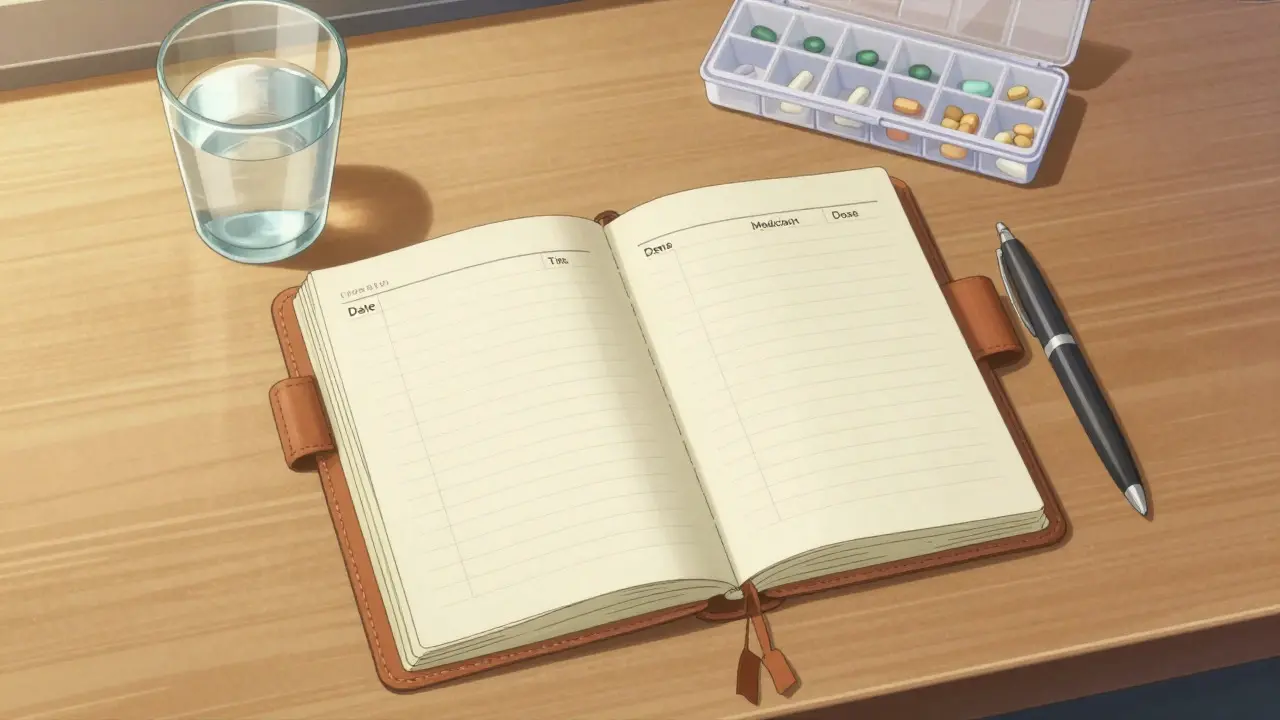
If you prefer simplicity, a small notebook kept near your medication cabinet works well. Create columns for Date, Time, Med, Dose, and Notes. If you struggle with forgetfulness, a digital app with alarm features might be safer. Some apps even allow you to share your log with a trusted contact, adding a layer of community safety.
Implementing the "Start Low and Go Slow" Strategy
The Substance Abuse and Mental Health Services Administration (SAMHSA) emphasizes starting with the lowest possible dose and increasing gradually. A medication log is the tool that makes this strategy actionable. Here is how to apply it:
- Establish a Baseline: Start with the minimum recommended dose. Log this first entry meticulously.
- Wait and Observe: Do not add more medication until the full duration of action has passed. Use your log to check the timestamp of your last dose.
- Record the Response: After the expected peak effect time, note your pain level or symptom relief on a scale of 1-10.
- Decide on Adjustment: Only consider increasing the dose if the previous entry shows insufficient relief and adequate time has passed. Never increase based on guesswork.
This method prevents the common error of "stacking" doses-taking additional medication before the previous dose has worn off. Stacking is a leading cause of accidental respiratory depression in opioid users.
Integrating Harm Reduction Practices
For those using substances outside of strict medical supervision, or managing complex polypharmacy, harm reduction principles are vital. Your log can serve as a hub for these practices.
If you are using test strips to check for fentanyl or xylazine, record the result in your log next to the substance entry. Knowing that a batch contains a potent synthetic opioid changes how you should approach dosing. You might choose to split the dose in half and log that adjustment. This creates a historical record of how different batches affected you, helping you make safer choices in the future.
Additionally, consider the "never use alone" principle. If you live with someone or have a trusted friend, share your log periodically. They can spot trends you might miss, such as gradually increasing doses over weeks without realizing it. This external perspective is crucial for maintaining long-term safety.

Troubleshooting Common Challenges
Starting a new habit is hard. You might forget to log a dose, or feel that writing it down takes too much effort. Here are strategies to overcome these hurdles:
- Pair the Habit: Always log immediately after taking the medication. Keep the pen and notebook open right next to your pills. If you use an app, keep it on your home screen.
- Simplify the Entry: If writing full sentences feels tedious, use codes. "Oxy 5mg @ 8pm - OK" is faster and still effective.
- Weekly Review: Set aside 10 minutes each Sunday to review your week. Look for patterns. Are you taking more medication on weekends? Are certain days harder to manage? This reflection turns raw data into insight.
Remember, the goal isn't perfection; it's awareness. Even logging 80% of your doses provides significantly more safety than logging none.
When to Seek Professional Help
Your medication log is a powerful tool, but it is not a substitute for professional medical advice. Bring your log to your doctor's appointments. It provides objective data that helps clinicians adjust prescriptions safely. If your log shows you are consistently needing higher doses to achieve the same effect, or if you notice increased side effects, discuss this with your healthcare provider immediately. They may need to adjust your treatment plan or refer you to specialized support services.
How often should I update my medication log?
Update your log immediately after every dose. Delaying entries increases the risk of forgetting details or misremembering times, which defeats the purpose of preventing overdose errors.
Can a medication log help with non-opioid medications?
Yes. While often associated with opioids, logs are crucial for any medication with narrow therapeutic windows or significant side effects, such as blood thinners, insulin, or sedatives. Tracking helps prevent interactions and ensures consistent dosing.
Is there a free app recommended for medication tracking?
Many free apps exist, such as Medisafe or MyTherapy. Look for ones that offer reminder features and easy history viewing. However, ensure the app respects your privacy and does not require excessive permissions.
What if I missed a dose? Should I log it?
Yes, log the missed dose and note why it happened. This information is valuable for understanding your routine barriers. Do not double up on the next dose unless instructed by your doctor; instead, wait for the next scheduled time.
How does a personal log differ from a Prescription Drug Monitoring Program (PDMP)?
A PDMP tracks prescriptions filled at pharmacies, providing a view of what was prescribed. A personal log tracks actual consumption, including timing, method, and co-substances, offering real-time data on your body's exposure that PDMPs cannot provide.