
Health January 16, 2026
Antibiotic-Related Liver Injury: Understanding Hepatitis and Cholestasis Risks
Liver Injury Risk Calculator
Liver Injury Type Calculator
Enter your ALT and ALP levels to determine if you may have hepatitis, cholestasis, or mixed liver injury. This tool uses the R-ratio (ALT/ALP) to identify the type of liver injury.
Results will appear here after calculation.
When you take an antibiotic, you expect it to fight infection-not hurt your liver. But for some people, even common antibiotics like amoxicillin-clavulanate or ciprofloxacin can trigger serious liver damage. This isn’t rare. In fact, antibiotics cause 64% of all drug-induced liver injury cases in intensive care units. That’s more than any other class of medication. And while many people never notice anything wrong, others develop hepatitis or cholestasis without warning-sometimes after just a week of treatment.
How Antibiotics Hurt the Liver
Antibiotics don’t attack the liver on purpose. The damage happens because of how these drugs are processed. When your liver breaks down antibiotics, it sometimes creates toxic byproducts. These can overload liver cells, damage mitochondria (the energy factories inside cells), or trigger inflammation. In some cases, your immune system even mistakes liver tissue for a threat and starts attacking it. There are two main ways this damage shows up: as hepatitis or cholestasis. Hepatitis means the liver cells themselves are inflamed and dying. That shows up in blood tests as a big spike in ALT (alanine aminotransferase)-usually more than five times the normal level. Cholestasis is different. Here, bile can’t flow properly out of the liver. That leads to a rise in ALP (alkaline phosphatase) and bilirubin, which can make your skin or eyes turn yellow. Sometimes both happen at once-called mixed injury. The R-ratio helps doctors tell the difference. It’s calculated by dividing the ALT level (adjusted for normal range) by the ALP level. If the number is above 5, it’s mostly hepatitis. Below 2, it’s cholestasis. Between 2 and 5? Mixed. This isn’t just academic-it changes how doctors respond.Which Antibiotics Are Most Dangerous?
Not all antibiotics carry the same risk. Some are far more likely to cause liver injury than others. Amoxicillin-clavulanate (Augmentin) is the biggest culprit. About 15 to 20 people out of every 100,000 who take it will develop liver injury. It mostly causes cholestasis-up to 80% of cases. Symptoms often show up 1 to 6 weeks after starting the drug. You might feel tired, lose your appetite, or notice your urine turning dark. Sometimes there are no symptoms at all until a routine blood test reveals the problem. Fluoroquinolones like ciprofloxacin and azithromycin are less likely to cause injury, but when they do, it’s often mixed-type. They can trigger liver damage within just 1 to 2 weeks. That’s faster than most other antibiotics. In hospitals, piperacillin-tazobactam (TZP) is a major concern. One study found that nearly 29% of ICU patients on TZP for more than 7 days developed liver injury. Compare that to meropenem, another common ICU antibiotic, where only about 12% had similar issues. And here’s something surprising: men are more than twice as likely as women to get liver damage from meropenem. Even rifampin-used for tuberculosis-can be risky. It builds up toxic intermediates in the liver, especially at high doses. And when it’s combined with isoniazid, the risk spikes even higher. That’s why doctors monitor liver enzymes closely in TB patients.Who’s at Highest Risk?
It’s not just about the drug. Your body matters too. If you’re in the ICU with sepsis, your risk of antibiotic-related liver injury jumps by 80%. That’s because your liver is already under stress from infection, low blood pressure, or inflammation. Adding antibiotics on top? That’s a dangerous combo. Age plays a role. Older adults process drugs slower, so toxins stick around longer. People with existing liver disease-like fatty liver or hepatitis B-are also more vulnerable. Genetics might be the biggest hidden factor. New research shows certain HLA gene variants make some people far more likely to develop idiosyncratic (unpredictable) liver injury from antibiotics. It’s not about dose or duration-it’s about your DNA. That’s why two people taking the same antibiotic, for the same length of time, can have totally different outcomes. And your gut bacteria? They’re part of the story too. Antibiotics wipe out good microbes, letting harmful ones take over. This imbalance breaks down the gut barrier, letting toxins leak into the bloodstream and reach the liver. One study found people with low levels of Faecalibacterium prausnitzii-a key beneficial gut bacterium-had more than a 3.5 times higher risk of liver injury after antibiotics.
What Do the Numbers Tell You?
Blood tests are your early warning system. Here’s what doctors look for:- Hepatocellular injury: ALT > 5× ULN (upper limit of normal)
- Cholestatic injury: ALP > 2× ULN, with symptoms like jaundice or itching
- Mixed injury: ALT > 3× ULN AND total bilirubin > 2× ULN
What Happens After Stopping the Drug?
Good news: in most cases, the liver heals itself once the antibiotic is stopped. Recovery can take weeks to months, but full recovery is common-especially if caught early. In severe cases, though, things get serious. About 1 in 5 patients with antibiotic-induced liver injury develop acute liver failure. That’s rare, but it happens. The mortality rate for those cases is around 10%. That’s why early detection saves lives. There’s no specific antidote. No pill you can take to reverse the damage. Treatment is supportive: rest, fluids, monitoring. In extreme cases, a liver transplant may be needed.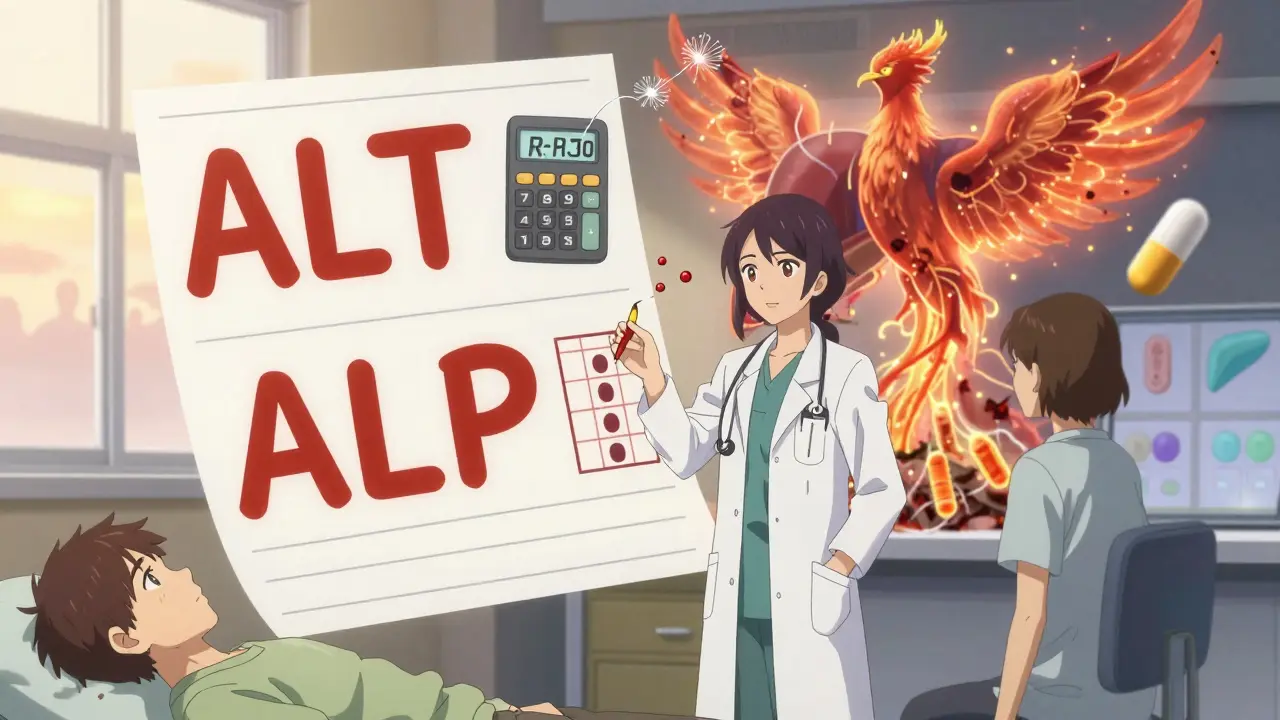
How to Protect Yourself
You can’t always avoid antibiotics-they’re life-saving. But you can reduce your risk:- Ask if the antibiotic is truly necessary. Many infections (like colds or sinusitis) are viral and don’t need antibiotics at all.
- If you’re prescribed a high-risk drug like amoxicillin-clavulanate, ask about baseline liver testing.
- Don’t ignore subtle symptoms: fatigue, nausea, dark urine, pale stools, or yellowing skin. These aren’t normal side effects.
- If you’re in the hospital on multiple antibiotics, ask if your liver enzymes are being checked weekly.
- Keep a list of all medications you’ve taken recently-especially antibiotics. That helps doctors spot patterns.
What’s Next?
Researchers are working on better ways to predict who’s at risk. Clinical trials are testing whether probiotics can protect the gut and liver during antibiotic treatment. Early results look promising. In the future, genetic testing might become routine. If you carry certain HLA markers, your doctor could avoid high-risk antibiotics altogether. That could cut liver injury rates by 30-40% in the next five to seven years. For now, awareness is your best defense. Antibiotics save lives-but they’re not harmless. Understanding the signs of liver injury means you can speak up, ask questions, and catch problems before they become serious.Can antibiotics cause jaundice?
Yes. Jaundice-yellowing of the skin or eyes-is a classic sign of cholestatic liver injury caused by antibiotics. It happens when bile flow is blocked, causing bilirubin to build up in the blood. This is most common with drugs like amoxicillin-clavulanate, cotrimoxazole, or erythromycin. Jaundice usually appears after several weeks of use, but can show up sooner in sensitive individuals.
How long does it take for the liver to recover after stopping an antibiotic?
Most people see improvement within 2 to 8 weeks after stopping the antibiotic. Liver enzymes often drop by half within the first two weeks. Full recovery can take up to 6 months, especially if the injury was severe. In rare cases, permanent damage can occur, but this is uncommon if the drug is stopped early.
Are over-the-counter antibiotics linked to liver injury?
In most countries, true antibiotics require a prescription. But some people misuse veterinary antibiotics or buy them online without oversight. These unregulated products carry the same risks-and often higher ones, because dosing is unknown and quality isn’t guaranteed. Any antibiotic, even if sold without a prescription, can cause liver injury if taken improperly.
Can I take another antibiotic if one caused liver injury?
It depends. You should avoid the specific antibiotic that caused the injury-and possibly others in the same class. For example, if amoxicillin-clavulanate caused liver damage, you should avoid other penicillin combinations. Your doctor may choose an antibiotic from a different group, like a macrolide or tetracycline, but only after evaluating your risk and liver function. Never self-prescribe after a reaction.
Is liver damage from antibiotics permanent?
In the vast majority of cases, no. The liver is one of the few organs that can regenerate. Once the triggering antibiotic is stopped, healing usually begins. Permanent damage is rare and typically only occurs if the injury was severe, went unnoticed for weeks, or led to acute liver failure. Early detection is key to full recovery.
Do herbal supplements increase the risk of antibiotic-related liver injury?
Yes. Some supplements like green tea extract, kava, black cohosh, and high-dose niacin can stress the liver on their own. When combined with antibiotics, especially those already known to be hepatotoxic, the risk multiplies. Always tell your doctor about any supplements you’re taking-many people don’t realize they’re medications too.
Write a comment
Items marked with * are required.




15 Comments
Kristin Dailey January 16, 2026 AT 18:49
Antibiotics are just another government tool to keep us sick. Pharma owns the FDA. They don't care if your liver dies as long as the profits keep flowing.
Andrew Qu January 17, 2026 AT 20:51
This is actually one of the clearest explainers I've seen on antibiotic liver toxicity. The R-ratio breakdown alone is worth saving. If you're on Augmentin longer than 10 days, get baseline and weekly LFTs. Period.
kenneth pillet January 18, 2026 AT 14:03
I had a friend get jaundice from cipro. No symptoms till her eyes turned yellow. Doc said it was probably the antibiotic. She was fine after stopping it. Just got lucky.
Pat Dean January 19, 2026 AT 09:21
Of course the liver gets hurt. People are just too lazy to use natural remedies. Garlic. Oregano oil. Honey. Everything you need is in nature. Pharma doesn't want you to know that.
Emma ######### January 19, 2026 AT 16:02
I really appreciate how this post breaks down the difference between hepatitis and cholestasis. I didn't realize how much the R-ratio matters. My uncle had a mixed injury from TZP in the ICU and they didn't catch it until his bilirubin was through the roof. He's okay now but it was terrifying.
Danny Gray January 21, 2026 AT 14:12
So we're supposed to trust doctors who prescribe antibiotics like candy? Meanwhile, the same system that tells us to take these drugs also says 'your liver is fine' until it's not. The real question isn't which antibiotic-it's why we're even being pushed into this cycle in the first place.
Naomi Keyes January 22, 2026 AT 13:16
According to the American College of Gastroenterology Guidelines (2023), hepatotoxicity from antimicrobials is classified as 'idiosyncratic' when occurring at therapeutic doses, with a latency period typically ranging from 5 to 60 days. Moreover, the R-value, defined as (ALT/ULN)/(ALP/ULN), must be interpreted in context of clinical symptoms, not in isolation.
Zoe Brooks January 23, 2026 AT 22:53
This is wild. I had no idea gut bacteria played a role. I started taking probiotics after every antibiotic last year. My liver tests have never been better. 🙌
Stacey Marsengill January 25, 2026 AT 02:55
They don't tell you this because if you knew how many people's livers are being slowly murdered by prescriptions, you'd riot. And then they'd have to stop selling these toxic pills. So they bury it in fine print and call it 'rare.'
Aysha Siera January 26, 2026 AT 11:45
Big Pharma and the CDC are working together to poison us. The antibiotics are laced with glyphosate. The liver injury? It's not the drug-it's the chemtrail residue they've been spraying since 2017. Your DNA is being rewritten. Wake up.
rachel bellet January 26, 2026 AT 13:32
The data here is statistically significant but lacks proper multivariate adjustment for confounders like BMI, alcohol use, and concomitant statin therapy. Without controlling for these, the attribution to antibiotics is premature.
Selina Warren January 26, 2026 AT 16:39
If you're reading this and you're on antibiotics right now-stop scrolling and call your doctor. Ask about liver enzymes. Don't wait for yellow eyes. You're not being paranoid. You're being smart.
Robert Davis January 28, 2026 AT 14:57
I've been saying this for years. Antibiotics are a crutch. We've turned into a nation of germaphobes who can't handle a sniffle without a pill. Now our livers are paying the price. And nobody wants to talk about it.
Eric Gebeke January 29, 2026 AT 13:13
You think this is bad? Wait till you find out how many people get liver damage from OTC painkillers. Tylenol is a silent killer. But hey, at least you can buy it without a prescription. So it's safe, right? 😏
Robert Cassidy January 29, 2026 AT 19:52
The real tragedy isn't the liver damage. It's that we've accepted this as normal. We let corporations dictate our health. We let doctors prescribe without warning. We let the system normalize toxicity. And then we wonder why we're all so sick. The answer isn't in the R-ratio. It's in the moral collapse of modern medicine.