Health May 1, 2026
Anticoagulant and Herbal Supplement Interactions: Safety Overview
Anticoagulant Supplement Interaction Checker
Disclaimer: This tool is for educational purposes only and does not replace professional medical advice. Always consult your physician before changing your supplement regimen.
Imagine you’ve been taking blood thinners, also known as anticoagulants that prevent dangerous blood clots, for years. Your levels are stable. You feel fine. Then, you decide to try a "natural" supplement for joint pain or better sleep. Within days, your body reacts-not with relief, but with unexplained bruising, nosebleeds, or worse. This isn’t a rare horror story; it is a daily reality for thousands of patients who assume that "natural" automatically means "safe."
The truth is stark. Herbal supplement interactions with prescription anticoagulants represent one of the most under-recognized causes of preventable harm in modern medicine. As of late 2025, these interactions account for an estimated 30,000 to 50,000 emergency department visits annually in the United States alone. The problem is not just about avoiding specific herbs; it is about understanding how your body processes medication when you introduce other compounds into the mix. Whether you are on older medications like warfarin or newer direct oral anticoagulants (DOACs), your choices in the supplement aisle can have life-altering consequences.
Why Natural Does Not Mean Harmless
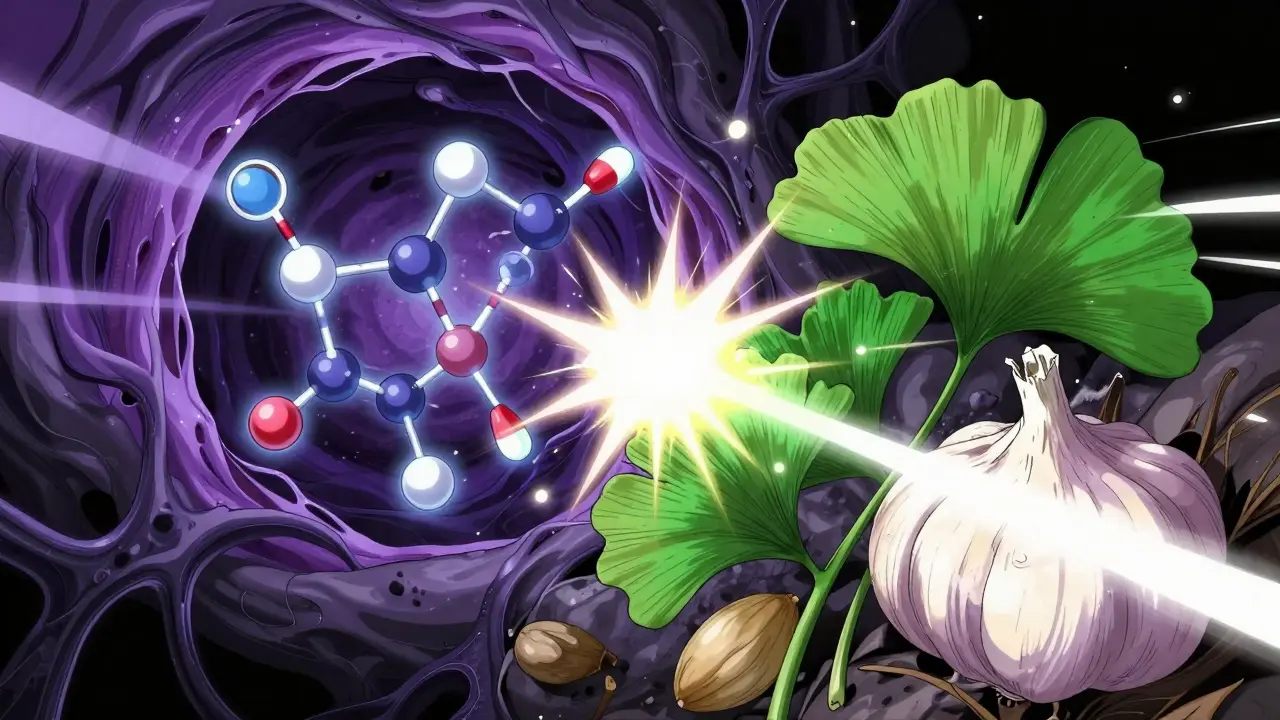
We often fall into the trap of thinking that because something grows in the ground, it cannot interfere with synthetic drugs. This is a dangerous misconception. Herbs contain active chemical compounds that are just as potent as pharmaceutical ingredients. In fact, many modern drugs were originally derived from plants. When you take an herb alongside a blood thinner, you are not just adding a benign substance; you are introducing a variable that can amplify or cancel out your medication’s effect.
The core issue lies in two main mechanisms: pharmacokinetic and pharmacodynamic interactions. Pharmacokinetic interactions occur when an herb changes how your body absorbs, metabolizes, or eliminates the drug. For example, if an herb blocks the liver enzymes responsible for breaking down warfarin, the drug builds up in your bloodstream, raising your risk of bleeding. Conversely, if an herb speeds up metabolism, the drug clears too quickly, leaving you vulnerable to clotting. Pharmacodynamic interactions happen when the herb directly affects blood clotting pathways itself, working in tandem with the drug to produce a compounded effect. According to a 2022 meta-analysis in the British Journal of Clinical Pharmacology, pharmacokinetic issues account for 42% of documented cases, while pharmacodynamic effects make up the remaining 58%. Both paths lead to the same destination: instability in your International Normalized Ratio (INR) or drug levels.
The High-Risk Herbs You Need to Know
Not all supplements carry the same level of danger, but several common ones stand out as particularly risky. The FDA’s 2024 analysis of over 14,000 adverse event reports identified a "top ten" list of herbs that account for 68% of severe interaction events. Knowing these names is your first line of defense.
| Herb / Supplement | Primary Risk Mechanism | Potential Consequence |
|---|---|---|
| Ginkgo biloba | Inhibits platelet-activating factor | Increased bleeding risk, especially with warfarin |
| Garlic | Antiplatelet effects | Prolonged bleeding time, bruising |
| Ginger | Antiplatelet activity | Mild to moderate bleeding risk at high doses |
| Ginseng | Variable enzyme modulation | Can either increase or decrease INR unpredictably |
| St. John's Wort | CYP3A4 enzyme induction | Reduces effectiveness of DOACs like apixaban |
| Chamomile | Vitamin K content | May reduce warfarin effectiveness |
| Cranberry | Enzyme inhibition | Elevated INR levels |
| Green Tea Extract | Vitamin K and caffeine | Unpredictable INR fluctuations |
| Danshen (Salvia miltiorrhiza) | Direct anticoagulant properties | Massive INR spikes (300-400% increases reported) |
| Dong Quai | Blood circulation stimulation | Enhanced bleeding risk |
Among these, Danshen deserves special attention. Documented case reports across five countries between 2018 and 2023 show that concurrent use with warfarin can increase INR by 300% to 400% within just 72 hours. That is not a minor fluctuation; it is a medical emergency waiting to happen. Similarly, St. John's Wort poses a unique threat to users of newer anticoagulants like apixaban. By inducing the CYP3A4 enzyme, it can reduce apixaban levels by 50% in three days, effectively rendering the medication useless and exposing you to stroke risk.
Warfarin vs. Newer Blood Thinners: Different Risks
Your risk profile depends heavily on which type of anticoagulant you are taking. Warfarin, a vitamin K antagonist, has a narrow therapeutic index. This means the difference between a therapeutic dose and a toxic dose is small. It is metabolized primarily by CYP2C9 and CYP3A4 enzymes in the liver. Because so many herbs interact with these specific enzymes, warfarin users face the highest burden of potential interactions. A 2020 systematic review found that 57.7% of 78 documented herbs potentiate warfarin’s effects through enzyme inhibition.
Newer agents, such as apixaban, rivaroxaban, and dabigatran, generally have fewer food and drug interactions. They do not require routine INR monitoring, which makes them more convenient. However, "fewer" does not mean "none." St. John's Wort remains a significant hazard for DOAC users due to its strong enzyme-inducing properties. Additionally, supplements like CBD oil have emerged as a new concern. A 2024 randomized trial published in JAMA Internal Medicine found that CBD oil caused a 2.8-fold increase in INR in 68% of warfarin users, highlighting that even trendy wellness products carry substantial risks.
The Silent Epidemic: Non-Disclosure and Gaps in Care
Perhaps the most alarming statistic is not about the herbs themselves, but about communication. A 2024 Medscape survey revealed that 69.3% of patients on anticoagulants used herbal supplements without informing their physicians. Why? Because 42.7% believed that "natural means safe." But there is another side to this coin: healthcare providers often fail to ask specifically. The same study noted that while 89% of doctors routinely inquire about prescription drugs, only 37% explicitly ask about herbal supplements. Documentation rates in medical records for supplement use sit at a dismal 27%.
This gap in communication creates a perfect storm. Patients assume their doctors know everything they take. Doctors assume patients will mention anything non-prescription. Meanwhile, regulatory frameworks like the Dietary Supplement Health and Education Act of 1994 allow supplements to hit the market without pre-market safety testing. Consequently, 34.7% of herbal products contain unlisted ingredients, according to a 2023 FDA report. You might be buying "pure ginger," but you could be ingesting undisclosed compounds that interact with your blood thinner.
Practical Steps for Safer Management
Navigating this landscape requires proactive steps from both patients and providers. If you are on blood thinners, treat your supplement regimen with the same seriousness as your prescription meds. Here is how to stay safe:
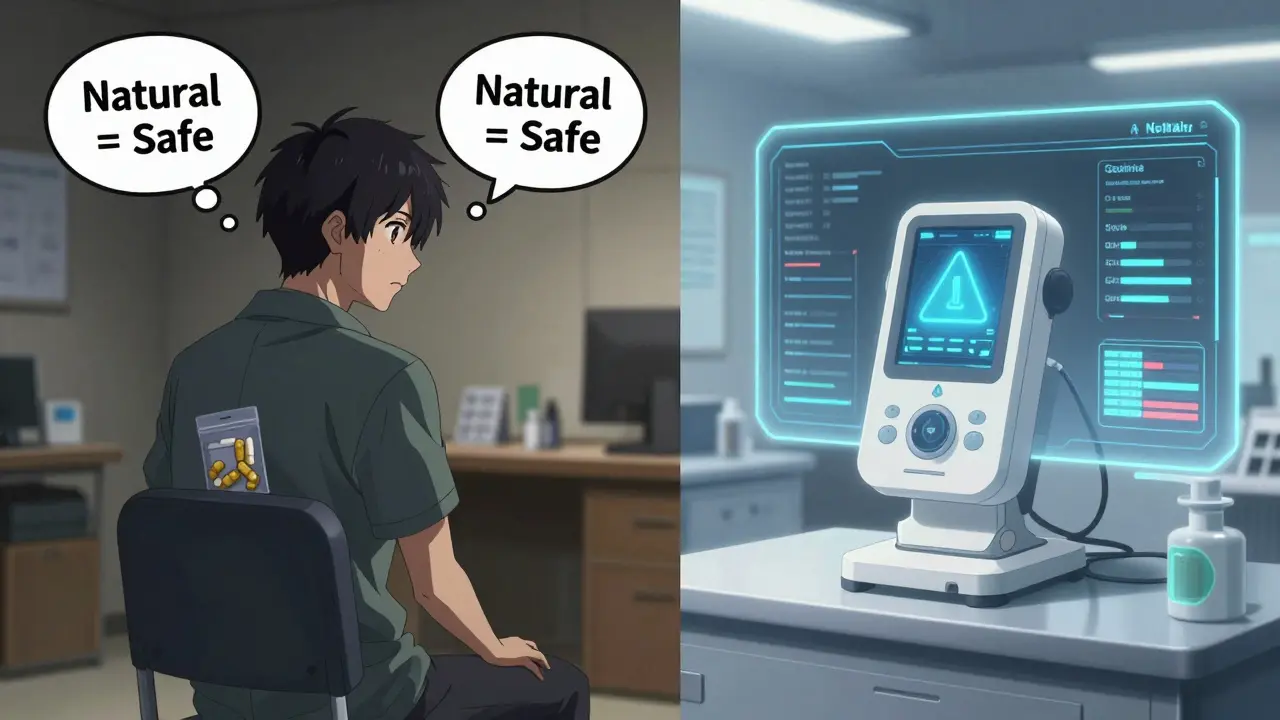
- Discard the "Natural = Safe" Myth: Recognize that herbs are biologically active substances. Before starting any new supplement, check its interaction profile.
- Use Reliable Resources: Don’t rely on anecdotal advice from friends or generic internet searches. Use databases like the Natural Medicines Database, which rates interaction severity on a 1-7 scale. Level 7 indicates life-threatening interactions requiring immediate discontinuation.
- Be Transparent with Your Doctor: Bring every bottle, bag, and jar to your appointments. Include vitamins, minerals, teas, and essential oils. If your doctor doesn’t ask, volunteer the information. Say, "I am taking [X] supplement; does this interact with my blood thinner?"
- Monitor More Frequently: If you must use a supplement with a known interaction risk, work with your pharmacist to establish a tighter monitoring schedule. For warfarin users, this might mean checking INR weekly instead of monthly during the initial period.
- Consider Pharmacogenomic Testing: Emerging technology offers personalized insights. The International Warfarin Pharmacogenetics Consortium reported in 2024 that genotyping for CYP2C9 and VKORC1 variants reduces major bleeding events by 31% in patients using herbal supplements. Ask your provider if this testing is appropriate for you.
For healthcare providers, the call to action is equally clear. The American Heart Association issued a Class I Recommendation in 2022 stating that all patients prescribed anticoagulants must undergo structured screening for herbal supplement use at each clinical encounter. Tools like the 5-step screening protocol implemented at UCSF Medical Center have proven effective, reducing undocumented supplement use from 73% to 28% within 18 months. It takes only about seven minutes per patient encounter-a small investment for potentially life-saving outcomes.
Looking Ahead: Technology and Regulation
The landscape is shifting. In 2025, the FDA mandated that all anticoagulant prescriptions include a standardized herbal interaction checklist. This simple administrative change aims to bridge the communication gap. On the technological front, AI-powered tools like MedCheck AI, approved by the European Medicines Agency in 2024, demonstrated 92.4% accuracy in predicting significant interactions in validation studies. These tools promise to help clinicians catch dangerous combinations before they cause harm.
However, vigilance remains key. The global herbal supplement market grew to $128.9 billion in 2024, with usage rising by 12.3% annually in Western countries. Without improved screening protocols, the American Heart Association projects that anticoagulant-herbal interactions will account for 14.3% of all major bleeding events in cardiovascular patients by 2030. The window for action is now. By understanding the risks, communicating openly, and leveraging available resources, you can protect yourself from preventable harm.
Is it safe to take garlic supplements while on blood thinners?
Garlic supplements pose a significant risk because they have antiplatelet effects that can compound the action of blood thinners, leading to increased bleeding times and bruising. While culinary amounts of garlic are generally considered safe, concentrated supplements should be avoided or used only under strict medical supervision with close monitoring of coagulation parameters.
Do newer blood thinners like Eliquis have fewer interactions than warfarin?
Yes, direct oral anticoagulants (DOACs) like apixaban (Eliquis) and rivaroxaban (Xarelto) generally have fewer dietary and drug interactions compared to warfarin. However, they are not immune to interactions. Strong enzyme inducers like St. John's Wort can significantly reduce their effectiveness, increasing the risk of clotting. Always consult your doctor before starting any new supplement.
How quickly can an herbal supplement affect my INR levels?
Effects can occur rapidly. For example, Danshen has been documented to increase INR by 300-400% within 72 hours of concurrent use with warfarin. Other herbs may take longer to build up in the system, but changes can still manifest within a few days to weeks. Frequent monitoring is essential when starting or stopping any herbal product.
Why don't doctors always ask about herbal supplements?
Studies show that while most doctors ask about prescription drugs, fewer explicitly inquire about herbal supplements, partly due to time constraints and the assumption that patients will disclose them. Additionally, documentation rates for supplement use in medical records are low. Patients must proactively share this information to ensure safe care.
What should I do if I suspect a supplement is interacting with my blood thinner?
If you experience unusual bruising, bleeding gums, nosebleeds, or dark stools, stop the supplement immediately and contact your healthcare provider. Do not wait for your next scheduled appointment. Seek emergency care if bleeding is severe or uncontrollable. Your doctor may need to adjust your medication dosage or order urgent lab tests.