Health August 31, 2026
Drug Interactions Discovered Post-Market: Why Safety Isn't Finished at Approval
You take a new medication because your doctor said it was tested and safe. The FDA approved it. The trials were rigorous. But what if the real trouble starts after you leave the pharmacy? It’s a scary thought, but here is the reality: post-market surveillance catches dangers that clinical trials simply miss. In fact, nearly one-third of all new drugs get a major safety warning or are pulled from shelves years after approval. This isn’t just bureaucratic red tape; it’s a critical safety net for millions of people.
Why does this happen? Because clinical trials are controlled bubbles. They involve small groups of healthy-ish people for short periods. Real life is messy. You might be elderly, have three other conditions, and take five other pills. That complexity creates chemical collisions-drug interactions-that no lab could predict in advance. Let’s look at why these hidden risks exist, how they are found, and what it actually means for your health.
The Blind Spot in Clinical Trials
Think of a clinical trial like a test drive on a closed track. The drivers are professional (healthy volunteers), the weather is perfect (controlled environment), and the car is brand new (single drug). It looks great. But once that car hits rush hour traffic with potholes and rain, things change. Pre-approval trials typically enroll between 1,000 and 5,000 participants. Compare that to the millions who eventually use the drug. Statistically, rare side effects-those happening in 1 in 10,000 cases-are invisible in a group of 3,000 people.
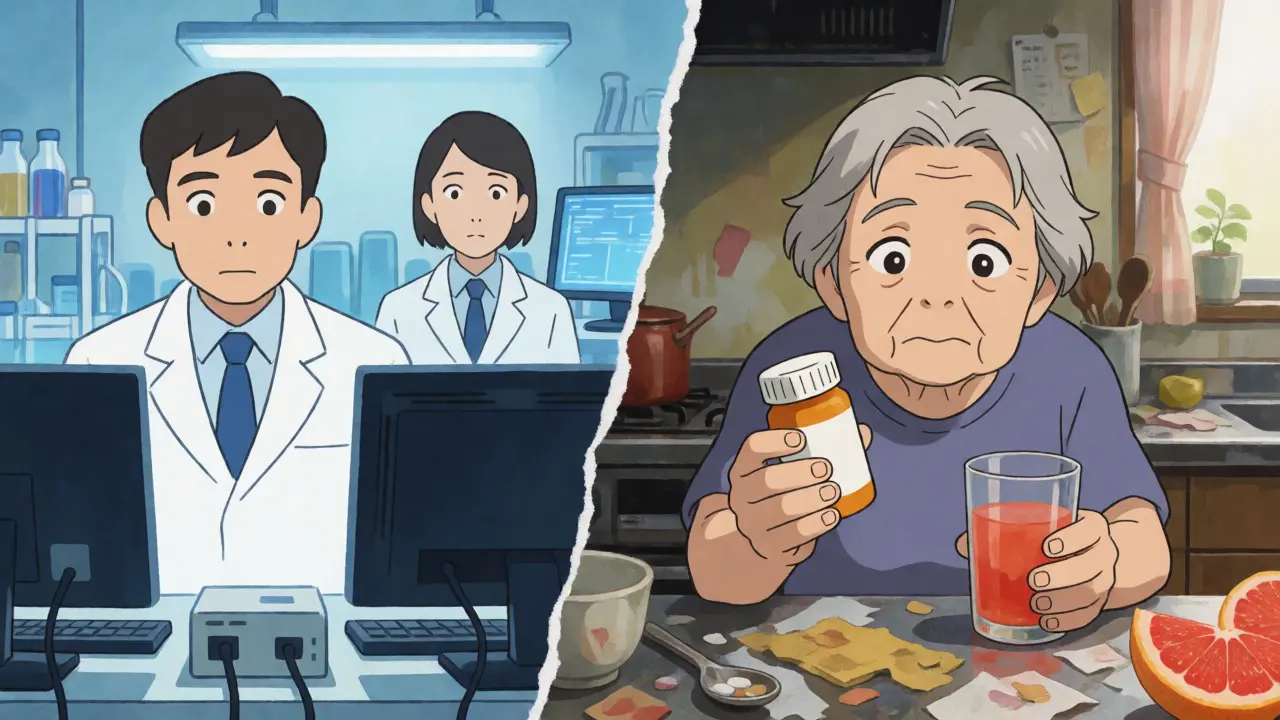
There is also the issue of duration. Most trials last six to twelve months. Many patients, however, take medications for decades. A slow-building toxicity or an interaction that only appears after long-term accumulation won’t show up in a year-long study. Dr. Robert Temple, former Deputy Center Director for Clinical Science at the FDA, noted that "the real world population may look quite different from the clinical trial population." Trials often exclude children, the elderly, and those with multiple comorbidities. So when a grandmother takes her heart pill alongside her arthritis med, she enters uncharted territory.
How We Find These Hidden Risks
If trials miss them, how do we find them? Enter pharmacovigilance, the science of detecting and preventing adverse effects. After the thalidomide tragedy in the 1960s, regulators realized that monitoring couldn’t stop at approval. Today, systems like the FDA’s FAERS (FDA Adverse Event Reporting System) act as massive early-warning radars.
These systems rely heavily on voluntary reporting from doctors, pharmacists, and patients. It’s not perfect-experts estimate that 90-95% of adverse events go unreported-but the sheer volume helps. When thousands of reports pile up showing the same pattern, algorithms flag a "signal." For instance, the FDA’s Sentinel Initiative now monitors over 300 million patient records across 18 data partners. It scans electronic health records in real-time, looking for statistical anomalies that suggest a drug is causing harm in specific subgroups.
The Chemistry Behind the Collisions
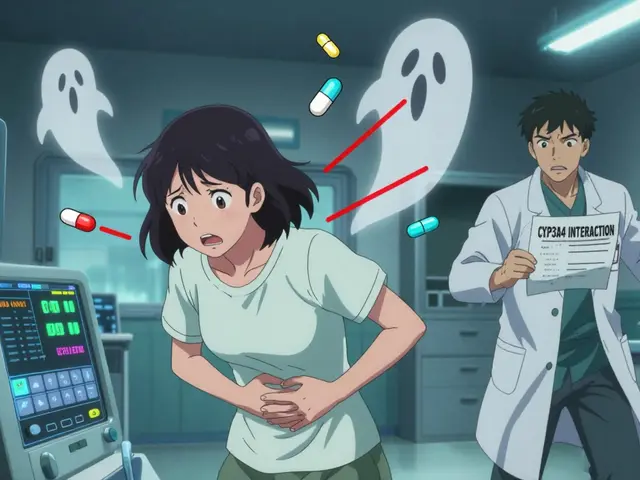
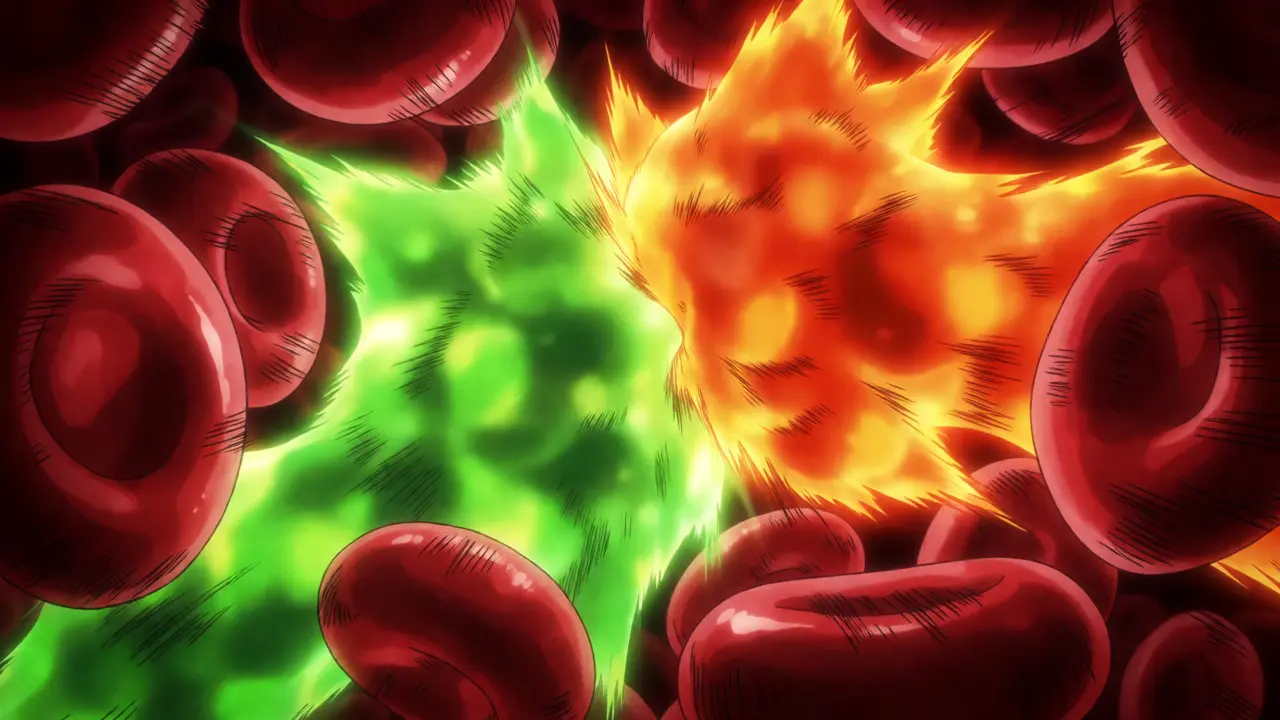
Not all interactions are random bad luck. Many follow clear biochemical rules, primarily involving liver enzymes. The most notorious culprit is the cytochrome P450 system, specifically the CYP3A4 enzyme. This enzyme metabolizes about half of all prescription drugs. If Drug A blocks CYP3A4, then Drug B-which relies on that enzyme to break down-can build up to toxic levels in your blood.
A classic example is the interaction between fluconazole (an antifungal) and simvastatin (a cholesterol drug). Fluconazole inhibits CYP3A4, causing simvastatin levels to jump 3-10 fold. This dramatically increases the risk of rhabdomyolysis, a painful and dangerous muscle breakdown condition. Similarly, grapefruit juice blocks CYP3A4, which can raise atorvastatin levels by up to 15 times. These aren’t theoretical risks; they are documented mechanisms that turn helpful medicines into hazards.
| Interaction Type | Mechanism | Real-World Example | Consequence |
|---|---|---|---|
| Enzyme Inhibition | One drug blocks the metabolism of another | Fluconazole + Simvastatin | Rhabdomyolysis (muscle damage) |
| Food-Drug | Dietary components alter absorption/metabolism | Grapefruit Juice + Atorvastatin | Toxic drug levels, liver stress |
| Additive Toxicity | Two drugs affect the same organ system | Warfarin + NSAIDs | Increased bleeding risk |
| Transporter Blockade | Drugs compete for cellular uptake | Probenecid + Penicillin | Prolonged antibiotic effect |
Case Studies: When Things Went Wrong
History is littered with drugs that looked safe until they hit the masses. Take benfluorex, sold as Mediator in France. It was used for diabetes and weight loss for 30 years. No one noticed the link to valvular heart disease until after 5 million patients had used it. It was finally withdrawn in 2009. Or consider pergolide, a Parkinson’s drug. Its association with cardiac valvulopathy emerged after approximately 1 million patient-years of use, leading to its withdrawal in 2007.
Sometimes, the interaction is bizarrely specific. Hydromorphone extended-release (Exalgo) was found to cause "dose dumping" when taken with alcohol. Instead of releasing slowly, the entire dose hit the bloodstream at once, risking accidental overdose. This wasn’t caught in initial labeling but was discovered via FAERS data after 18 months on the market. These examples highlight a crucial point: absence of evidence in trials is not evidence of absence in practice.
What This Means For You
So, should you panic every time you pick up a prescription? No. But you should be proactive. Since post-market discoveries are common, your medication list needs regular review. Here is how to navigate this landscape:
- Keep an updated list: Include everything-prescriptions, over-the-counter meds, vitamins, and herbal supplements. St. John’s Wort, for example, interacts with apixaban (Eliquis), increasing bleeding risks, yet it’s often overlooked because it’s "natural."
- Ask about food: Don’t assume only pills interact. Ask your pharmacist if grapefruit, dairy, or leafy greens affect your specific meds.
- Report weird symptoms: If something feels off, tell your doctor. Your report might contribute to the data pool that saves someone else later. Underreporting is a huge hurdle in pharmacovigilance.
- Use digital checkers wisely: Tools like GoodRx or Epocrates are useful first passes, but they aren’t infallible. Always confirm high-risk interactions with a pharmacist.
The economic impact of missing these interactions is staggering. The Institute of Medicine estimated that adverse drug events cost the U.S. healthcare system $3.5 billion annually, with interactions making up about 30% of that total. Preventable hospital admissions due to drug interactions remain a significant burden, accounting for 3-5% of all admissions according to recent policy papers.
The Future of Drug Safety
We are getting better at catching these issues faster. Technology is shifting from passive reporting to active surveillance. In 2023, the FDA approved the first AI-powered pharmacovigilance platform capable of processing 10,000 adverse event reports daily with 92.7% accuracy. The European Medicines Agency has already reduced signal detection time from 18 months to 45 days using machine learning algorithms.
Genomics plays a growing role too. The NIH’s Pharmacogenomics Research Network analyzes genetic factors in over 15,000 drug interaction cases. Soon, your prescription might come with a genetic profile check, ensuring the drug works for your specific biology before you even swallow the first pill. While we can’t eliminate all risks, we are closing the gap between trial data and real-world reality.
Why weren't these interactions found during clinical trials?
Clinical trials are limited by size (usually 1,000-5,000 people), duration (often less than a year), and participant selection (excluding complex patients). Rare interactions or those requiring long-term exposure or specific combinations of other meds simply don't appear in these controlled settings.
Are post-market warnings a sign that the drug is unsafe?
Not necessarily. A warning often means the risk is now known and manageable. It allows doctors to screen for contraindications more carefully. Only severe cases lead to market withdrawal. Many drugs remain highly beneficial despite identified interactions.
Do I need to worry about food-drug interactions?
Yes, for certain medications. Grapefruit juice, for example, can significantly increase levels of statins and some calcium channel blockers. Alcohol can alter the release mechanism of extended-release painkillers. Always ask your pharmacist about dietary restrictions for your specific prescriptions.
How can I help improve drug safety data?
You can report adverse effects directly to the FDA through their MedWatch program. Since underreporting is estimated at 90-95%, your contribution helps create a clearer picture of real-world safety profiles, potentially identifying patterns that benefit future patients.
What is the difference between a side effect and a drug interaction?
A side effect is an unintended reaction to a single drug. A drug interaction occurs when one substance (another drug, food, or supplement) changes how a drug works, either making it stronger, weaker, or changing its side effect profile. Interactions are a subset of adverse events caused by combination use.