Health July 14, 2026
FDA Safety Alerts: Understanding Communications About Generic Drug Problems
Imagine you pick up a prescription for a generic version of a medication you’ve taken for years. It looks slightly different-maybe the color is off, or the pill is shaped differently-but it’s supposed to be the same medicine at a fraction of the cost. Now imagine that new safety information has emerged about this drug since the original brand-name label was written. Who tells you? And more importantly, who gets to update the warning label on your specific bottle?
This is the heart of a complex and often confusing issue in pharmaceutical regulation. The U.S. Food and Drug Administration (FDA) has a robust system for monitoring drug safety, but when it comes to generic drugs medications that are bioequivalent to brand-name drugs but sold under their chemical name, the rules for communicating safety alerts are tangled. If you’re a patient, a healthcare provider, or just someone trying to understand why your medication’s label hasn’t changed despite news reports of side effects, you need to know how these systems work-and where they fall short.
How FDA Safety Alerts Work for Brand-Name vs. Generic Drugs
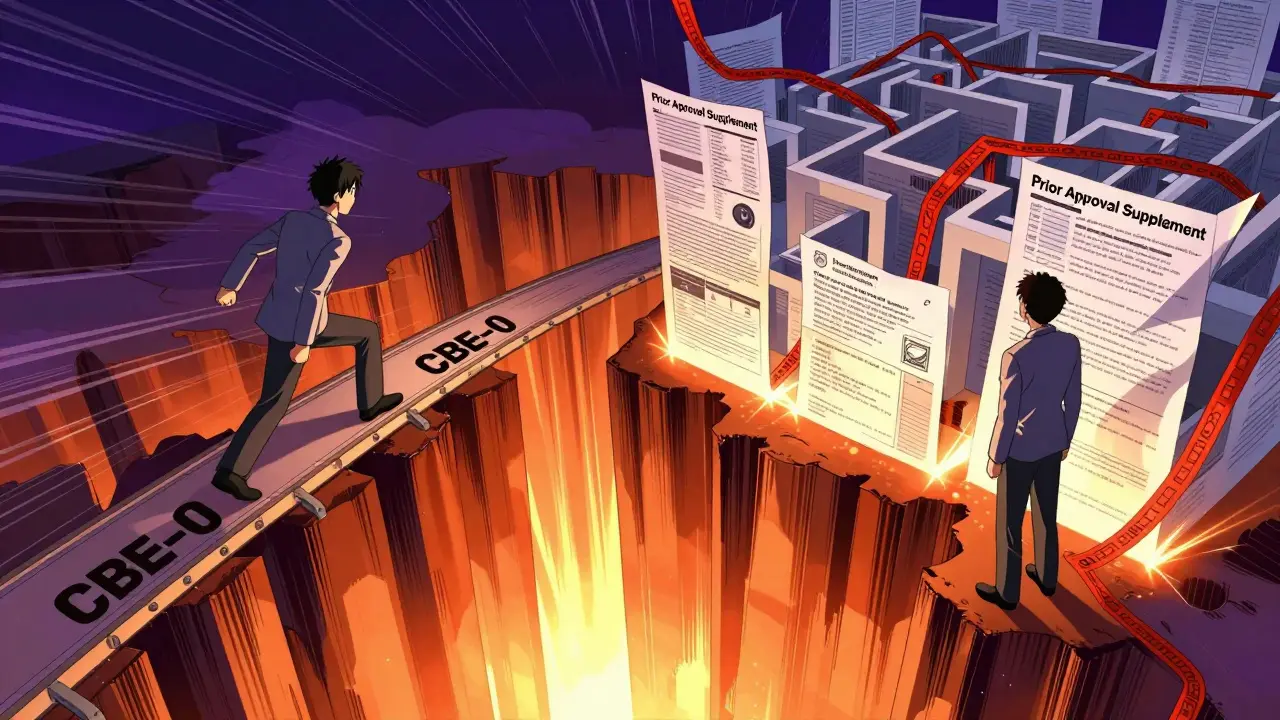
To understand the gap, we first need to look at how the FDA handles safety communications for brand-name medications. When a manufacturer discovers new risks associated with their drug after it hits the market, they can use a process called a Changes Being Effected (CBE) supplement a regulatory pathway allowing manufacturers to update drug labels without prior FDA approval. This allows them to add warnings, contraindications, or dosage changes immediately, notifying the FDA within 30 days. It’s a fast-track system designed to protect patients from emerging dangers.
Generic drug manufacturers, however, do not have this privilege. Under the current framework established by the Hatch-Waxman Act of 1984 legislation creating the modern generic drug approval pathway, generic makers must copy the labeling of the reference listed drug (RLD)-the original brand-name product. They cannot independently change the safety warnings. If new safety data emerges, the generic manufacturer must wait for the brand-name company to update its label, or they must submit a formal supplement to the FDA and wait for approval, a process that can take nine to twelve months according to David Gaugh, Senior Vice President for Sciences and Regulatory Affairs at the Generic Pharmaceutical Association (GPhA).
This creates a significant lag. Patients taking generics may not receive updated safety information until long after it becomes available for those on brand-name prescriptions. The FDA’s MedWatch program the FDA's safety information and adverse event reporting program, launched in 1993, serves as the primary channel for public reporting and official alerts, but it doesn’t solve the labeling discrepancy between brands and generics.
The Regulatory Tug-of-War: Why Can’t Generics Update Labels?
You might wonder why the FDA hasn’t simply allowed generic manufacturers to update labels like brand companies do. The answer lies in a decades-old legal and economic debate. In 2013, the FDA proposed a rule to extend the CBE-0 process to generic manufacturers. This would have allowed them to make unilateral changes to safety labels if they identified new risks.
Consumer health organizations strongly supported this move. A coalition of 27 groups argued that requiring all prescription drugs to carry up-to-date safety warnings is essential. Their point is simple: many insurance plans mandate the use of generics if available, meaning millions of patients rely on these cheaper alternatives. Those patients deserve accurate, timely information about the risks they face.
However, the generic industry pushed back hard. GPhA and other manufacturers argued that the proposed rule contradicted the spirit of the Hatch-Waxman Act. That act was designed to encourage competition by allowing generics to enter the market quickly and cheaply, provided they were bioequivalent to the brand. If generics had to assume the liability and administrative burden of maintaining independent safety labels, it could drive smaller competitors out of business, reducing competition and potentially raising prices.
There’s also a legal minefield. Brand-name companies are frequently sued for failing to update warnings quickly enough. If generic manufacturers gain the power to change labels, they also become targets for litigation. As one legal expert noted, the liability landscape is already complex; adding generics into the mix could create chaos in courts and confusion for manufacturers.
What “Bioequivalence” Really Means for Your Safety
Let’s clear up a common misconception: generic drugs are not inferior copies. To get approved, a generic must meet rigorous standards set by the FDA’s Office of Generic Drugs (OGD). It must contain the same active ingredient, in the same amount, and deliver the drug to your body in the same way as the brand-name version. This is known as bioequivalence.
However, generics can differ in inactive ingredients, known as excipients. These include colors, flavors, preservatives, and binders. While usually harmless, differences in excipients can matter. Dr. Xin Fu, lead for Excipient Safety Assessment at the FDA, notes that changes in excipients can alter the safety profile of a drug depending on the context of use-such as the dose, route of administration, or patient population. For example, a generic might contain a dye that causes an allergic reaction in sensitive individuals, even if the active drug is identical.
For certain products, like ophthalmic (eye drops) or parenteral (injectable) drugs, the rules are stricter. Regulations under 21 CFR 314.94 require these generics to match the RLD’s excipient concentrations almost exactly, with minor exceptions for buffers or preservatives. But for most oral pills, some variation is allowed. This means that while the therapeutic effect should be the same, the safety profile regarding allergies or intolerances might shift slightly.
Monitoring Systems: How the FDA Watches Generic Drugs
So, if generic manufacturers can’t update labels easily, how does the FDA ensure safety? They rely on postmarketing surveillance. The OGD actively monitors two main databases:
- FDA Adverse Event Reporting System (FAERS): This collects reports of side effects from healthcare professionals and consumers.
- Drug Quality Reporting System: This tracks issues related to manufacturing quality, such as contamination or potency problems.
The FDA conducts monthly screening of these systems. For instance, during the first year of marketing for the first generic version of Rexulti (a psychiatric medication), the FDA initiated proactive pharmacovigilance screening. They monitored for any signals related to the different appearance of the generic compared to the brand. In that case, no quality or safety signals were detected. But this level of scrutiny isn’t automatic for every generic; it’s often triggered by specific concerns or high-risk profiles.
The FDA also publishes regular updates on its Drug Safety and Availability page. Recent examples include the September 2024 alert regarding the voluntary withdrawal of Oxbryta due to cardiovascular risks. While this was a brand-name drug, the principles apply broadly. The FDA uses these channels to communicate urgent safety information to the public, bypassing the slow label-update process entirely.

Complex Generics: A Growing Challenge
Not all generics are created equal. Simple tablets are straightforward to replicate. But complex generic drug products generics with difficult formulations, delivery mechanisms, or active ingredients present unique hurdles. These include transdermal patches, extended-release injectables, and inhalers. Replicating the precise delivery mechanism of a brand-name patch, for example, requires sophisticated engineering.
Because these products are harder to copy, there are fewer competitors. This reduces market pressure and can complicate safety monitoring. If a complex generic fails to deliver the drug correctly, the consequences can be severe. The FDA has increased its focus on these products in recent years, recognizing that standard bioequivalence tests might not capture all safety nuances. Specialized monitoring approaches are required, and the agency continues to refine its strategies for these high-stakes medications.
| Feature | Brand-Name Manufacturer | Generic Manufacturer |
|---|---|---|
| Label Update Process | CBE-0 Supplement (Unilateral) | Prior Approval Supplement (PAS) |
| Time to Update Label | Immediate (notify FDA within 30 days) | 9-12 months average review time |
| Liability for Warnings | High (frequently sued for inadequate warnings) | Limited (protected by copying RLD label) |
| Excipient Flexibility | Can choose formulation | Must match RLD closely (varies by drug type) |
What This Means for You: Navigating the Gap
If you’re a patient, here’s what you need to do. Don’t assume that because your generic pill looks different, it’s unsafe. But do stay informed. The FDA’s MedWatch program allows anyone to report adverse events. If you experience unexpected side effects, report them. Your report could trigger a safety signal that leads to broader action.
Talk to your pharmacist. They are trained to spot discrepancies between brands and generics. Ask if there are known issues with the specific generic you’re prescribed. Pharmacists often have access to real-world data that isn’t yet reflected in official labels.
Check the FDA website regularly. The Drug Safety and Availability page is updated frequently. Subscribe to alerts if possible. While the labeling system for generics is imperfect, the FDA’s direct communications are reliable and timely.
Finally, understand that the debate over generic labeling is ongoing. The 2013 proposal remains under consideration. Consumer advocates continue to push for change, arguing that patient safety must outweigh corporate liability concerns. Until a final rule is published, the status quo persists: brand-name manufacturers hold the key to updated safety warnings, and generic patients must rely on the FDA’s broader surveillance nets to catch emerging risks.
Can generic drug manufacturers update safety warnings on their own?
No, currently they cannot. Under the Hatch-Waxman Act, generic manufacturers must copy the labeling of the reference listed drug (brand-name). They must wait for the brand to update its label or go through a lengthy FDA approval process to change it themselves, which can take up to a year.
Are generic drugs as safe as brand-name drugs?
Yes, in terms of active ingredients and therapeutic effect, generics are required to be bioequivalent to brand-name drugs. However, differences in inactive ingredients (excipients) can sometimes cause allergic reactions or tolerability issues. The FDA rigorously tests for this, but individual responses may vary.
Why does the FDA allow a delay in generic safety labeling?
The current system balances patient safety with market stability. Allowing generics to unilaterally change labels could expose them to massive liability lawsuits, potentially driving smaller companies out of business and reducing competition. The FDA argues that the existing surveillance systems (like FAERS) catch serious issues before they become widespread.
What is the CBE-0 supplement process?
CBE-0 stands for Changes Being Effected. It is a regulatory pathway that allows brand-name drug manufacturers to update their drug labels with new safety information immediately, notifying the FDA within 30 days. Generic manufacturers do not currently have access to this expedited process.
How can I report a side effect from a generic drug?
You can report side effects through the FDA’s MedWatch program. You can submit a report online via the FDA website, by mail, or by fax. Healthcare providers can also report directly to the FDA or the drug manufacturer. Your report helps the FDA identify potential safety signals.
What are complex generic drugs?
Complex generic drugs are medications that are difficult to replicate due to their formulation, delivery mechanism, or active ingredients. Examples include transdermal patches, inhalers, and extended-release injections. They require specialized testing and monitoring because small differences in design can significantly impact safety and efficacy.