Health June 15, 2026
How Heat and Humidity Ruin Your Meds: Storage Guide for 2026
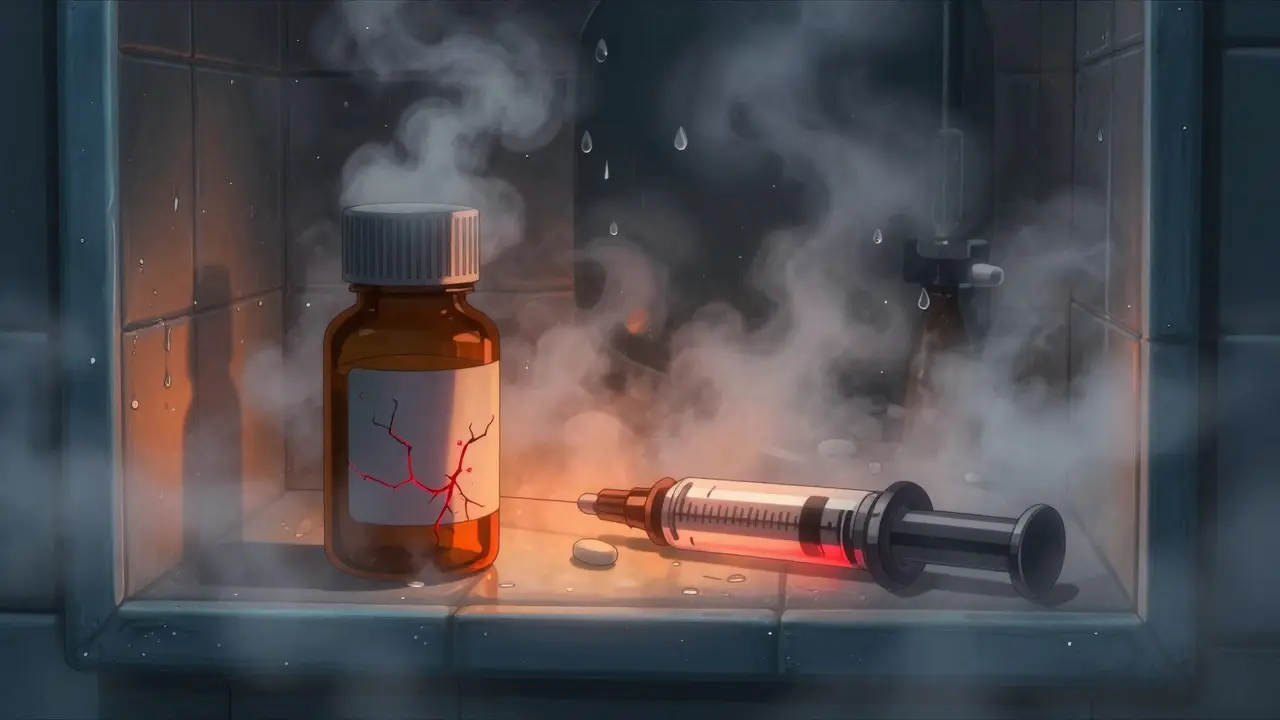
Think your bathroom cabinet is the perfect spot for your pills? Think again. That humid air from your morning shower isn't just making your mirror foggy; it’s actively breaking down the chemical structure of your medication. In fact, many people are unknowingly taking degraded drugs that have lost their potency long before the expiration date printed on the bottle.
Medications are complex chemical compounds designed to work within a specific stability profile. When exposed to heat and moisture, these compounds can degrade, change form, or even become toxic. The expiration date you see on the label is not an arbitrary number-it is a guarantee of full potency and safety, but only if the drug has been stored under strict conditions. If you’ve ever left your car in the sun during a summer afternoon or kept your insulin near a window, you might be compromising your health without realizing it.
The Science Behind Drug Degradation
To understand why storage matters, you need to look at how pharmaceutical companies determine those expiration dates. They don’t guess. According to standards set by the United States Pharmacopeia (USP), stability testing is conducted under controlled conditions, typically between 20-25°C (68-77°F) with relative humidity between 35-65%. This is the baseline for every pill, liquid, and injection you buy.
When you step outside that range, chemistry takes over. Heat accelerates molecular movement, causing chemical bonds to break faster than intended. Humidity introduces water molecules that can hydrolyze-chemically split-the active ingredients. Dr. Hani Jneid, an interventional cardiologist at Baylor College of Medicine, notes that extreme heat and moisture cause medications to become less potent before their official expiration dates. It’s not just about effectiveness; it’s about safety. As Patricia Vandercruys from The Montreal Children's Hospital warns, the breakdown of meds may result in potentially harmful effects, and you often cannot tell if a medication has been altered just by looking at it.
The U.S. Food and Drug Administration (FDA) emphasizes that expiration dates represent the last date a manufacturer guarantees the drug is fully potent and safe when stored correctly. If storage conditions are poor, that guarantee is voided immediately.
Which Medications Are Most Vulnerable?
Not all drugs react the same way to environmental stress. Some are tough; others are incredibly fragile. Understanding which category your medication falls into is crucial for your health.
| Medication Type | Vulnerability Level | Key Risks & Symptoms of Damage |
|---|---|---|
| Bathrooms & Liquids | High | Rapid degradation due to humidity spikes (70-90%) and temperature fluctuations. |
| Insulin & Biologics | Critical | Irreversible protein denaturation. Insulin loses up to 20% potency after 24 hours at 37°C. |
| Nitroglycerin | Critical | Decomposes rapidly above 25°C. Can fail to relieve angina attacks. |
| EpiPens & Inhalers | High | Mechanical failure (15-20% rate above 30°C). Inhalers can explode above 49°C. |
| Solid Tablets (e.g., Ibuprofen) | Low-Moderate | More resilient. Maintain ~85-90% potency at 40°C for 30 days, but still degrade over time. |
| Aspirin | Moderate | Decomposes into vinegar and salicylic acid when exposed to moisture. |
Biologic medications, such as monoclonal antibodies and insulin, are the most sensitive. These drugs rely on complex protein structures that unfold-or denature-when exposed to temperatures outside the 2-8°C (35.6-46.4°F) refrigeration range. Once unfolded, they cannot be fixed. For diabetics, this means uncontrolled blood glucose levels and serious complications.
Liquid antibiotics, like amoxicillin suspension, are another high-risk category. Once reconstituted with water, they must be refrigerated. At room temperature, they can lose 30-40% of their potency within just 72 hours. Taking a sub-potent antibiotic doesn’t just mean you stay sick longer; it contributes to the global crisis of antibiotic resistance by exposing bacteria to insufficient doses.
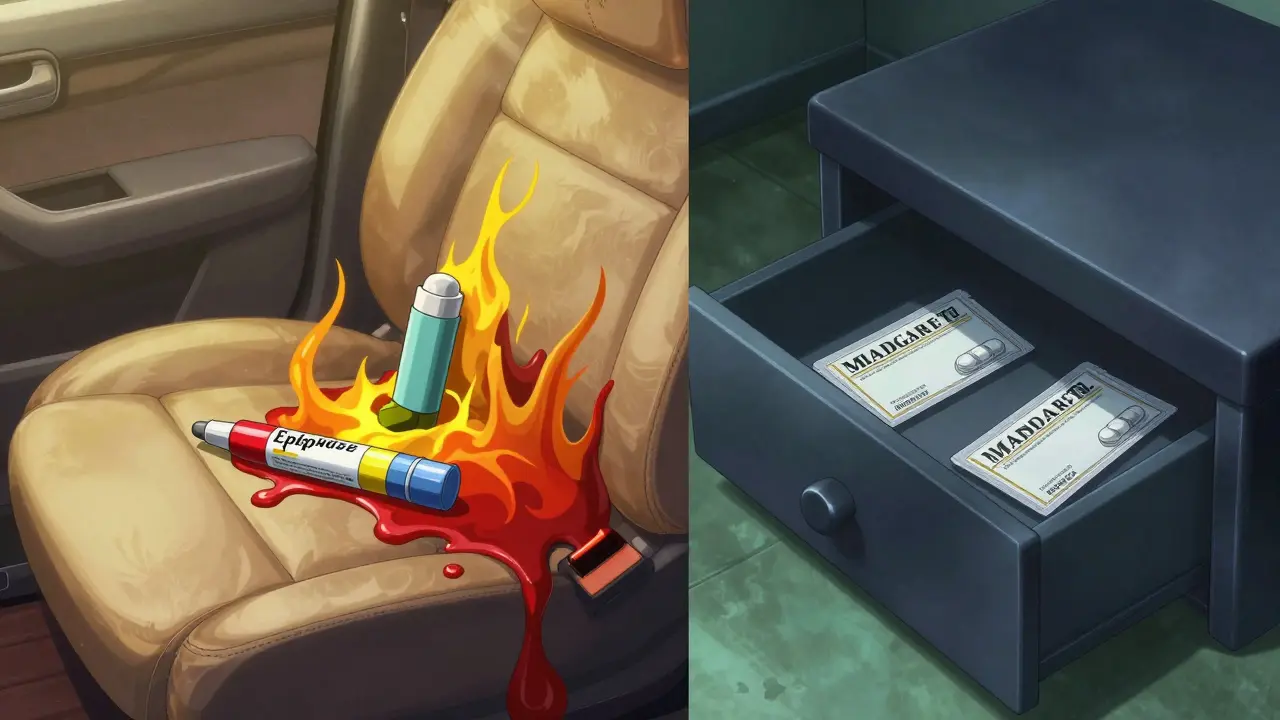
Even life-saving emergency devices are at risk. EpiPens contain epinephrine, which degrades in heat. Research shows mechanical failure rates jump to 15-20% when exposed to temperatures above 30°C (86°F) for extended periods. Similarly, metered-dose inhalers contain propellants that expand with heat. If the temperature exceeds 49°C (120°F)-which happens easily in a parked car-these devices can literally explode.
The Bathroom Cabinet Trap
Most people store their medicine in the bathroom because it’s convenient. But this is arguably the worst place in your home for pharmaceuticals. Every time you take a hot shower, humidity levels spike to 70-90%, and temperatures rise significantly. Abby Case, a clinical pharmacy specialist at St. Joseph’s/Candler, explains that moisture and heat can damage the exterior coating of capsules. This is particularly dangerous for extended-release medications, which rely on that coating to release the drug slowly. If the coating breaks down, the body absorbs the entire dose at once, leading to potential overdose symptoms.
Kitchens are also risky zones. Storing meds near the sink exposes them to steam and humidity, while spots near the oven or dishwasher subject them to temperatures exceeding 32°C (90°F). The ideal storage environment is a cool, dry, dark place away from appliances and windows.
Signs Your Medication Has Been Compromised
You can’t always trust your eyes, but there are visual and sensory clues that indicate degradation. If you notice any of the following, do not take the medication:
- Color changes: Pills turning yellow, brown, or developing spots.
- Texture shifts: Tablets that stick together, crumble easily, or feel unusually hard or soft.
- Odor changes: A strong vinegar smell indicates aspirin has decomposed into salicylic acid and acetic acid. This can cause increased stomach irritation.
- Physical damage: Cracked or chipped capsules, or liquid medications that appear cloudy or contain particles.
- Clumping: Powdered supplements or antibiotics that have formed lumps due to moisture absorption.
However, remember that many degraded medications look perfectly normal. Just because a pill looks fine doesn’t mean it works.
Best Practices for Safe Medication Storage
Protecting your health starts with proper storage habits. Here is how to keep your medications effective until their expiration date:
- Choose the right location: Use a bedroom drawer or a closet shelf away from direct sunlight, bathrooms, and kitchens. Aim for a consistent temperature between 15-25°C (59-77°F) with humidity below 60%.
- Keep original containers: Blister packs and opaque bottles protect against light and moisture. Don’t transfer pills to weekly organizers unless you’re using them immediately, as these offer little protection.
- Manage travel wisely: Never leave medications in a hot car. Even a short trip on a sunny day can raise interior temperatures above 60°C (140°F). For day trips, take only what you need. For sensitive drugs like insulin, use specialized cool packs available at pharmacies.
- Follow specific instructions: Read the label. If it says “refrigerate,” do not freeze it unless instructed. Freezing can damage some biologics. If it says “store at room temperature,” keep it out of the fridge, as condensation when moving it in and out can introduce moisture.
- Check expiration dates regularly: Dispose of expired medications properly. Do not flush them unless specifically instructed, as this contaminates water supplies. Use local drug take-back programs.
Future Trends in Medication Stability
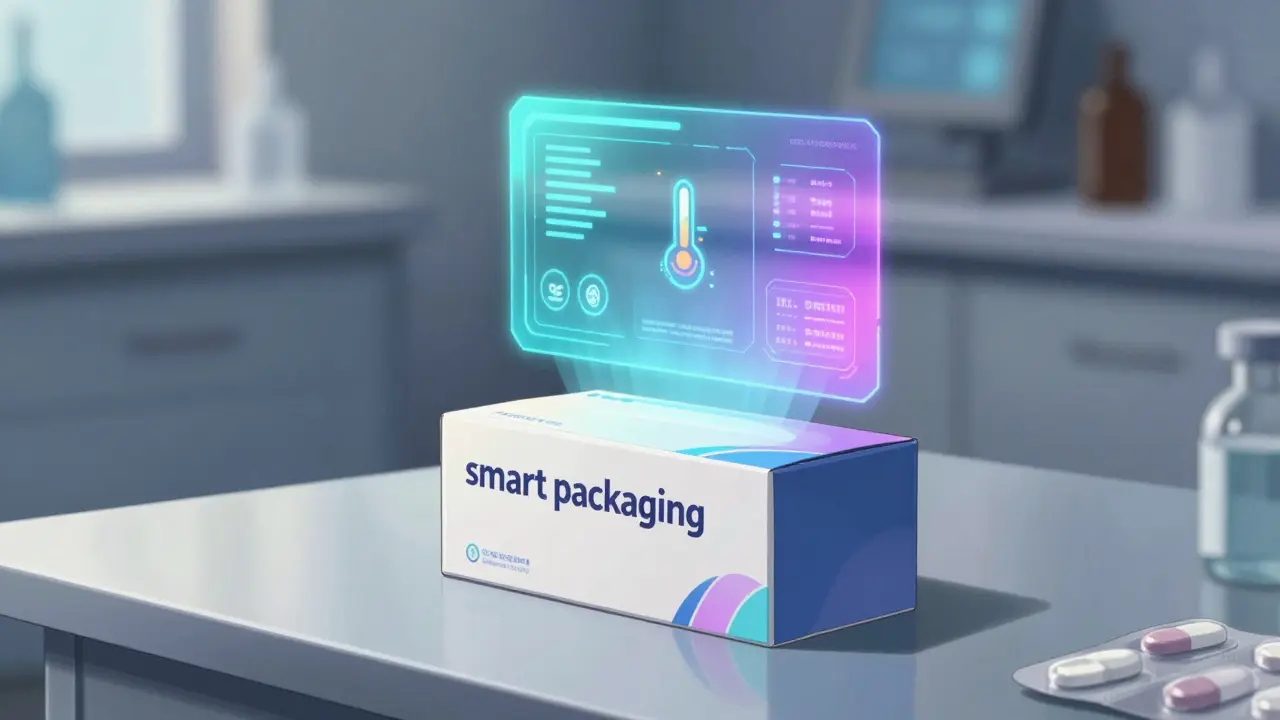
As climate change leads to more frequent heatwaves, the pharmaceutical industry is adapting. Manufacturers are increasingly using desiccants (drying agents), opaque packaging, and temperature-indicating labels to alert patients if a drug has been exposed to unsafe conditions. Future innovations may include smart packaging with embedded sensors that sync with mobile apps to monitor storage conditions in real-time. Until then, vigilance remains your best defense.
Can I put my medication in the freezer to extend its life?
Generally, no. Unless the label specifically instructs freezing, storing medication in the freezer can damage its chemical structure. The cold can cause tablets to crack or liquids to separate. Always follow the manufacturer’s storage guidelines, which usually recommend room temperature or refrigeration (not freezing).
Is it safe to take medication past its expiration date if it was stored properly?
While some studies suggest certain solid oral medications retain potency for years after expiration, the FDA advises against it. The expiration date is the only guaranteed period of full strength and safety. For critical drugs like insulin, nitroglycerin, or antibiotics, taking expired medication can be dangerous or ineffective.
Why is the bathroom the worst place for medicine?
Bathrooms experience extreme fluctuations in temperature and humidity. Hot showers create steam that raises humidity to 70-90% and increases ambient temperature. This environment accelerates chemical degradation, damages capsule coatings, and promotes mold growth in liquid medications.
What should I do if my EpiPen was left in a hot car?
If your EpiPen has been exposed to temperatures above 30°C (86°F) for an extended period, it may have lost potency or suffered mechanical failure. You should replace it immediately. In an emergency, use it if it is your only option, but be aware it may not work effectively. Always carry a backup in a cooler environment.
How can I tell if my insulin has gone bad?
Clear insulin should remain clear. If it appears clumpy, stringy, or discolored, it has degraded. Cloudy insulin should mix evenly when rolled gently; if particles remain stuck to the sides, discard it. Additionally, if insulin has been frozen or exposed to high heat, it is likely compromised even if it looks normal.
Write a comment
Items marked with * are required.

8 Comments
Amy Bogdahn June 15, 2026 AT 23:20
Most people are just too lazy to read the label.
Dale Simpson June 17, 2026 AT 17:50
hey guys! this is super important info. i always thought my bathroom cabinet was fine but now im worried. thanks for sharing this guide, it really helps us stay safe and healthy. lets all try to move our meds to a cooler spot. you got this!
Tumble Farm June 19, 2026 AT 09:03
The degradation kinetics of pharmaceutical compounds under non-standard environmental conditions are often underestimated by the general public. Hydrolysis rates increase exponentially with temperature according to the Arrhenius equation. For biologics, protein denaturation is irreversible and leads to loss of therapeutic efficacy. The USP standards cited are baseline minimums; actual stability may vary based on excipient composition. It is crucial to understand that visual inspection is insufficient for detecting molecular degradation. Patients should consult their pharmacists regarding specific storage requirements for high-risk medications such as insulin and nitroglycerin. Proper storage is not merely a recommendation but a critical component of treatment adherence and safety.
ankit agarwal June 21, 2026 AT 08:17
The epistemological framework of drug stability testing reveals a profound disconnect between industrial manufacturing parameters and domestic storage realities. We must interrogate the assumption that expiration dates are absolute temporal boundaries rather than conditional probabilities contingent upon environmental variables. The thermodynamic instability of complex protein structures in biologics necessitates a rigorous adherence to cold chain logistics even at the consumer level. This is not merely a matter of convenience but of bioethical responsibility towards patient outcomes. The hydrolytic degradation pathways elucidated in the text underscore the fragility of modern pharmacopeia when subjected to uncontrolled ambient humidity and thermal fluctuations.
Dez Johnston June 22, 2026 AT 01:52
I appreciate how detailed this guide is. It’s easy to overlook these small details until something goes wrong. I’ve been storing my blood pressure meds in the kitchen drawer near the stove without realizing the heat could affect them. I’m going to move them to my bedroom closet tonight. Thanks for looking out for everyone’s health here.
Ashley Jacelyn June 22, 2026 AT 04:06
This is such a helpful reminder. I never realized that humidity from showers could actually break down the pills. I feel relieved to know what signs to look for now. Thank you for sharing this knowledge with us all.
Sonam Norbu June 23, 2026 AT 08:38
Americans need to take responsibility for their own health instead of blaming manufacturers. If you live in a hot climate, buy an air conditioner or store your meds properly. Stop expecting the government to regulate every aspect of your daily life. Common sense dictates keeping chemicals cool and dry. It’s time we stop being so dependent on external validation for basic survival tasks.
Koushiki Behera June 24, 2026 AT 07:19
It is fascinating how our environment interacts with the molecules we consume 🌿💊. We often forget that nature is powerful and can alter substances in unexpected ways. Let us be mindful of where we keep our healing tools. Peace and health to all who read this ✨🙏.