Health January 26, 2026
How to Use Refill Synchronization to Improve Medication Adherence
Managing multiple medications is overwhelming. If you’re taking pills for high blood pressure, diabetes, cholesterol, and maybe depression, keeping track of when each one runs out feels like a full-time job. You forget. You run out. You skip doses. And before you know it, your health starts to slip. This isn’t just inconvenient-it’s dangerous. Half of all people with chronic conditions don’t take their meds as prescribed, according to the World Health Organization. But there’s a simple, proven fix: refill synchronization.
What Is Refill Synchronization?
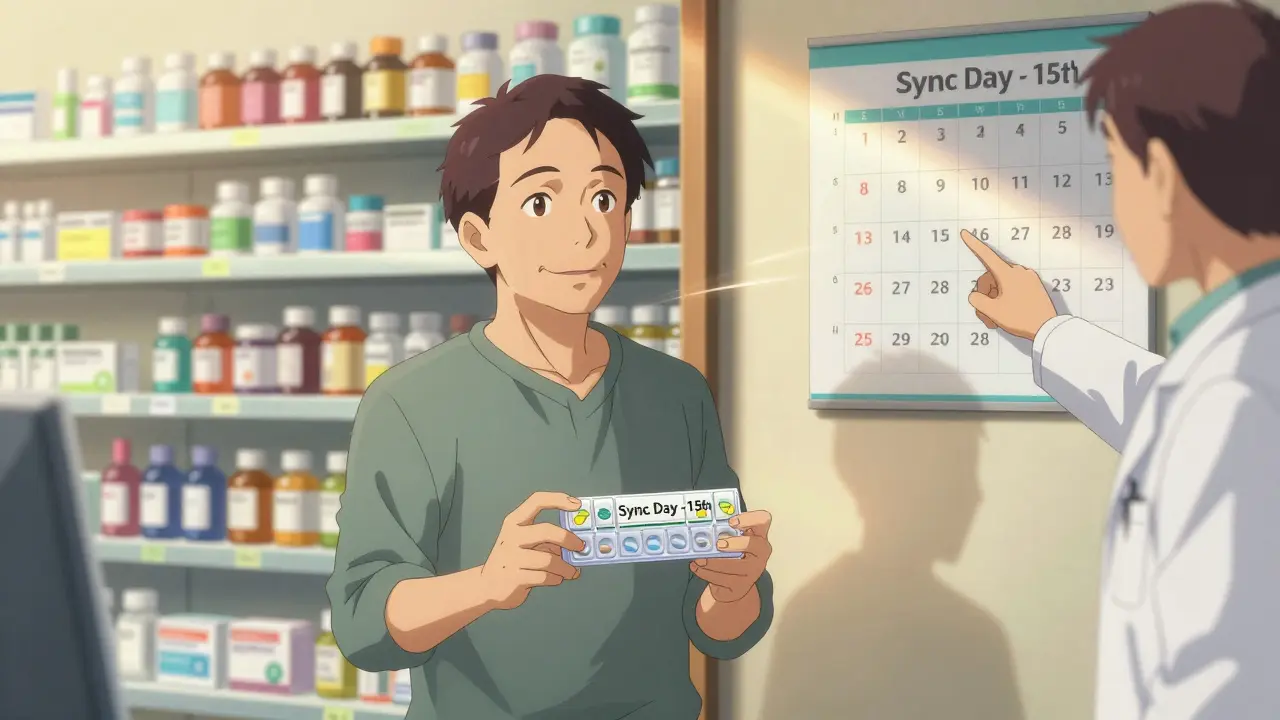
Refill synchronization-often called med sync-is a pharmacy service that lines up all your regular medications to be refilled on the same day each month. Instead of getting a prescription for your blood pressure pill on the 5th, your diabetes med on the 12th, and your cholesterol pill on the 20th, your pharmacist adjusts everything so they all come due on the 15th. You walk in once a month, pick up all your pills at once, and you’re set until next month. It sounds basic. But the impact is huge. Studies show patients enrolled in med sync programs improve their medication adherence by 3 to 5 percentage points. That might not sound like much, but for someone with heart disease or diabetes, that small jump can mean the difference between staying out of the hospital and ending up in the ER.How It Works: A Step-by-Step Breakdown
Getting synced up doesn’t happen overnight. It’s a process, and your pharmacist guides you through it. Here’s how it works:- Initial consultation: Your pharmacist sits down with you and reviews every medication you’re taking-prescription, over-the-counter, even supplements. They check your refill dates, dosing schedules, and any past issues like early refills or missed pickups.
- Creating your sync plan: Based on your current schedule, they figure out the best single date for all your meds. To make sure you don’t run out during the transition, they might give you a few extra pills on your first sync visit. For example, if your blood pressure med usually runs out in 10 days but your sync date is in 30, they’ll give you enough to cover the gap.
- Monthly refill day: On your chosen date-say, the 15th of every month-you come in. Your pharmacist checks for new prescriptions, changes in dosage, or side effects. They also make sure you’re still taking everything as directed. No more guessing. No more scrambling.
- Convenient pickup or delivery: Most pharmacies now offer pickup windows, drive-thru, or even home delivery on your sync day. Some even send you a text reminder a few days before.
Who Benefits Most?
Med sync isn’t for everyone. It’s designed for people taking multiple maintenance medications-drugs you take daily for chronic conditions like:- Hypertension
- Diabetes
- High cholesterol
- Depression or anxiety
- Thyroid disorders
- Osteoporosis
Why It Works: The Science Behind the Numbers
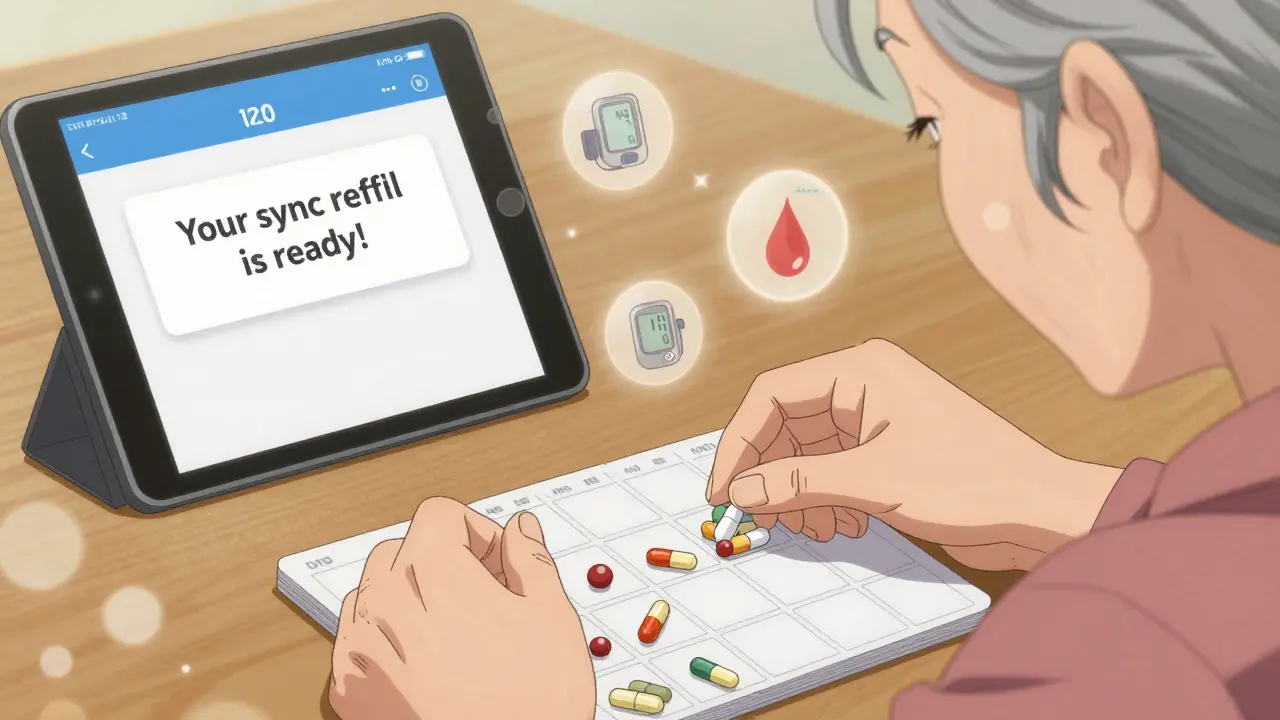
The data doesn’t lie. A 2017 study in Health Affairs tracked nearly 23,000 Medicare patients. Those in med sync programs had a Proportion of Days Covered (PDC)-a key adherence metric-of 0.87. Those not synced? 0.84. That 3-point difference might seem small, but it translates to fewer hospitalizations and lower costs. In fact, researchers estimated that just a 1-point rise in adherence for heart meds could save Medicare $206 million a year. Another study from the American Journal of Managed Care found the biggest gains were in patients who used only retail pharmacies. Those using mail-order services saw almost no improvement. Why? Because med sync isn’t just about dates-it’s about contact. Every month, you talk to your pharmacist. They ask how you’re feeling. They catch side effects. They notice if you’re skipping doses. That human connection matters.Challenges and How to Overcome Them
It’s not perfect. The biggest hurdle? Insurance. Many plans won’t let you refill a prescription early-even if it’s part of a sync program. That means your pharmacist has to call your doctor for an early authorization. It’s a paperwork headache. About 47% of pharmacists report this as a major obstacle, according to the National Community Pharmacists Association. Another issue? Patient confusion. Some people think, “Why are you giving me extra pills? Am I being overprescribed?” That’s why counseling is key. Pharmacists spend 20-30 minutes on the first visit explaining the plan. Good ones use simple visuals-like a calendar or a pill box-to show how it all lines up. And not every pharmacy offers it. As of 2022, 87% of chain pharmacies (CVS, Walgreens, Rite Aid) have formal med sync programs. But only 45% of independent pharmacies do. If your local pharmacy doesn’t offer it, ask. Demand drives change.
Real Stories: What Patients Say
On Reddit, users share how med sync changed their lives:- “Since my pharmacist synced my 5 medications to the 15th of each month, I haven’t missed a single dose in 18 months-this has literally changed my diabetes management.” - u/MedicationMama
- “I used to run out of my blood pressure pill every other month. Now I never do. My doctor says my numbers are better than they’ve been in years.” - Anonymous patient, Pharmacy Times survey
What’s Next for Refill Synchronization?
The program is growing fast. In 2014, about 355,000 people were synced. By 2022, that number jumped to 12-15 million. Why? Because value-based care is changing how pharmacies get paid. Instead of just filling prescriptions, they’re now rewarded for keeping patients healthy. CVS and Walgreens have added digital tools: text reminders, app-based adherence tracking, and even copay discounts tied to sync participation. Kroger Health is testing virtual pharmacist visits on sync days. By 2025, the American Pharmacists Association predicts 75% of U.S. pharmacies will offer med sync. It’s becoming standard-not optional.How to Get Started
If you’re taking three or more chronic meds:- Ask your pharmacist if they offer medication synchronization.
- Bring a list of all your medications-including doses and refill dates.
- Ask: “Can we make all my refills happen on the same day each month?”
- If they say no, ask if they can start the program. Pharmacies respond to patient demand.
- Once synced, show up on your refill day. Use it as a chance to talk about how you’re feeling.
Can I sync medications if I use mail-order pharmacies?
It’s possible, but much less effective. Mail-order pharmacies refill based on their own schedules, not yours. Most med sync programs are designed for retail pharmacies where you have regular, in-person contact. Studies show patients who use only retail pharmacies see adherence improvements of 8-11 percentage points. Those using mail-order see almost no gain-sometimes as little as 1 point. For best results, get all your maintenance meds from one local pharmacy.
What if my insurance won’t let me refill early?
This is a common issue. Your pharmacist will need to contact your doctor to request an early refill authorization. Some insurers require a note explaining it’s for synchronization. If your pharmacy struggles with this, ask if they can work with your prescriber to switch to a 90-day supply instead. Many insurers allow 90-day fills for maintenance drugs, which makes syncing easier.
Do I have to pay extra for refill synchronization?
No. Refill synchronization is a free service offered by most pharmacies. It’s built into your regular prescription co-pay. Some pharmacies even offer discounts or loyalty points for participating. The goal isn’t to make money-it’s to improve your health and reduce costly hospital visits. That’s why insurers and Medicare Advantage plans encourage it.
Can I sync medications with different dosing schedules, like once daily and twice daily?
Yes. The pharmacy adjusts the quantity of each medication so you have enough to last until your next sync date, regardless of how often you take it. For example, if you take one pill daily and another twice daily, they’ll give you 30 of the first and 60 of the second. You’ll still take them as prescribed-just all on the same pickup day.
How long does it take to get synced up?
It usually takes one visit-about 20 to 30 minutes. After that, you’re on a monthly cycle. The first time, your pharmacist might need to call your doctor for early refills or adjust quantities. Once everything’s aligned, it’s smooth sailing. Most patients are fully synced within a month.
Write a comment
Items marked with * are required.





11 Comments
Harry Henderson January 28, 2026 AT 00:02
Stop pretending this is some revolutionary idea. I’ve been doing this since 2018. My pharmacy just started charging $5 extra for it last year. They call it a 'convenience fee.' Don’t be fooled-this isn’t about your health, it’s about squeezing more cash out of seniors.
Anjula Jyala January 28, 2026 AT 13:43
Med sync is a bandaid for systemic pharmacy fragmentation. Without integrated EHR interoperability and standardized refill protocols across payers, you're just rearranging deck chairs on the Titanic. The 3% adherence lift is statistically insignificant when 42% of patients still miss doses due to cost-related nonadherence. This is performative healthcare.
Candice Hartley January 30, 2026 AT 02:32
This changed my life 😭 I used to panic every time I ran out of my antidepressant. Now I get all my meds on the 10th and I actually feel like I’ve got control. Thank you for writing this.
suhail ahmed January 30, 2026 AT 15:12
Let me tell you something-this isn’t just about syncing pills. It’s about rebuilding trust between you and your health. When your pharmacist remembers your dog’s name and asks how your granddaughter’s recital went? That’s the magic. The calendar? Just the vehicle. The human touch? That’s what keeps you alive. I’ve seen grandmas who hadn’t left the house in months show up every month just to say hi. That’s healthcare with soul.
Kathy McDaniel February 1, 2026 AT 08:28
i never knew this was a thing 😅 my pharmacist just started doing it for me last month and i forgot i even had a refill until i got the text. now i feel like a pro at being sick. thanks for the heads up!!
Andrew Clausen February 3, 2026 AT 02:44
Let’s be clear: the 3-point adherence increase cited here is pulled from cherry-picked Medicare data. The real-world effect in younger, working populations is negligible. Most people who need this service can’t access it because their pharmacy is a CVS kiosk in a Walmart. And don’t get me started on the 90-day supply loophole-pharmacies are gaming the system to maximize rebates, not improve outcomes. This isn’t innovation. It’s corporate optimization dressed in white coats.
Paul Taylor February 3, 2026 AT 23:41
I’ve been syncing my meds for five years now and I can’t believe people still act like this is some kind of secret. You take blood pressure meds, diabetes meds, cholesterol meds, thyroid meds, and an antidepressant-that’s five different refill dates. You think you’re being responsible by keeping track of them all? You’re just playing Russian roulette with your kidneys and your brain. The pharmacy doesn’t care if you forget-they get paid either way. But when you sync, they have to actually look at you. They have to ask if you’re dizzy. If you’re depressed. If you’re still taking that pill they prescribed three years ago. That’s the real win. Not the calendar. Not the text reminders. The fact that someone is finally paying attention.
Desaundrea Morton-Pusey February 5, 2026 AT 03:38
Of course this works. Because in America, if you make it convenient, people will do it. But let’s not pretend this isn’t a symptom of a broken system. Why are we giving people 12 different pills for 12 different problems? Why aren’t we fixing the root causes? Why is the solution to a healthcare crisis a monthly trip to the pharmacy? This isn’t progress. It’s just a more polished version of the same failure.
Murphy Game February 5, 2026 AT 05:20
They’re syncing your meds so they can track you. Every time you walk in, they log your vitals, your mood, your refill history. That data goes into a corporate algorithm that rates your 'health risk.' If your adherence drops, your insurance premiums go up. If you're 'noncompliant,' they flag you for wellness programs you didn’t ask for. This isn’t help. It’s surveillance with a smile.
John O'Brien February 6, 2026 AT 04:56
Bro this is the dumbest thing I’ve ever heard. I take like 3 pills and I forget them all the time. But I just put them in a little box with the days of the week and boom. Done. No pharmacy visit. No text reminders. No drama. Why are we making this so complicated? Just buy a pill organizer. It’s $4 at the dollar store.
astrid cook February 7, 2026 AT 17:40
I used to be so proud of myself for remembering my meds. Then I ran out of my blood pressure pill on a Friday night and my husband had to drive 40 miles to the 24-hour pharmacy. I cried in the parking lot. I didn’t sleep. I felt like a failure. Then I got synced. Now I don’t even think about it. I just… live. I don’t know why no one told me this was possible. It’s like someone handed me back my life.