Health July 24, 2026
Medication Reconciliation: How to Update Lists Across Care Settings
Why Your Medication List Is Likely Wrong Right Now
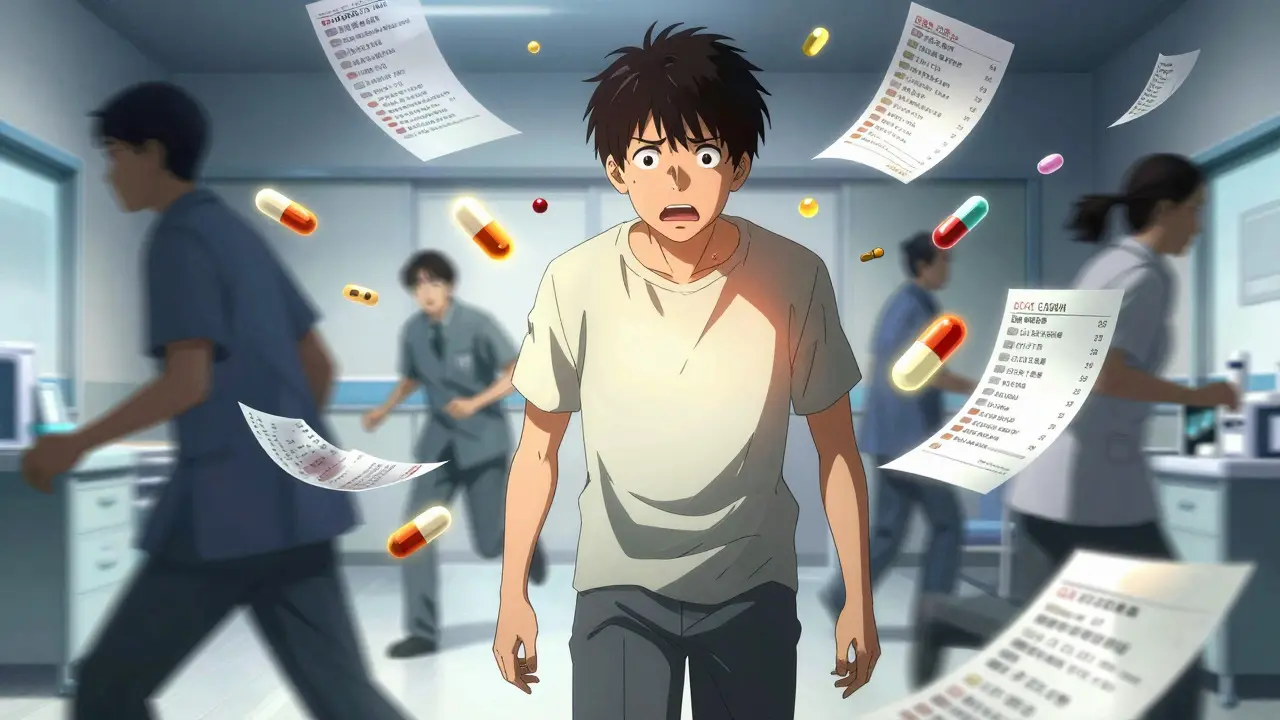
Imagine you are in the hospital. A nurse asks what medications you take. You list five pills. But at home, you actually take seven, including an over-the-counter sleep aid and a herbal supplement your doctor doesn't know about. When you leave the hospital, the discharge paperwork lists only the five pills you mentioned. The result? You stop taking two essential drugs or double up on something dangerous. This isn't a rare glitch; it is the norm.
Medication reconciliation is the process of identifying the most accurate list of all medications a patient is taking-including name, dosage, frequency, and route-and using this list to provide correct medications for patients anywhere within the health care system. It sounds bureaucratic, but it is literally a matter of life and death. Research shows that medication errors occur in 50-70% of patient transitions between care settings. Of those errors, 20-30% cause actual harm. That means if you go to the emergency room or get admitted to a hospital, there is a very high chance your medication record will be wrong by the time you leave.
The goal is simple: ensure that every provider who touches your care has the exact same information as the last one. No omissions, no duplications, no dosing errors. But achieving this requires more than just asking "what do you take?" It requires a structured, multi-step verification process that involves pharmacists, electronic records, and yes, you.
The Five Steps to Getting It Right
You cannot fix a problem you don't measure. The Institute for Healthcare Improvement (IHI) and other major bodies have standardized medication reconciliation into five specific steps. If any step is skipped, the chain breaks.
- Develop a Best Possible Medication History (BPMH): This is not just copying what's in your chart. It means gathering every single substance you ingest. This includes prescription drugs, over-the-counter (OTC) meds, vitamins, herbal remedies, and even traditional medicines. The gold standard here is verifying against at least two independent sources. Relying solely on patient memory leads to errors in 42% of cases.
- Develop a Plan for the New Setting: What medications *should* you be taking right now? For example, do you still need your blood pressure med while fasting for surgery? Do you need painkillers instead of your usual routine?
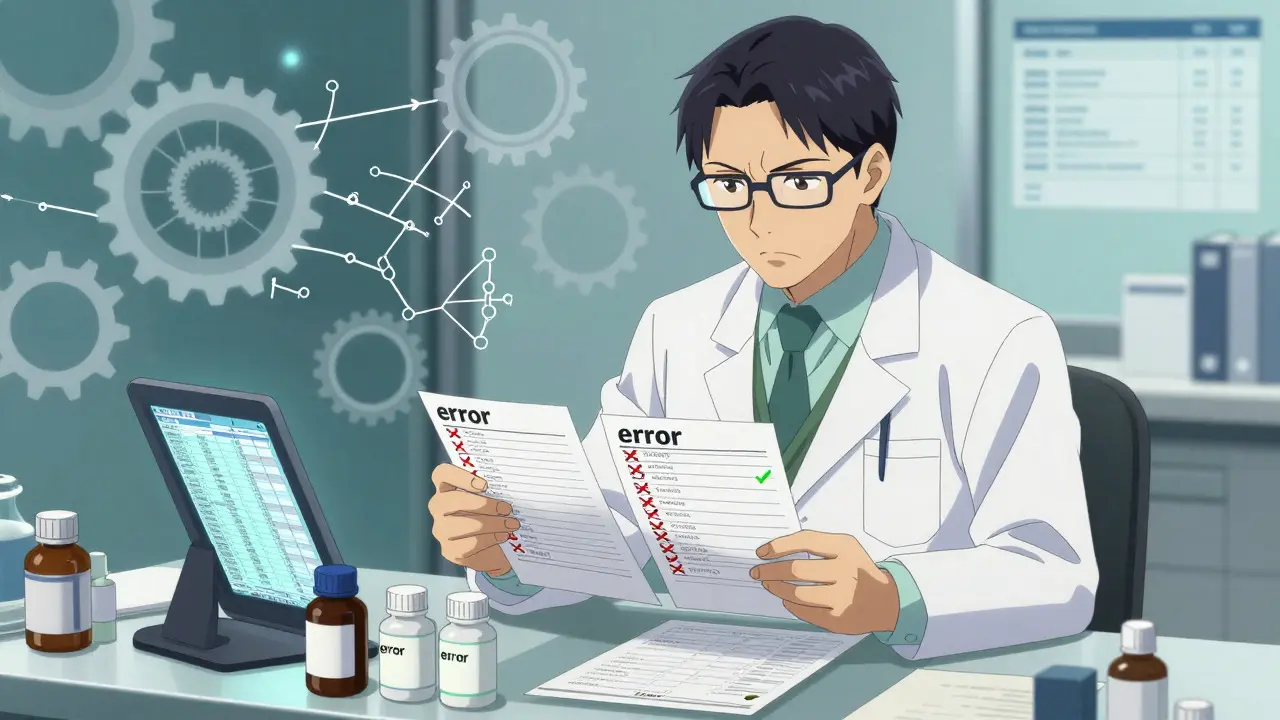
- Compare the Lists: This is the detective work. Line by line, compare your home list with the new orders. Look for differences.
- Make Clinical Decisions: Resolve the discrepancies. Why is Drug A missing? Was it intentional? Why is Drug B duplicated? Is the dose correct for your kidney function?
- Communicate the Final List: Hand off the verified list to the next caregiver and, crucially, to you, the patient.
Most hospitals fail at step one. They assume the electronic health record (EHR) is complete. It rarely is. A 2017 study found that patient self-report alone is deeply flawed, which is why involving a pharmacist to cross-reference community pharmacy records is critical.
Reconciliation vs. Review: Know the Difference
Patient often confuse medication reconciliation with a medication review. They sound similar, but they serve different purposes. Understanding this helps you advocate for yourself.
| Feature | Medication Reconciliation | Comprehensive Medication Review |
|---|---|---|
| Timing | During transitions of care (admission, transfer, discharge) | Routine checkups or annual visits |
| Primary Goal | Prevent errors during handoffs (omissions, duplications) | Evaluate treatment effectiveness and adherence |
| Who Leads It | Often nurses or pharmacists during acute care | Pharmacists or primary care providers |
| Regulatory Status | Mandatory for Joint Commission accreditation | Quality metric (NCQA), but less strictly enforced |
Medication reconciliation is a safety net for the chaotic moments when you move from one setting to another. A medication review is a long-term strategy for managing chronic conditions. You need both, but reconciliation is the urgent priority when you are hospitalized.
The Pharmacist Advantage
If you want to reduce errors, you need expertise. Nurses are incredibly skilled, but their workload during admission is overwhelming. Doctors are focused on diagnosing the acute issue. Pharmacists are the medication experts.
The American Society of Health-System Pharmacists (ASHP) states clearly that pharmacists are essential for safe transitions of care. Data backs this up. Facilities using pharmacist-led reconciliation models see a 47% reduction in error rates compared to nurse-only models. At Mayo Clinic, a pharmacist-led program reduced 30-day readmissions by 18% and prevented over 1,200 adverse drug events annually.
However, access varies. In many smaller community hospitals, pharmacists may not be available 24/7. In these cases, trained technicians or nurses using robust clinical decision support systems can help, but the accuracy drops. If you are being admitted, ask if a pharmacist will review your medications. It is a reasonable request that could save your life.

Barriers That Sabotage Safety
Even with good intentions, reconciliation fails. Why? Because the healthcare system is fragmented. Here are the biggest roadblocks:
- Fragmented EHR Systems: Your primary care doctor uses Epic. The hospital uses Cerner. The specialist uses Allscripts. These systems don't always talk to each other smoothly. A 2023 survey found that 76% of hospitals report issues with fragmented health information systems.
- Poor Patient Knowledge: Shockingly, 40-50% of elderly patients cannot accurately name their medications or explain why they take them. If you don't know what you're taking, the hospital can't reconcile it correctly.
- Time Pressure: Discharge reconciliation can take 45-60 minutes per patient in some facilities. With staffing shortages, providers often rush, leading to "checkbox" compliance rather than genuine verification.
- Missing OTC and Herbal Data: Electronic records rarely capture the ibuprofen you pop for headaches or the St. John's Wort you take for mood. Yet, these interact with prescription drugs frequently.
Dr. Gordon Schiff from Harvard Medical School noted that current practices often become "checkbox exercises" that fail to address underlying system issues. We need to move beyond ticking boxes to actually solving the data gaps.
How You Can Protect Yourself
You are the constant in your healthcare journey. Providers change, systems fail, but you are there from start to finish. Here is how to make sure your medication list is accurate across care settings:
- Create a Master Medication List: Keep a physical or digital list of everything you take. Include brand names, generic names, doses, and frequencies. Update it every time your doctor changes a prescription.
- Bring Your Bottles: When going to the ER or hospital, bring your actual pill bottles. Photos of labels work too. This eliminates guesswork about dosage and strength.
- List Your Supplements: Don't hide the vitamins or herbs. Tell the provider exactly what they are. Many herbal supplements interact dangerously with blood thinners and heart medications.
- Ask Questions at Discharge: Before you leave the hospital, ask: "What changed in my medication list?" Write down the answers. If you are confused, say so. 61% of patients feel confused about medication changes after discharge-don't be part of that statistic.
- Follow Up Within 7 Days: Call your primary care provider or pharmacist within a week of discharge. Confirm that your new prescriptions match what the hospital intended.
Technology is improving. AI tools are being tested to predict discrepancies, and interoperability standards like USCDI Version 4 are helping systems share data better. But until those systems are perfect, human vigilance is your best defense.
What is the difference between medication reconciliation and medication therapy management?
Medication reconciliation is a specific safety process performed during transitions of care (like hospital admission or discharge) to ensure the medication list is accurate and consistent. Medication Therapy Management (MTM) is a broader service, often covered by Medicare Part D, that focuses on optimizing therapeutic outcomes through ongoing reviews, adherence counseling, and coordination with providers. Reconciliation is about accuracy during handoffs; MTM is about long-term effectiveness.
Why do medication errors happen so often during hospital transfers?
Errors happen because information is lost or distorted as it moves between different providers and systems. Studies show that 50-70% of transitions involve medication errors. Common causes include incomplete patient histories, reliance on memory rather than verified records, poor communication between departments, and the failure to account for over-the-counter drugs or supplements.
Does insurance cover pharmacist-led medication reconciliation?
Coverage varies. Medicare covers Medication Therapy Management (MTM) for eligible beneficiaries, which includes comprehensive reviews. However, specific hospital-based reconciliation services are typically bundled into the hospital bill rather than billed separately to the patient. Private insurance plans increasingly recognize the value of pharmacist interventions, but you should check your specific plan details for outpatient reconciliation services.
How can I prepare for a hospital stay to ensure my medications are correct?
Prepare a written list of all medications, including doses and frequencies. Bring your actual pill bottles or clear photos of the labels. Include over-the-counter drugs, vitamins, and herbal supplements. Share this list with every provider you see. Upon discharge, verify that your new instructions match your understanding before leaving.
What role does technology play in medication reconciliation?
Electronic Health Records (EHRs) and clinical decision support systems help automate parts of the process, such as checking for drug interactions. Interoperability standards allow different hospital systems to share medication histories. Emerging AI tools aim to predict discrepancies. However, technology currently supports rather than replaces human judgment, as algorithms can miss context or non-standard medications.