Health December 15, 2025
PTSD Nightmares: How Prazosin and Sleep Therapies Actually Work
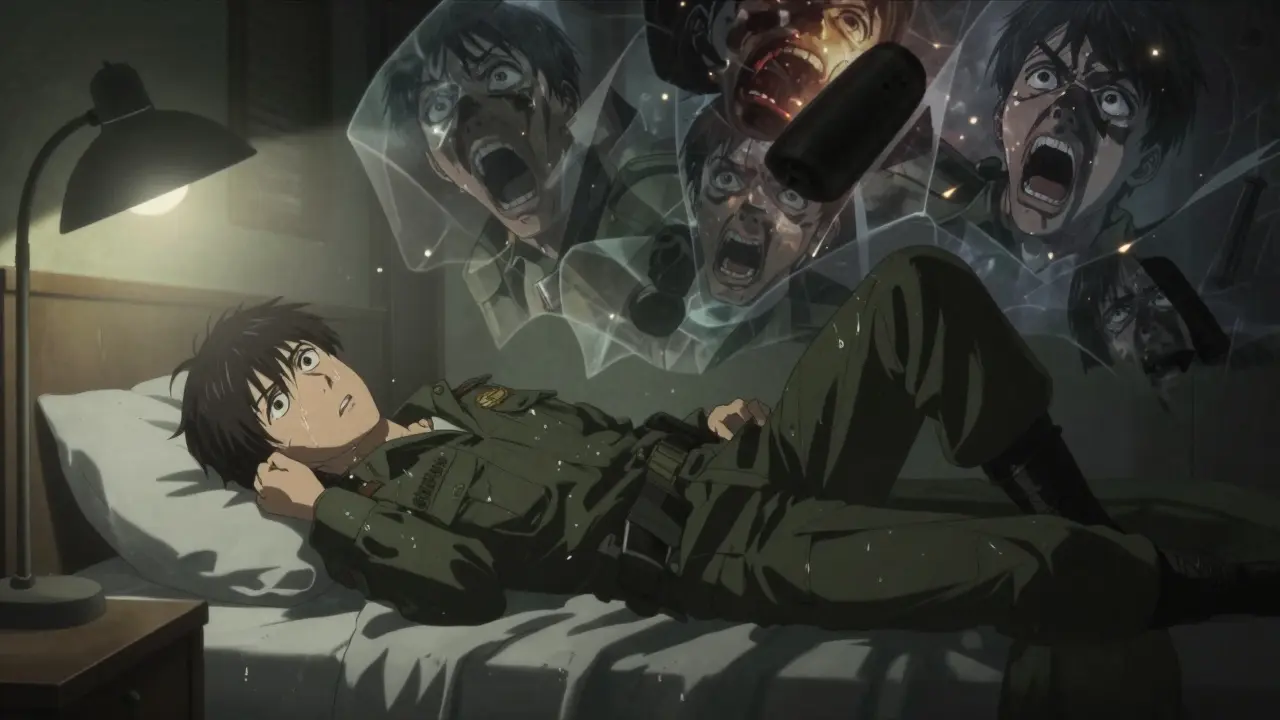
For many people living with PTSD, the worst part isn’t the memories-it’s what happens when they close their eyes. Nightmares don’t just disrupt sleep; they keep trauma alive. Every night, the same scenes replay: the crash, the scream, the silence after the explosion. And when you wake up drenched in sweat, heart pounding, you don’t just feel tired-you feel broken. You start dreading bedtime. That’s not laziness. That’s PTSD.
Research shows 71% to 90% of military veterans with PTSD experience frequent nightmares. Among civilians who’ve survived abuse, accidents, or violent crime, it’s still 52% to 71%. These aren’t random bad dreams. They’re trauma reenactments, wired deep into the brain’s fear circuitry. And they’re not going away with willpower alone.
Why Prazosin Became a Go-To for Nightmares
In 2003, Dr. Murray Raskind at the VA Puget Sound started giving a blood pressure drug called prazosin to veterans with severe PTSD nightmares. It wasn’t supposed to help sleep. But it did. A lot.
Prazosin blocks alpha-1 receptors in the brain, which reduces the surge of norepinephrine-the stress chemical that spikes during REM sleep. In PTSD, this system goes haywire. Your brain thinks it’s still under threat, even when you’re asleep. Prazosin quiets that alarm.
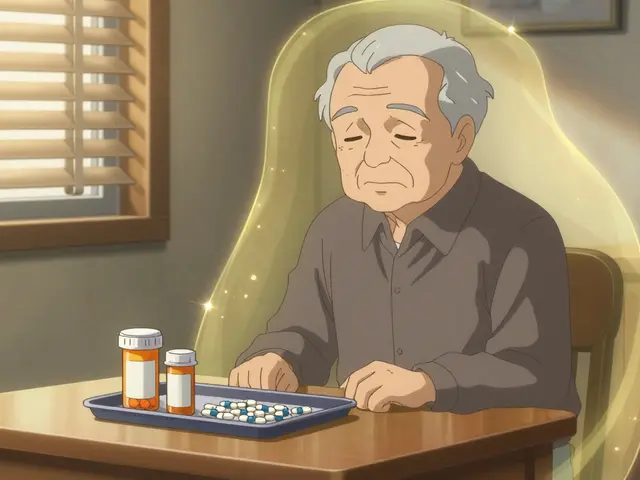
Dosing usually starts at 1 mg at bedtime, slowly increasing by 1 mg each week until the nightmares ease, often between 3 mg and 15 mg. Some patients need up to 25 mg. It’s not a magic pill. But for many, it’s the first time in years they’ve slept through the night without waking up screaming.
Studies show prazosin reduces nightmare frequency by about half in most users. One 2023 trial with 360 participants found those on 6 mg nightly had a 32% drop in nightmare distress compared to just 18% in the placebo group. That difference? Statistically real.
But here’s the catch: prazosin doesn’t fix PTSD. It only masks the nightmare symptom. And it comes with trade-offs. About 44% of users report side effects-dizziness (29%), low blood pressure (15%), nasal congestion (18%). Some feel faint when standing up too fast. A few stop taking it because of this. Worse, 28% of people who quit prazosin suddenly experience rebound nightmares-worse than before.
And despite years of use, the FDA still hasn’t approved prazosin for PTSD nightmares. It’s off-label. Why? Because not all trials worked. A major 2018 Department of Defense study found no significant benefit over placebo. Critics say the doses were too low, the treatment too short, or the patients weren’t selected properly. Supporters argue those studies missed the point: prazosin works best for those with severe, trauma-specific nightmares-not everyone with PTSD.
What Actually Fixes Sleep in PTSD? (Hint: It’s Not Just Pills)
There’s a growing consensus: if you want to heal PTSD-related sleep problems, you need to treat the sleep itself-not just the trauma.
Enter CBT-I: Cognitive Behavioral Therapy for Insomnia. It’s not about counting sheep. It’s about rewiring your brain’s association with bed. A typical CBT-I program lasts 6 to 8 weeks, with weekly 60-minute sessions. Here’s what happens:
- Stimulus control: If you’re awake for more than 20 minutes, you get out of bed. No scrolling. No worrying. Just sit in another room until you’re sleepy. This breaks the link between bed and anxiety.
- Sleep restriction: You limit time in bed to match how much you’re actually sleeping. If you only sleep 5 hours, you’re only allowed in bed 5 hours. Sounds brutal? It is. But your body catches up. Sleep efficiency improves fast.
- Cognitive restructuring: You challenge thoughts like “I’ll never sleep again” or “If I don’t sleep 8 hours, I’ll collapse.” These thoughts keep your nervous system on high alert.
- Sleep hygiene: No caffeine after noon. No screens an hour before bed. Consistent wake-up time-even on weekends.
Studies show CBT-I cuts insomnia severity by 60-70%. In PTSD patients, it also reduces overall PTSD symptoms by 40-50%. Why? Because sleep isn’t just a symptom-it’s a regulator. When you sleep well, your amygdala calms down. Your prefrontal cortex starts working again. You stop reacting to every sound like it’s a threat.
And the gains stick. VA patient surveys show 63% of people who completed CBT-I still had better sleep six months later. That’s rare in mental health treatment.
Imagery Rehearsal Therapy: Rewriting Your Nightmares
What if you could rewrite the nightmare before you even dream it?
Imagery Rehearsal Therapy (IRT) does exactly that. In 3 to 5 sessions, you pick a recurring nightmare. You write it down-every detail. Then you rewrite it. Not just a little. You change the ending. Maybe the attacker disappears. Maybe you escape. Maybe you call for help and someone answers.
Then, every day for 10-15 minutes, you read the new version out loud and picture it clearly in your mind. You’re training your brain to replace the fear script with a new one.
Results? 67% to 90% of PTSD patients report fewer nightmares after IRT. In one National Center for PTSD survey, 85% said their nightmare distress dropped significantly. It’s not just about fewer dreams-it’s about feeling safer in your own mind.
And unlike medication, IRT has no side effects. No dizziness. No low blood pressure. Just a little mental effort. The catch? You have to be willing to face the nightmare while awake. That’s hard. Many patients avoid it because it feels like reliving the trauma.

Combining Therapies: The Real Breakthrough
Here’s where things get powerful: combining sleep therapy with trauma therapy.
One 2022 VA study compared two groups: one got Prolonged Exposure (PE) therapy alone. The other got PE paired with CBT-I. The results were dramatic.
- Insomnia severity dropped 12.4 points in the combo group vs. 4.2 in PE alone.
- Sleep efficiency jumped 15.3% vs. 3.1%.
- Total sleep time increased by 78 minutes vs. 22 minutes.
That’s not a small improvement. That’s life-changing.
Why? Because trauma therapy can stir up nightmares before they fade. CBT-I gives patients the tools to handle the sleep disruption while processing the trauma. They don’t quit treatment because they’re too exhausted to cope.
Even more promising: the VA’s “Sleep SMART” initiative now offers CBT-I in 143 facilities, serving 86,000 veterans annually. Completion rates? 74%. That’s higher than most PTSD treatments.
What About Digital Tools? NightWare and Beyond
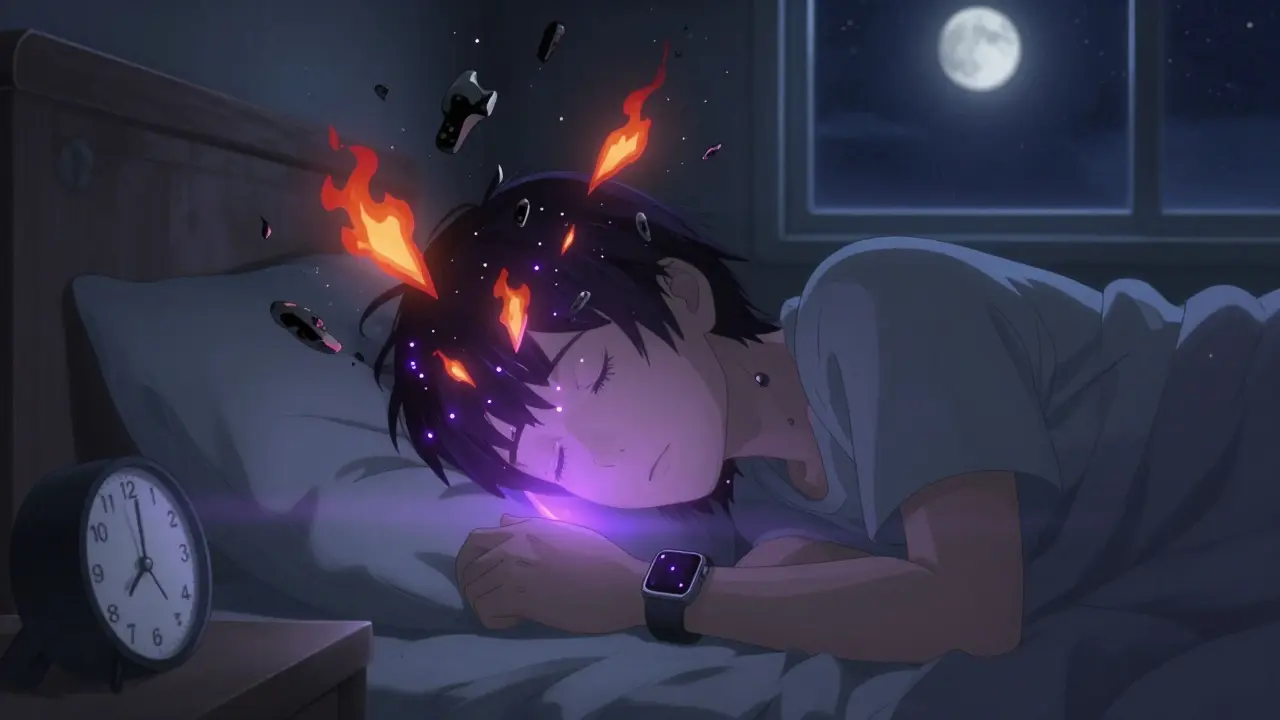
Technology is stepping in. In 2020, the FDA approved NightWare-the first digital therapeutic for PTSD nightmares. It uses an Apple Watch to detect changes in heart rate and movement during REM sleep. When it senses a nightmare is starting, it delivers a gentle vibration to disrupt the dream-without waking you up.
In a 2022 validation study, users saw a 58% reduction in nightmares. No pills. No therapy sessions. Just a wearable that quietly interrupts the fear cycle.
It’s not perfect. Some users find the vibrations annoying. Others don’t wear the watch consistently. But for those who can’t access therapy or don’t want medication, it’s a game-changer.
The Big Picture: Why This Matters
PTSD treatment has long focused on talk therapy and SSRIs. But sleep is the missing piece. You can’t heal trauma if you’re too exhausted to think straight. You can’t process memories if your brain is stuck in survival mode every night.
CBT-I and IRT aren’t just “add-ons.” They’re core treatments. The American Academy of Sleep Medicine upgraded its recommendation for CBT-I in PTSD from “conditional” to “strong” in 2023. That’s huge. It means sleep therapy is now considered as essential as trauma-focused therapy.
Prazosin still has a place-especially for those who can’t access therapy, live in rural areas, or need quick relief. But it’s not the end goal. It’s a bridge.
The future? Integrated care. Screening for nightmares at every PTSD appointment. Offering CBT-I or IRT alongside trauma therapy. Using digital tools like NightWare as supplements. Making sleep a priority-not an afterthought.
And the message to anyone struggling? You’re not broken. You’re not lazy. Your brain is trying to protect you. But it’s stuck. And there are real, proven ways out.
What to Do Next
If you’re dealing with PTSD nightmares, here’s your roadmap:
- Track your nightmares. Keep a simple log: date, content, intensity (1-10), how you felt after. Do this for two weeks.
- Ask your provider about CBT-I. Not just “sleep tips.” Real CBT-I. Find a certified provider through the Society of Behavioral Sleep Medicine.
- Ask about IRT. If nightmares are your main issue, this might be even more effective than medication.
- If you’re on prazosin, don’t quit cold turkey. Work with your doctor to taper slowly. Rebound nightmares are real.
- Try NightWare if you have an Apple Watch. It’s FDA-cleared, covered by some insurance, and non-invasive.
Healing doesn’t happen overnight. But sleep does. And once you start sleeping again, everything else becomes possible.
Write a comment
Items marked with * are required.





15 Comments
Hadi Santoso December 15, 2025 AT 04:34
man i never thought about nightmares being this wired into your brain like a glitchy loop. i had a buddy who took prazosin and said it was the first time in 8 years he woke up not screaming. i thought he was just lucky until i read this. now i get why sleep isn't just 'rest' for us.
Kayleigh Campbell December 16, 2025 AT 07:31
so prazosin’s basically a chemical chill pill for your amygdala? lol. i’m not surprised it’s off-label-big pharma doesn’t make money off a 60-year-old blood pressure drug. but hey, if it lets someone sleep without reliving their worst day… who cares if it’s not FDA-approved? the system’s broken, not the medicine.
Randolph Rickman December 18, 2025 AT 02:23
CBT-I changed my life. i used to think 'just sleep better' was the dumbest advice ever. turns out, it’s not about willpower-it’s about retraining your brain like you would a dog that jumps on the couch. i was skeptical but did the 6-week thing. now i sleep 7 hours straight. no pills. no guilt. just science. if you’re reading this and still dreading bedtime-try it. your future self will cry happy tears.
Kim Hines December 18, 2025 AT 22:08
the part about rebound nightmares when quitting prazosin scared me. i’ve been on it for 2 years. i didn’t know stopping cold could make it worse. thanks for the warning.
sue spark December 20, 2025 AT 14:45
imagine rewriting your nightmare like a fanfic… i did that last month. changed the ending so i called 911 and they came. i used to dream i was alone. now i dream someone hears me. it sounds stupid but i actually cried the first time i slept through it
Dan Padgett December 21, 2025 AT 22:59
in my village back home, we say nightmares are the soul trying to speak. modern medicine gives us pills and gadgets. but maybe the real healing is in remembering you’re not alone in the dark. i’ve seen people heal with stories, not scripts. the brain remembers safety better than fear-if you give it a new story to hold onto.
Souhardya Paul December 22, 2025 AT 09:19
just read the part about NightWare. i have an apple watch. i’m downloading it tonight. no therapy appointments, no prescriptions, just a little vibration to say ‘hey, you’re safe now.’ that’s kind of beautiful in a weird, techy way.
SHAMSHEER SHAIKH December 22, 2025 AT 09:57
It is with profound respect for the scientific rigor of this exposition that I must express my utmost admiration for the meticulous documentation of pharmacological and behavioral interventions pertaining to the management of post-traumatic nocturnal phenomena. The empirical data presented herein, particularly the 32% reduction in nightmare distress with prazosin versus placebo, constitutes a landmark contribution to the field of clinical sleep neurology. I respectfully urge all healthcare institutions to adopt these protocols without delay.
Andrew Sychev December 22, 2025 AT 16:20
Of course it works. The VA gives you a pill instead of real therapy because they don’t want to pay for 50 sessions. They’d rather you sleep through your trauma than actually face it. This is just chemical suppression disguised as progress. They’re drugging veterans into silence. Wake up people.
Colleen Bigelow December 23, 2025 AT 19:34
They're pushing this CBT-I nonsense because the government doesn't want to pay for real trauma therapy. This is all part of the woke agenda to make veterans feel guilty for having nightmares. You think rewriting your dream changes what really happened? Wake up. The enemy is still out there. And they don't care if you sleep.
Tiffany Machelski December 25, 2025 AT 01:01
im still scared to try irt cause it feels like i’m digging up a grave. but i wrote down one nightmare last night. just the words. didn’t change it. just wrote it. felt weird. but not as bad as i thought. maybe tomorrow i’ll try rewriting it.
Arun ana December 25, 2025 AT 18:21
so many people here talking about therapy and meds… but what about those of us who don’t have access? i live in a small town in India, no sleep specialists, no prazosin, no apple watch. what do we do? 🤔
anthony epps December 26, 2025 AT 00:27
wait so if i stop prazosin i get worse nightmares? that’s wild. i thought it was just helping me sleep. i didn’t know my brain was hooked. i’m gonna talk to my doc before i quit.
Kitty Price December 26, 2025 AT 05:35
just tried NightWare. it vibrated once last night and i woke up confused… then realized i was having the dream again. i didn’t scream. i just… breathed. for the first time in 5 years. thank you. 🙏
Billy Poling December 26, 2025 AT 23:08
It is imperative to note, with due diligence and scholarly precision, that the assertion that sleep is a 'regulator' of trauma neurobiology, while intuitively appealing, lacks sufficient longitudinal neuroimaging validation across heterogeneous PTSD subtypes. The generalization of CBT-I efficacy to all trauma survivors, particularly those with comorbid dissociative disorders, may constitute an overextension of therapeutic inference. One must exercise caution before endorsing systemic implementation of sleep-focused interventions as primary modalities, lest we inadvertently pathologize adaptive survival mechanisms that have evolved over millennia under conditions of persistent environmental threat.