Health February 17, 2026
Arrhythmias Explained: Atrial Fibrillation, Bradycardia, and Tachycardia
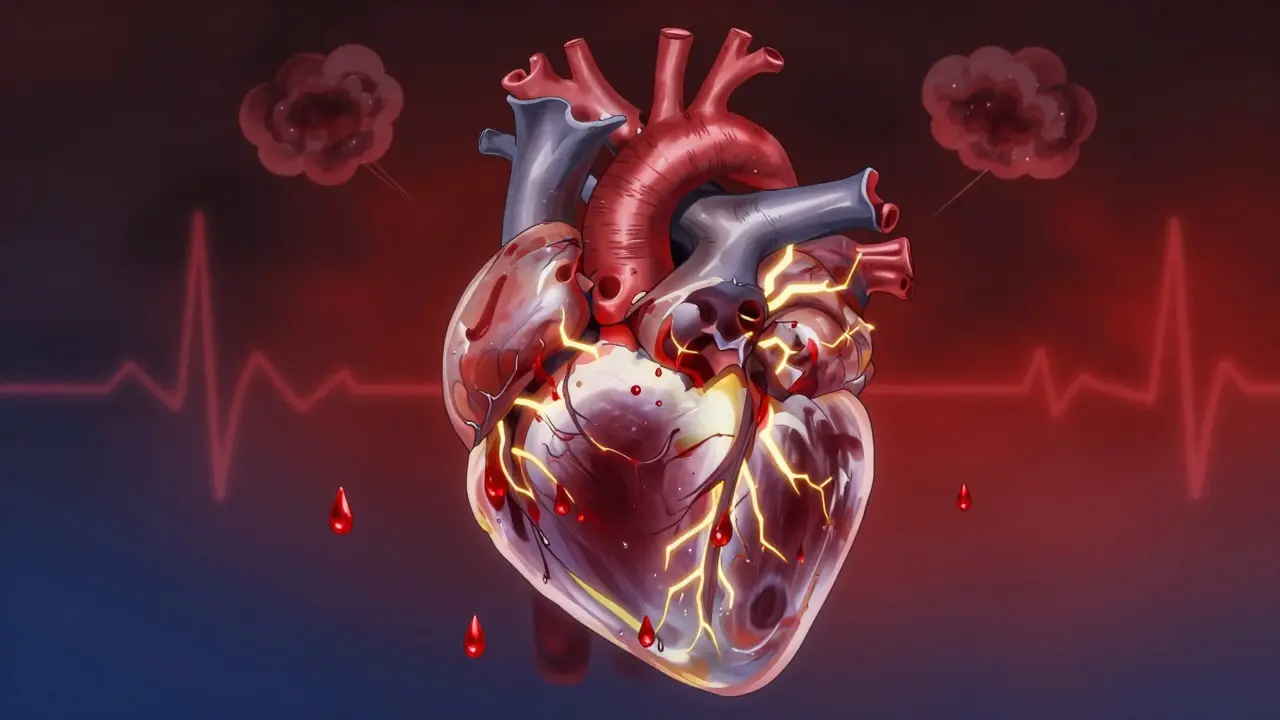
When your heart skips a beat, races too fast, or drags along like it’s stuck in mud, it’s not just "feeling off." It could be an arrhythmia - a problem with the rhythm or rate of your heartbeat. These aren’t always dangerous, but they can be warning signs of something bigger. Three of the most common types are atrial fibrillation, bradycardia, and tachycardia. If you’ve ever felt your heart fluttering in your chest, or noticed you’re winded after climbing a flight of stairs when you used to breeze up it, you’re not alone. Millions of people deal with these issues every year - and understanding them is the first step to taking control.
Atrial Fibrillation: When Your Heart’s Upper Chambers Go Chaotic
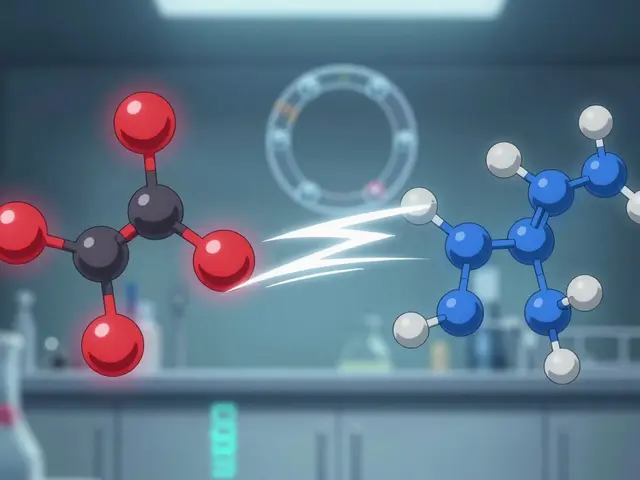
Atrial fibrillation, often called AFib or AF, is the most common serious heart rhythm disorder. Imagine your heart’s upper chambers (the atria) trying to beat in sync, but instead, they’re quivering like a flag in a storm. That’s AFib. The electrical signals that normally tell your heart when to contract become messy, scattered, and out of order. The result? An irregular, often rapid heartbeat.
The American Heart Association estimates that between 2.7 and 6.1 million Americans have AFib. In the UK, it’s estimated that over 1.2 million people live with it - and many don’t even know it. Why? Because some people feel nothing at all. Others notice a fluttering in the chest, fatigue, dizziness, shortness of breath, or a pulse that feels uneven. You might check your wrist and think, "Why is my pulse not steady?" That’s a classic sign.
AFib isn’t usually fatal on its own, but it’s dangerous because it increases your risk of stroke by five times. When the atria don’t contract properly, blood can pool and form clots. If one of those clots breaks loose, it can travel to your brain and cause a stroke. That’s why doctors don’t just treat the fluttering - they treat the risk.
Diagnosis usually starts with a simple pulse check. If your pulse feels irregular, your doctor will likely order an electrocardiogram (ECG). This test records the electrical activity of your heart and can show the telltale signs of AFib: no clear P-waves, and an irregular R-R interval. For people who have episodes that come and go (paroxysmal AFib), a 24-hour or even 7-day portable ECG monitor might be needed to catch it.
Treatment depends on how long you’ve had it, how bad your symptoms are, and whether there’s an underlying cause like high blood pressure, thyroid issues, or sleep apnea. For most people, the first goal is rate control - using medications like beta-blockers or calcium channel blockers to slow the heart down. If that doesn’t help, or if you’re still feeling awful, doctors may try rhythm control: using drugs or a procedure called cardioversion to shock the heart back into a normal rhythm. Sometimes, a catheter ablation is needed. This is where a thin tube is threaded into the heart, and heat or cold is used to destroy small patches of tissue causing the乱码. A newer method called pulsed field ablation (PFA) uses electrical pulses instead of heat or cold, reducing damage to nearby tissue. It’s becoming more common, especially in younger patients.
Lifestyle matters, too. Cutting back on alcohol, quitting smoking, losing weight if needed, and managing blood pressure can all help reduce AFib episodes - even before you need medication.
Bradycardia: When Your Heart Beats Too Slow
Bradycardia means your heart is beating slower than 60 times per minute. Sounds bad, right? Not always. Athletes, for example, often have resting heart rates in the 40s or 50s. Their hearts are strong and efficient - they don’t need to beat fast to pump enough blood. That’s normal.
But if you’re not an athlete and your heart is beating 45 times a minute, and you feel dizzy, tired, or faint, that’s a problem. Your body isn’t getting enough oxygen-rich blood. You might notice you’re out of breath climbing stairs, or you can’t keep up with your kids at the park. Sometimes, you’ll just feel "off" - like you’ve been running on empty.
Causes vary. It can be from natural aging of the heart’s electrical system, damage from heart disease, an underactive thyroid, or even certain medications like beta-blockers or digoxin. In some cases, it’s a side effect of sleep apnea or an electrolyte imbalance.
Diagnosis starts with an ECG. If the slow rhythm shows up on the test, your doctor might ask you to wear a Holter monitor for a day or two to see if it happens during normal activities. Blood tests can check thyroid levels and electrolytes. An echocardiogram might be done to check heart structure.
If you have symptoms and no reversible cause, a pacemaker is often the answer. It’s a small device implanted under the skin near your collarbone. It sends tiny electrical pulses to your heart to keep it beating at a steady pace. Modern pacemakers adjust automatically - if you’re walking up a hill, it speeds up. If you’re sleeping, it slows down. They’re reliable, quiet, and last 5-15 years before needing replacement.
Not everyone with bradycardia needs one. If it’s mild and you feel fine, your doctor might just monitor you. But if you’ve fainted or nearly fainted, that’s a red flag. Don’t ignore it.
Tachycardia: When Your Heart Races Out of Control
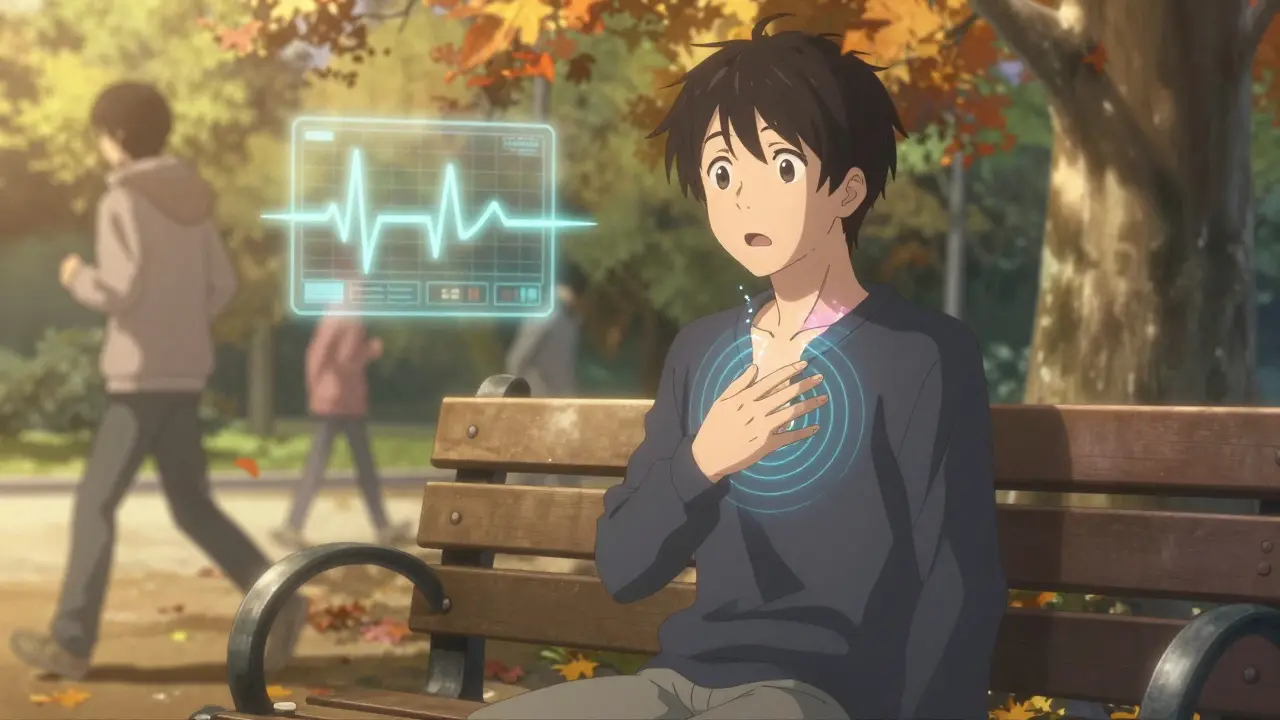
Tachycardia means your heart beats faster than 100 beats per minute at rest. Unlike AFib, which is irregular, tachycardia is often regular - but too fast. It can happen in the upper chambers (supraventricular tachycardia or SVT) or the lower chambers (ventricular tachycardia or VT). SVT is more common and usually less dangerous. VT is more serious because it can lead to sudden cardiac arrest.
SVT often strikes suddenly. One moment you’re fine, the next, your heart is pounding like you’ve just run a marathon. You might feel palpitations, chest tightness, lightheadedness, or even shortness of breath. Episodes can last seconds or hours. Some people trigger it with caffeine, stress, or dehydration. Others have no clear trigger.
VT is scarier. It usually happens in people with existing heart damage - from a past heart attack, cardiomyopathy, or genetic conditions. Symptoms include dizziness, fainting, chest pain, and in severe cases, sudden collapse. This is a medical emergency.
Diagnosis again relies on ECG. If the episode isn’t happening during the test, a Holter monitor or event recorder helps. Stress tests can sometimes bring it on in a controlled setting. For VT, an electrophysiology study (EPS) might be done - where doctors map the heart’s electrical pathways to find the problem area.
Treatment for SVT often starts with simple techniques: the Valsalva maneuver (holding your breath and bearing down like you’re having a bowel movement), or splashing cold water on your face. These can reset the rhythm. If that doesn’t work, medications like adenosine can be given intravenously. For recurring SVT, ablation is highly effective - it fixes the problem in about 90% of cases.
For VT, the stakes are higher. Medications like amiodarone or beta-blockers help control it. But if you’ve had a cardiac arrest or are at high risk, an implantable cardioverter-defibrillator (ICD) may be recommended. It’s like a pacemaker on steroids - it can detect a dangerous rhythm and deliver a shock to restore normal beating. It doesn’t prevent the arrhythmia, but it can save your life if it happens.
What to Do If You Suspect an Arrhythmia
If you notice any of these signs - irregular pulse, racing heart, dizziness, unexplained fatigue, or fainting - don’t brush it off. Write down when it happens, how long it lasts, and what you were doing. Did it happen after coffee? After exercise? While lying down? That info helps your doctor.
See your GP. They’ll check your pulse, listen to your heart, and likely order an ECG. If something looks off, they’ll refer you to a cardiologist or an electrophysiologist - a specialist in heart rhythms.
Don’t wait for symptoms to get worse. Many people with AFib don’t realize they’re at risk for stroke until it’s too late. Early detection means better outcomes. Even if you feel fine, an irregular pulse is worth investigating.
When to Seek Emergency Help
Call 999 or go to A&E if you experience:
- Chest pain that lasts more than a few minutes
- Fainting or near-fainting
- Severe shortness of breath
- Heart rate over 150 beats per minute with dizziness or confusion
These could signal a life-threatening rhythm - especially ventricular tachycardia or a stroke from AFib.
Living With an Arrhythmia
Most people with arrhythmias live full, active lives. The key is knowing your limits and sticking to your treatment plan. Take your meds. Keep your appointments. Monitor your symptoms. Avoid triggers like excessive caffeine, alcohol, or stress.
Exercise is usually safe - and encouraged - but check with your doctor first. Some people with VT or advanced AFib need to avoid intense activity. Others can run marathons with the right care.
Support groups and resources like the British Heart Foundation’s website offer practical advice on managing arrhythmias. You’re not alone. Millions are managing this every day.
Can arrhythmias go away on their own?
Yes, sometimes - especially in cases of paroxysmal atrial fibrillation or occasional supraventricular tachycardia. These can come and go without treatment. But just because it stops doesn’t mean the risk is gone. AFib, for example, can worsen over time and increase stroke risk even if symptoms disappear. That’s why medical evaluation is crucial, even if episodes seem harmless.
Is a fast heartbeat always dangerous?
Not always. A fast heart rate during exercise, stress, or fever is normal. But if your heart races while you’re sitting still, especially with dizziness or chest pressure, it’s not. That’s when you need to get checked. The difference is context: your body’s normal response versus a malfunction in your heart’s electrical system.
Do I need to take blood thinners forever if I have AFib?
Not forever - but often, yes. If you have AFib and other risk factors like high blood pressure, diabetes, or being over 65, your doctor will likely recommend long-term anticoagulants like warfarin or apixaban. Even if your AFib is controlled, the stroke risk remains. Stopping blood thinners without medical advice can be dangerous. Your doctor will reassess your risk every year.
Can lifestyle changes cure arrhythmias?
Lifestyle changes won’t cure most arrhythmias, but they can reduce how often they happen. Losing weight, cutting alcohol, managing sleep apnea, and controlling blood pressure can cut AFib episodes by 50% or more in some people. For SVT, avoiding caffeine and staying hydrated can prevent triggers. It’s not a cure - but it’s one of the most powerful tools you have.
Are ablation procedures risky?
All medical procedures carry some risk. Traditional ablation uses heat or cold to burn tissue, which can rarely damage the heart or blood vessels. Pulsed field ablation (PFA) is newer and designed to be safer - it targets heart cells without affecting nearby tissue. Success rates are high (80-90%), and serious complications happen in less than 2% of cases. Your doctor will explain your specific risk based on your health and the type of arrhythmia.
If you’ve been told you have an arrhythmia, remember this: it’s not a life sentence. It’s a signal. And with the right care, most people live without limits.
Write a comment
Items marked with * are required.



8 Comments
John Cena February 19, 2026 AT 00:14
Been dealing with occasional AFib for a few years now. Honestly, the biggest game-changer wasn’t meds-it was cutting out alcohol and finally treating my sleep apnea. I used to think it was just stress, but turns out my body was just tired all the time. Now I sleep better, my pulse is steadier, and I don’t feel like I’m running on fumes after climbing stairs anymore. Small changes, huge difference.
Also, never thought I’d say this, but I’m kinda grateful for it. Made me pay attention to my health in ways I never did before.
Y’all not alone.
Jonathan Rutter February 20, 2026 AT 01:12
Look, I’ve read this whole thing and I’m just gonna say it-people are way too casual about arrhythmias. You think it’s just "oh, my heart skipped a beat" and brush it off like it’s a glitch in your phone? Nah. This isn’t some minor hiccup. Atrial fibrillation alone is a silent killer that turns your heart into a malfunctioning washing machine. And don’t even get me started on how many people ignore symptoms because they "don’t feel bad enough."
Let me tell you about my uncle-he had paroxysmal AFib for 7 years. No symptoms. No diagnosis. Then boom-stroke. Left side paralyzed. Couldn’t talk. All because he thought "it’s just old age."
Stop normalizing this. If your pulse feels off, you need to get an ECG. Not next week. Not when you feel like it. Now. Your life isn’t a suggestion box.
And yes, I’m mad. You should be too.
Jana Eiffel February 21, 2026 AT 08:16
It is with profound humility that I acknowledge the intricate interplay between physiological dysfunction and the human capacity for adaptation. The heart, as an organ of both biological necessity and symbolic resonance, serves as a metaphor for the equilibrium we strive to maintain in our lives.
Indeed, the phenomenon of atrial fibrillation, while clinically defined by irregular electrical impulses, may also be interpreted as an allegory for the dissonance inherent in modern existence-where rhythm is disrupted by stress, noise, and the relentless pace of technological advancement.
One cannot help but reflect upon the ancient Greek notion of harmonia-the balance of opposing forces-as it pertains to cardiac function. The modern pacemaker, then, is not merely a mechanical intervention, but a technological embodiment of the soul’s yearning for order amidst chaos.
And yet, one must be cautious not to reduce the human experience to mere bioelectrical signals. There is dignity in suffering. There is wisdom in stillness. And perhaps, in the quiet moments when our heart slows, we are granted the rarest of gifts: the opportunity to listen.
With deepest respect for both science and spirit.
Freddy King February 21, 2026 AT 15:37
Okay but let’s be real-AFib is basically the heart’s version of buffering. You’re streaming your life and suddenly it’s like "loading…" for 10 seconds. And yeah, the stroke risk is real, but like… 5x? That’s not even that high statistically if you’re under 50 and not obese.
Also, ablation? Bro, it’s literally a minor outpatient procedure now. PFA is next-gen-no burns, no scarring. It’s like a software update for your heart. Why are people so scared? You get a new iPhone every 2 years but you’ll die before you let a catheter near your atrium?
And don’t even get me started on pacemakers. They’re basically Fitbits with a battery. You don’t see people panicking about a smartwatch.
Stop fear-mongering. This isn’t a death sentence. It’s a tech upgrade.
Also, I’ve had 2 SVT episodes. Valsalva maneuver worked like a charm. You’re welcome.
Hariom Sharma February 23, 2026 AT 06:51
Bro I had SVT last year and it was wild. One minute I’m chilling, next minute my heart’s like "I’m out here running a 5k."
Did the Valsalva thing and it worked like magic. No meds, no hospital. Just held my breath and pushed like I was pooping 😂
Now I avoid caffeine after 2pm and drink more water. Simple stuff.
Also, if you’re from India like me-you know how hot it gets here? Dehydration is the silent trigger. Just drink water. Always.
You got this. Stay chill, stay hydrated, and don’t stress. Your heart’s got your back if you give it a chance.
Nina Catherine February 25, 2026 AT 00:05
i had afib last year and it was scawy but my doc said i dont need meds yet just watch it and cut back on coffee and wine. i did and i feel way better now like im not always tired?? also i got a holter monitor and it was so weird seeing my heart on my phone lmao
Benjamin Fox February 26, 2026 AT 14:18
If you're not a veteran or have a military ID you're not entitled to talk about heart health 😤🇺🇸
My brother was a Navy medic-he says 90% of arrhythmias are caused by lazy Americans eating pizza and watching Netflix. Get off the couch. Build some muscle. Stop being soft. 🏋️♂️
Tommy Chapman February 28, 2026 AT 04:59
You people are so naive. You think lifestyle changes "help"? Nah. The real fix is getting your heart checked before you're 40. I’ve seen too many people wait until they’re 55 and then panic. Why wait? Get the ECG. Get the monitor. Get the ablation. Don’t be a statistic. You want to live? Act like it. No more "I’ll do it later." Later is when you’re flatlining.