
Health May 25, 2026
Placebo Effect and Generics: Managing Psychological Factors in Medication
Imagine taking a painkiller that is chemically identical to the expensive brand-name version you’ve used for years. The ingredients are the same. The dosage is the same. But because the pill looks different and costs less, your headache doesn’t go away as quickly. This isn’t just in your head-it’s a well-documented biological reality known as the placebo effect, which is a psychological phenomenon where patient expectations significantly influence actual therapeutic outcomes, regardless of pharmacological composition. When it comes to switching from brand-name medications to generics, this mental hurdle can be the difference between feeling better and giving up on treatment entirely.
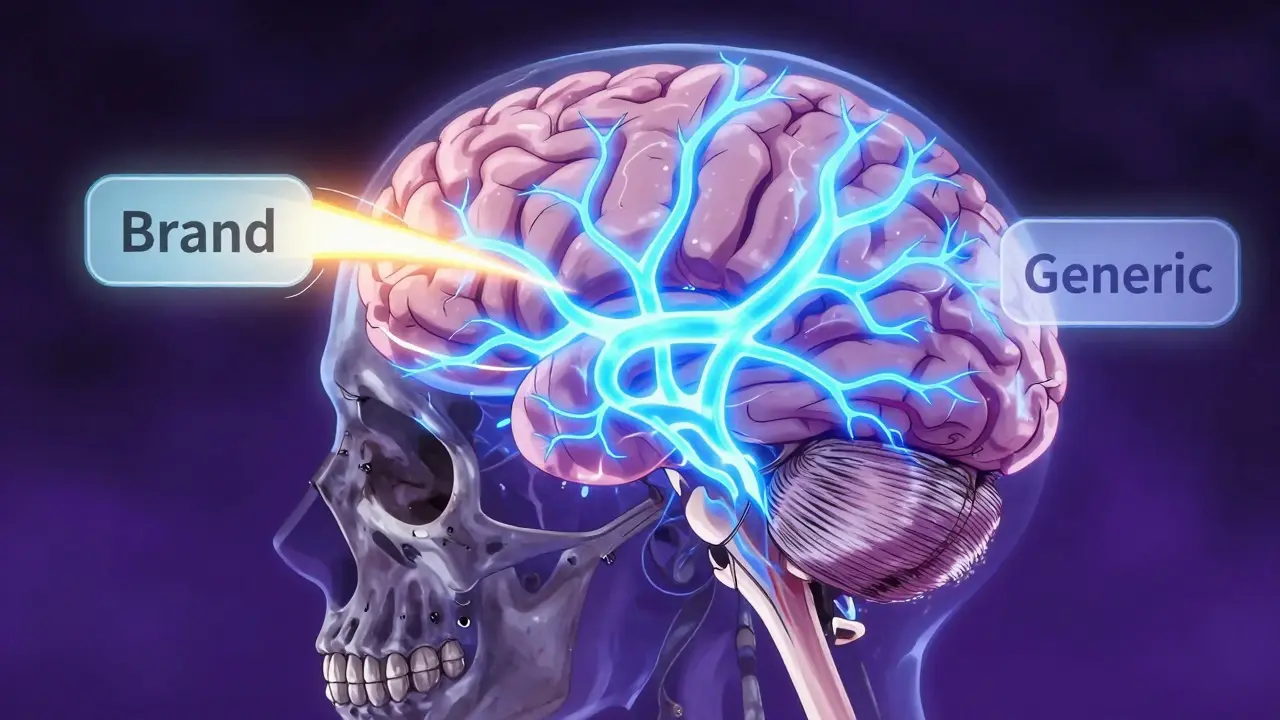
You might think that if two pills contain the same active ingredient, they should work exactly the same way. And scientifically, they do. However, human brains are wired to associate higher cost and familiar branding with superior quality. This cognitive bias triggers real neurobiological changes that can amplify or dampen a drug’s effectiveness. Understanding how these psychological factors work is crucial for anyone managing chronic conditions, reducing healthcare costs, or simply trying to get the most out of their prescription.
The Science Behind the Brand-Name Bias
Why does a label matter so much? It turns out that our brains don’t just process chemical signals; they also process context. A landmark study published in Health Psychology by Kate Faasse and her team at the University of Auckland revealed something striking. They gave participants placebo painkillers-sugar pills with no active medication-but labeled them differently. One group received pills labeled with famous brand names, while the other got pills labeled as "generic."
The results were undeniable. The "brand-name" placebos provided headache relief equivalent to actual ibuprofen. The "generic" placebos? They worked significantly less effectively. This wasn't imagination. Functional MRI (fMRI) studies have shown that when patients expect a strong effect from a brand-name drug, their dorsolateral prefrontal cortex activates 27% more intensely than when they take a generic-labeled version. This brain activity directly correlates with reported pain reduction.
This effect varies by medication type. Analgesics (painkillers) show the largest gap, with a statistical effect size of 0.82 for brand versus generic placebo responses. Cardiovascular medications show a smaller but still significant gap (0.31). Essentially, the more subjective the symptom-like pain or anxiety-the more powerful the placebo effect becomes.
The Nocebo Effect: When Expectations Cause Harm
If positive expectations can boost efficacy, negative expectations can create side effects. This is called the nocebo effect, which is the phenomenon where negative expectations about a treatment lead to adverse symptoms or reduced efficacy. This is particularly dangerous when patients switch to generics.
Consider statins, commonly prescribed for cholesterol. In clinical trials, patients who believed they were taking a generic statin reported muscle pain at rates of 8.7% to 11.2%. Those who took the same medication under neutral conditions reported pain in only 1.9% to 3.4% of cases. Yet, these patients were taking inert substances or identical formulations. The fear that "generics aren't as good" literally manufactured physical discomfort.
User experiences online reflect this trend. On forums like Drugs.com, nearly 80% of users who switched from brand to generic versions reported reduced efficacy or new side effects. One user noted their blood pressure rose after switching to generic levothyroxine, despite identical dosing. Another psychiatrist warned a patient that generic sertraline might "feel" less effective psychologically. These anecdotes highlight a critical issue: perception drives physiology.
Bioequivalence vs. Perception: Bridging the Gap
To understand why the disconnect exists, we need to look at what bioequivalence actually means. Regulatory agencies like the FDA require generic drugs to demonstrate bioequivalence to their brand-name counterparts. This means the generic must deliver the same amount of active ingredient into the bloodstream within a similar timeframe. Specifically, the 90% confidence interval for absorption metrics (AUC and Cmax) must fall between 80% and 125% of the brand-name drug.
| Attribute | Brand-Name Drug | Generic Drug |
|---|---|---|
| Active Ingredient | Identical chemical structure | Identical chemical structure |
| Cost | High (e.g., $4.83/pill for Lipitor) | Low (e.g., $0.08/pill for atorvastatin) |
| Patient Expectation | High efficacy due to marketing/price | Lower efficacy due to "cheap" perception |
| Adherence Rate | Higher (18.3% higher for CV meds) | Lower due to nocebo effects |
| Regulatory Standard | Full clinical trials required | Bioequivalence studies required |
Despite this scientific rigor, 30% of patients maintain negative perceptions about generics, according to FDA data. This misconception persists even though generics account for 90% of U.S. prescriptions and save billions annually. The challenge isn't the chemistry; it's the psychology. Patients often mistake inactive ingredients (fillers, dyes) for differences in potency, leading to unnecessary switches back to expensive brands.
Strategies for Managing Psychological Factors
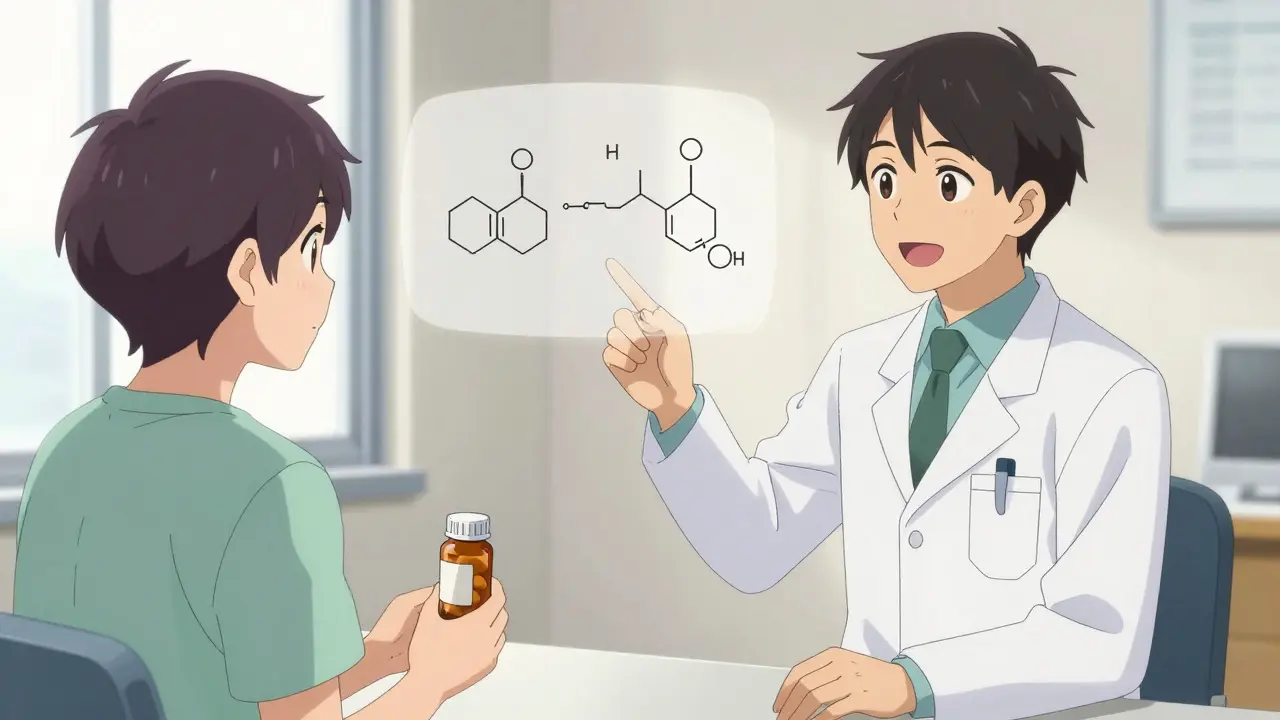
So, how do we overcome this mental barrier? Healthcare providers play a pivotal role. Research shows that a simple 3-minute educational intervention can reduce nocebo responses by 47%. Here’s how clinicians and patients can manage these psychological factors effectively:
- Explain Bioequivalence Clearly: Don’t just say "it’s the same." Explain the FDA’s rigorous standards. Use analogies, like comparing generic coffee to name-brand coffee-same beans, different packaging.
- Acknowledge Subjective Differences: Validate the patient’s feelings. Say, "You might notice a slight difference in how you feel initially due to expectation, but the chemical effect is identical." This reduces anxiety and prevents the nocebo effect from taking hold.
- Implement a Transition Period: Provide close monitoring for the first two weeks after switching. This allows patients to adjust psychologically without panicking over minor fluctuations in symptoms.
- Maintain Consistent Appearance: Recent FDA guidelines encourage manufacturers to keep pill colors and shapes consistent across brands and generics. Changing appearance increases discontinuation rates by nearly 20%.
Dr. Ted Kaptchuk from Harvard Medical School emphasizes that this isn’t about deception. It’s about leveraging the brain’s predictive processing. When patients believe in a treatment, their neural pathways produce measurable physiological changes. By framing generics positively, providers can harness this power rather than fighting against it.
Economic and Systemic Implications
The stakes are high. The U.S. generic drug market generated $62.3 billion in revenue in 2022, yet psychological factors cost an estimated $1.4 billion annually in unnecessary brand-name prescriptions and treatment failures. If patients stick with generics, healthcare systems could save up to $8.7 billion yearly by 2028 through improved adherence and reduced waste.
Insurance plans are beginning to adapt. Seventy-eight percent of Medicare Part D plans now include "expectation management" protocols for high-risk medications like antidepressants and statins. These protocols have reduced non-adherence by 22%. Additionally, digital therapeutics are emerging. The "Expectation Modulation Protocol," a 12-minute digital module, has been shown to reduce nocebo responses by 53% in clinical trials. This suggests that technology can help reframe patient expectations before they ever pick up a pill bottle.
Practical Tips for Patients Switching to Generics
If you’re considering switching to a generic, or have already done so and feel uncertain, here are actionable steps to ensure success:
- Educate Yourself: Read the FDA’s "Generic Drugs: Same Medicine, Different Price" guide. Understanding the science reduces fear.
- Track Your Symptoms: Keep a log for two weeks after switching. Note any changes in mood, pain levels, or energy. Often, perceived declines are temporary adjustments.
- Communicate with Your Doctor: If you feel worse, don’t just stop the medication. Discuss it. Your doctor can verify if the issue is psychological or if a different generic manufacturer might suit you better.
- Focus on Cost Savings: Remind yourself that the money saved can be reinvested in other health aspects, like nutrition or exercise, which complement your medication.
Remember, the goal isn’t to deny your feelings but to contextualize them. Your brain is powerful, but it shouldn’t dictate your medical choices based on outdated biases. With proper support and information, generics can be just as effective-and far more affordable-than brand-name alternatives.
Are generic drugs really the same as brand-name drugs?
Yes, generic drugs contain the same active ingredients, strength, dosage form, and route of administration as brand-name drugs. They must meet strict FDA bioequivalence standards, meaning they perform similarly in the body. The main differences are in inactive ingredients, price, and appearance.
Why do some people feel generics don't work as well?
This is often due to the placebo and nocebo effects. If a patient expects a generic to be less effective, their brain may not respond as strongly to the medication, or they may perceive side effects more intensely. Studies show that labeling alone can change pain relief outcomes by up to 38%.
Can the placebo effect make a sugar pill work like real medicine?
Yes. Research has shown that placebo pills labeled with brand names can provide pain relief equivalent to actual ibuprofen. This happens because the brain releases natural pain-relieving chemicals (endorphins) in response to positive expectations.
How can doctors help patients adjust to generic medications?
Doctors can use a 3-minute educational intervention explaining bioequivalence, acknowledge potential psychological adjustments, and monitor patients closely during the first two weeks. This approach has been shown to reduce nocebo responses by 47%.
Is it safe to switch between different generic manufacturers?
Generally, yes. All FDA-approved generics must meet the same bioequivalence standards. However, slight variations in inactive ingredients can occasionally cause sensitivity issues. If you experience problems, consult your doctor, who may recommend sticking to one specific manufacturer.
Write a comment
Items marked with * are required.






11 Comments
Christopher Laver May 27, 2026 AT 02:28
So basically you're telling me my doctor just saying the sugar pill works because I believe it does. Sounds like a scam to me.
Russell Russell May 27, 2026 AT 12:53
It is fascinating how our minds shape reality, isn't it? We often overlook the power of expectation in healing. This article highlights that science and psychology are not separate entities but intertwined forces. When we understand bioequivalence, we empower ourselves to make better health choices. It is not about being tricked; it is about understanding the mechanism of belief. Let us embrace this knowledge to improve our well-being collectively. The brain is indeed a powerful organ, capable of altering physiological responses through sheer will and expectation. We should all take a moment to reflect on how our perceptions influence our daily lives. Education is key here, as it demystifies the process and reduces fear. By sharing these insights, we can help others navigate their healthcare journeys with confidence. Remember, your mindset matters just as much as the medication itself. Let us move forward with an open mind and a willingness to learn from both science and experience.
Naresh Chandra May 29, 2026 AT 10:26
I completely agree with the points raised here!!! It is so important to understand the psychological aspect of medication!!! Many people suffer unnecessarily because they do not trust generics!!! We need more awareness campaigns!!! Thank you for sharing this informative post!!!
Cyburg Adeoye May 31, 2026 AT 04:52
This is a groundbreaking perspective on pharmacoeconomics and psychoneuroimmunology!!! The interplay between patient expectancy and therapeutic outcome is profound!!! We must leverage cognitive behavioral strategies to mitigate nocebo effects!!! Healthcare providers should implement standardized psychoeducational interventions!!! This will optimize clinical efficacy and reduce healthcare expenditure!!! Embrace the paradigm shift towards holistic patient care!!! Your expectations literally rewrite your biological response!!!
Joseph Teichman May 31, 2026 AT 15:59
just keep taking ur meds doc says its fine dont overthink it saves money thats the point
Angela Niculescu June 1, 2026 AT 11:50
Oh please. You think I'm stupid enough to believe a cheap white pill works the same as the one with the fancy logo? My body knows the difference. I've tried generics before and felt like garbage. So sorry your science doesn't match my reality. Keep telling yourself whatever makes you feel better about spending less money while suffering more.
Victoria Mangiapane June 1, 2026 AT 21:46
Ugh, another article trying to gaslight patients into accepting inferior products. I switched to generic antidepressants and nearly died from withdrawal symptoms. Tell that to the FDA who clearly has their pockets lined by big pharma lobbyists. It's always 'trust the science' when it suits them. My head hurts just reading this nonsense.
Nivetha Narayanan June 3, 2026 AT 03:37
honestly i get where everyone is coming from tho... its scary to switch meds right? but hey if the gov says its safe maybe try it once? no pressure at all lol. just chill and see what happens. sometimes u gotta take a leap of faith yeah?
Frank Arlyss June 4, 2026 AT 04:07
You know what really bothers me? How doctors never tell you which manufacturer made your generic. They just hand you a bottle and hope for the best. I had to call three different pharmacies to find the one that didn't make me nauseous. It's not about price, it's about control. Why should I have to play detective with my own health? It feels like they're hiding something. I need to know exactly what's going into my system, not some vague promise of 'bioequivalence.' It's disrespectful to assume we'll just accept whatever is cheapest without question.
Tim Reynolds June 5, 2026 AT 08:16
The FDA is compromised!!! Big Pharma owns the regulators!!! They want you on expensive brands!!! Generics are a way to test new fillers on unsuspecting populations!!! Wake up!!! The placebo effect is a cover-up for toxic ingredients!!! Don't let them poison you with cheap pills!!!
Groman Neta June 6, 2026 AT 23:45
Typical oversimplification of complex pharmacokinetics. The author fails to address the variability in excipients which can significantly alter absorption rates in sensitive individuals. This narrative serves to pacify the masses rather than educate them properly. One cannot simply dismiss patient-reported outcomes as mere 'nocebo' effects without rigorous individualized assessment. It is intellectually lazy to attribute all adverse reactions to psychology. Such reductive thinking undermines genuine medical inquiry and ignores legitimate physiological differences in drug metabolism among diverse populations.