
Health February 27, 2026
When to Call Your Doctor After Switching to Generics: Warning Signs
Switching from a brand-name drug to a generic version is supposed to save money-and for most people, it does. But what happens when you start feeling off after the switch? Maybe your headaches return, your energy crashes, or your skin breaks out in a rash. These aren’t just "bad luck"-they could be signs your body isn’t tolerating the new version. Not all generics are created equal, and some people need to pay close attention after the switch.
Why Some People React Differently to Generics
Generic drugs are required by the FDA to have the same active ingredient, strength, and dosage form as the brand-name version. That means the part of the pill that actually treats your condition-like levothyroxine for thyroid issues or sertraline for depression-must be identical. So why do some people feel worse?The difference lies in the inactive ingredients. These are the fillers, dyes, binders, and preservatives that hold the pill together or help it dissolve. A generic manufacturer can use completely different ones than the brand-name maker. For most people, this doesn’t matter. But for some, it triggers allergic reactions, digestive upset, or even changes in how the drug is absorbed.
This is especially true for drugs with a narrow therapeutic index (NTID). These are medications where the difference between an effective dose and a toxic one is very small. Even a 10% change in how much of the drug gets into your bloodstream can cause problems. Examples include:
- Levothyroxine (for hypothyroidism)
- Warfarin (blood thinner)
- Lamotrigine (for epilepsy and bipolar disorder)
- Phenytoin (another seizure medication)
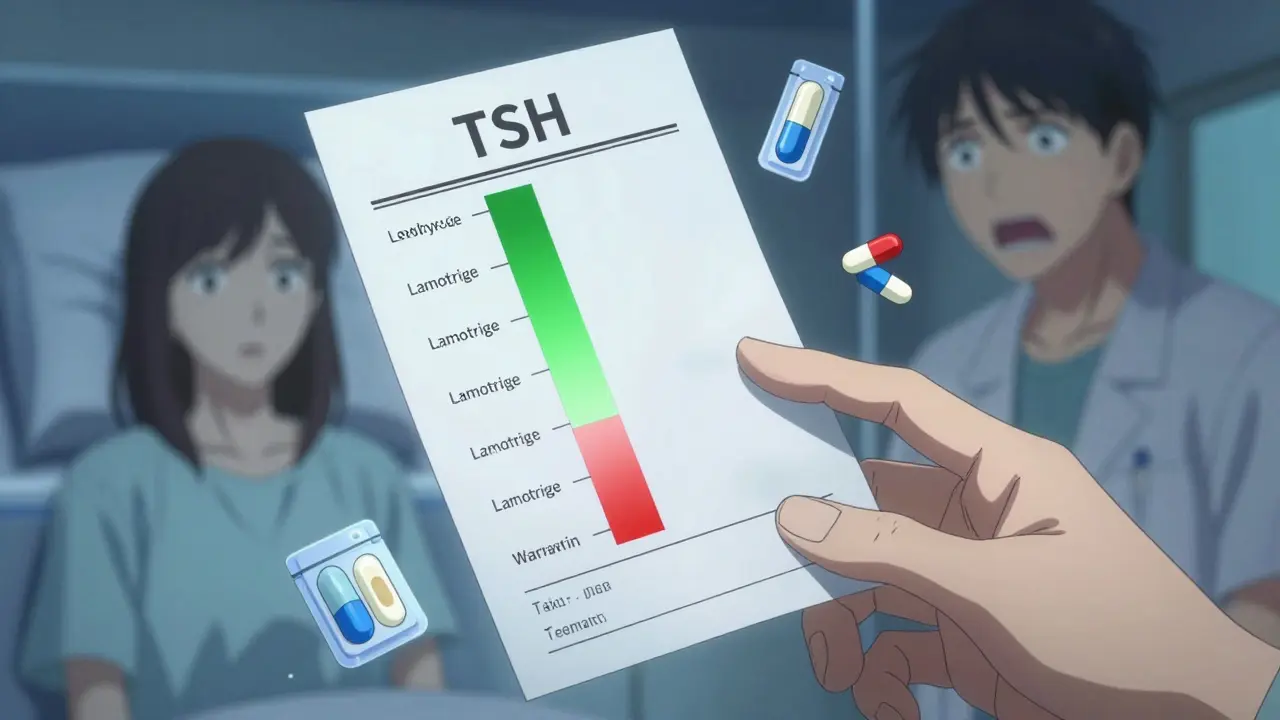
A 2017 study in Clinical Therapeutics found that 15.3% of patients stabilized on brand-name levothyroxine saw their TSH levels go out of range after switching to generic. That’s not rare-it’s common enough that doctors should watch for it.
Warning Signs You Shouldn’t Ignore
If you’ve just switched to a generic, here are the red flags that mean it’s time to call your doctor-not wait it out:- Skin rash, hives, or itching-This can signal an allergic reaction to a dye or filler. A 2022 FDA report showed that 14.3% of adverse events linked to generic switches involved skin reactions.
- Persistent nausea, vomiting, or diarrhea-More than 8% of reports to the FDA’s adverse event system mention this. It’s not just "upset stomach." If it lasts more than 2 days, get checked.
- Unexplained fatigue or dizziness-If you’re suddenly more tired than usual, or you feel lightheaded when standing, it could mean your drug levels are off.
- Loss of symptom control-Did your seizures come back? Did your thyroid symptoms return? Did your migraines start again after switching from brand-name sumatriptan? These aren’t coincidences. A 2022 case study in the Journal of Managed Care & Specialty Pharmacy documented a patient whose migraines vanished after switching back to the brand.
- Changes in mood or mental state-For people on antidepressants like sertraline or mood stabilizers like lamotrigine, even small changes in absorption can trigger anxiety, mania, or depression. One 2023 case in Annals of Pharmacotherapy involved a bipolar patient who went into mania after a generic switch and had to be hospitalized.
These aren’t "maybe" signs. They’re clear signals your body is reacting. Don’t assume it’s "just adjustment time." Some reactions happen within hours. Others take days or weeks. Either way, if you notice something new and concerning, call your doctor.
Which Medications Are Riskiest?
Not all generics carry the same risk. Based on data from the FDA, patient reviews on Drugs.com, and clinical studies, these are the top three drugs with the highest reported side effects after switching:- Sertraline (Zoloft generic) - 37.2% of patient reports mention side effects like increased anxiety, insomnia, or nausea.
- Lamotrigine (Lamictal generic) - 32.8% report mood shifts, rashes, or seizure breakthroughs.
- Levothyroxine (Synthroid generic) - 29.5% report fatigue, weight changes, or heart palpitations.
For these drugs, the risk isn’t theoretical. It’s documented. If you’re on one of them, be extra vigilant. Your pharmacist may not warn you-pharmacists are trained to substitute unless told not to. But you can ask: "Is this the same formulation I was on before?"
What to Do If You Suspect a Problem
If you notice any of the warning signs above, don’t panic-but don’t ignore it either. Here’s what to do:- Call your doctor within 24 hours. Don’t wait for your next appointment. Explain exactly what changed and when.
- Don’t stop the medication. Abruptly stopping drugs like levothyroxine or lamotrigine can be dangerous. Let your doctor guide you.
- Ask for a blood test. For NTID drugs, your doctor may check specific levels: TSH for thyroid meds, INR for warfarin, or serum levels for antiepileptics.
- Request the original brand. If you had been stable on the brand-name version, you have a right to ask for it again. Many insurance plans will approve it if your doctor documents medical necessity.
- Check your pharmacy’s source. Sometimes, the same generic drug is made by different manufacturers. If you switch pharmacies and feel worse, it could be a different maker. Ask your pharmacist: "Which company makes this generic?"
When to Go to the ER
Some reactions are emergencies. If you experience any of these, call 911 or go to the ER immediately:- Swelling of the throat or tongue
- Difficulty breathing
- Sudden drop in blood pressure (feeling faint, cold skin, rapid pulse)
These are signs of anaphylaxis-a life-threatening allergic reaction. Even if you’ve never had an allergy before, new ingredients in generics can trigger them. The American College of Allergy, Asthma, and Immunology says any suspected allergic reaction to a new medication should be treated as urgent.
How to Protect Yourself Going Forward
You can’t always avoid generics-but you can take control:- Ask your doctor to write "Do Not Substitute" on your prescription if you’ve had a bad reaction before. This legally blocks automatic substitution.
- Know your drug’s therapeutic index. If you’re on warfarin, levothyroxine, or an antiseizure drug, ask if it’s an NTID. If yes, be cautious.
- Keep a symptom log. Note when you switched, what symptoms started, and how severe they were. This helps your doctor spot patterns.
- Check the FDA’s Orange Book. It lists which generics are rated "A" (therapeutically equivalent) or "B" (potential concerns). You can search it online.
- Stay informed. In 2023, California passed a law requiring pharmacists to notify doctors before substituting 12 high-risk generics. Other states are following. Ask your pharmacist about local rules.
It’s Not About Trust-It’s About Awareness
Most generics are safe. In fact, 90% of prescriptions in the U.S. are filled with generics. But 28% of people report side effects after switching, according to a JAMA study. That gap between science and experience matters. Science says they’re the same. Real people say they feel different.That’s why you need to listen to your body. If something changes after a switch, it’s not "all in your head." It’s a signal. And you have the right to speak up-before it turns into a crisis.
Can generic drugs really be less effective than brand-name ones?
For most drugs, yes-they’re equally effective. But for drugs with a narrow therapeutic index (NTID), like levothyroxine, warfarin, or lamotrigine, even small differences in how the body absorbs the drug can lead to noticeable changes in effectiveness or side effects. Studies show that up to 15% of patients on NTID drugs experience changes in lab results or symptoms after switching to generics.
Why do I feel worse after switching to a generic if the active ingredient is the same?
The active ingredient is the same, but the fillers, dyes, and binders aren’t. Some people are sensitive to these inactive ingredients, which can affect how quickly the drug is absorbed or trigger allergic reactions. For example, a dye in one generic version might cause a rash, while another version uses a different filler that slows absorption, leading to lower drug levels in your blood.
Should I avoid generics altogether?
No. Generics are safe and effective for the vast majority of people and medications. But if you’re on a high-risk drug like levothyroxine, warfarin, or an antiseizure medication, pay attention to how you feel after a switch. If you notice new symptoms, talk to your doctor-you may need to stay on the brand or try a different generic.
Can my pharmacist switch my medication without telling me?
In most states, yes-unless your doctor wrote "Do Not Substitute" on the prescription. Pharmacists are allowed to substitute generics unless told otherwise. But in states like California, pharmacists must notify the prescribing doctor before substituting for certain high-risk drugs. Always ask: "Is this the same as my last prescription?"
What should I do if I think my generic isn’t working?
Call your doctor right away. Don’t wait. Keep track of when you switched, what symptoms you’re having, and how severe they are. Your doctor may order a blood test to check drug levels (like TSH for thyroid meds or INR for warfarin). If the test shows a change, you may be able to get your brand-name drug back-or try a different generic from another manufacturer.
Switching to generics should help you save money-not make you sick. If you notice changes in how you feel, speak up. Your body knows when something’s off. Trust it.
Write a comment
Items marked with * are required.






9 Comments
Brandie Bradshaw February 28, 2026 AT 14:28
The FDA's equivalence standards are a joke. Same active ingredient? Sure. But biology isn't a spreadsheet. The excipients? They're not inert. They're chemical wildcards. I've seen patients on levothyroxine go from TSH 1.8 to 8.2 after a switch. No change in dose. Just a different filler. This isn't anecdotal-it's pharmacokinetics. And yet, insurers push generics like they're interchangeable soda brands. We're treating human physiology like a commodity. It's not just about cost-it's about control. And someone's losing control here.
Martin Halpin February 28, 2026 AT 15:20
You know what's truly absurd? The fact that we're still having this conversation in 2025. I mean, think about it: we can land rovers on Mars, we can splice genes with CRISPR, we can stream 8K video in real time-and yet, when it comes to the medicine that keeps people alive, we're still relying on a system that treats a pill's binder like it's a matter of personal preference. I had a neighbor switch from brand-name lamotrigine to generic and developed a full-body rash that lasted six weeks. Six weeks. She didn't have insurance. She couldn't afford to go back. So she just… stopped. And now she's on disability. That’s not a side effect. That’s a systemic failure dressed up as fiscal responsibility. The pharmaceutical industry doesn’t care if you bleed internally from a bad filler-they care if you’re still buying the next one. And we’re complicit because we’re too tired to fight.
Eimear Gilroy March 1, 2026 AT 15:46
I'm curious-has anyone here actually checked the manufacturer of their generic? I switched my sertraline last month and noticed increased anxiety. When I called the pharmacy, they said it was made by Teva. My old one was from Mylan. I switched back and felt normal within 48 hours. The FDA says they're equivalent, but the manufacturers? Totally different processes. I'm starting to think "bioequivalence" is a legal loophole, not a medical guarantee.
Ajay Krishna March 3, 2026 AT 08:12
I appreciate this post a lot. As someone who works in community health, I see this every week. People come in saying, 'I feel weird' after a switch, and we assume it's anxiety. But it's not. It's real. I always tell folks: if you're on warfarin, levothyroxine, or an antiseizure med, ask for the brand unless you're absolutely sure the generic won't mess with you. And if you're worried, get a blood test. It's cheap. It's quick. It's worth it. You're not being paranoid-you're being smart.
Noah Cline March 3, 2026 AT 22:23
Let’s not romanticize this. The 15.3% TSH shift in the 2017 study? That’s not a fluke-it’s a pharmacodynamic variance within the 90% confidence interval of bioequivalence. The FDA’s 80–125% AUC threshold is mathematically permissible for interchangeability. What you’re describing is a subset of patients with extreme inter-individual variability-likely due to CYP450 polymorphisms or gut microbiome differences. This isn’t a generic problem. It’s a precision medicine problem. Stop blaming the system. Start testing patients.
Lisa Fremder March 4, 2026 AT 07:44
This is why America is falling apart. We let corporations dictate our health because we’re too lazy to pay $10 more. You want to save money? Then don’t take the meds. Or better yet-don’t get sick. I don’t care if your rash came from a dye. You knew the risk. Stop crying. Get a job. Pay for the brand. Or stop being a victim.
Sophia Rafiq March 4, 2026 AT 20:58
I’m a nurse. I’ve seen this too many times. One patient switched from Synthroid to generic and started having palpitations. TSH went from 2.1 to 7.9. We called the pharmacy. The generic came from a different manufacturer than before. We switched back. Symptoms resolved in 10 days. No one warned her. No one asked. The system is designed to move pills, not people. If you’re on an NTID drug, always ask: who made this? And write 'Do Not Substitute' on your script. It’s your right.
Full Scale Webmaster March 6, 2026 AT 17:01
Okay, so let me get this straight. You’re saying that because a pill has a different dye or binder, your body suddenly stops working? That’s not science. That’s placebo. I’ve been on generics for 12 years. No issues. You’re just looking for reasons to feel bad. Maybe you’re stressed. Maybe you’re not sleeping. Maybe you’re just mad your insurance doesn’t pay for luxury medicine. The fact is: 90% of people don’t notice a difference. The other 10%? They’re either hypochondriacs or they’re trying to game the system. And now you want to make everyone pay more because you can’t handle a little change? Get over it. The world doesn’t revolve around your thyroid.
Byron Duvall March 6, 2026 AT 18:47
I think the real issue here is that the FDA is in bed with Big Pharma. They only approve generics from companies that donate to lobbying groups. I read a whistleblower report once-there’s a backroom deal where brand-name companies secretly own the generic manufacturers. That’s why they’re 'equivalent' on paper. In reality? The generics are made in the same factories. It’s all a scam. You think your doctor knows? Nah. They’re paid to push the cheap stuff. Wake up. This isn’t about health. It’s about control.