
Health May 18, 2026
Alpha-1 Antitrypsin Deficiency: Understanding Genetic COPD and Treatment Options
Imagine getting out of breath climbing a single flight of stairs at age 35. For most people, this signals poor fitness or perhaps asthma. But for others, it is the first warning sign of Alpha-1 Antitrypsin Deficiency, a hereditary genetic disorder that causes early-onset emphysema and liver disease due to insufficient production of protective proteins. Unlike typical chronic obstructive pulmonary disease (COPD), which usually strikes older adults after decades of smoking, this condition is written into your DNA from birth.
This isn't just another respiratory issue. It is a specific genetic flaw that leaves your lungs unprotected against their own immune system. If you have been told you have "early COPD" or "asthma that won't go away," understanding this condition could change everything about how you manage your health.
What Is Alpha-1 Antitrypsin Deficiency?
To understand the problem, we need to look at what normally happens in your body. Your liver produces a protein called alpha-1 antitrypsin, a blood protein that protects lung tissue from enzymes released by white blood cells during inflammation. Think of it as a shield. When you breathe in dust, smoke, or viruses, your immune system sends neutrophils to fight them. These cells release an enzyme called neutrophil elastase, an enzyme that breaks down bacteria but can also destroy healthy lung tissue if left unchecked.
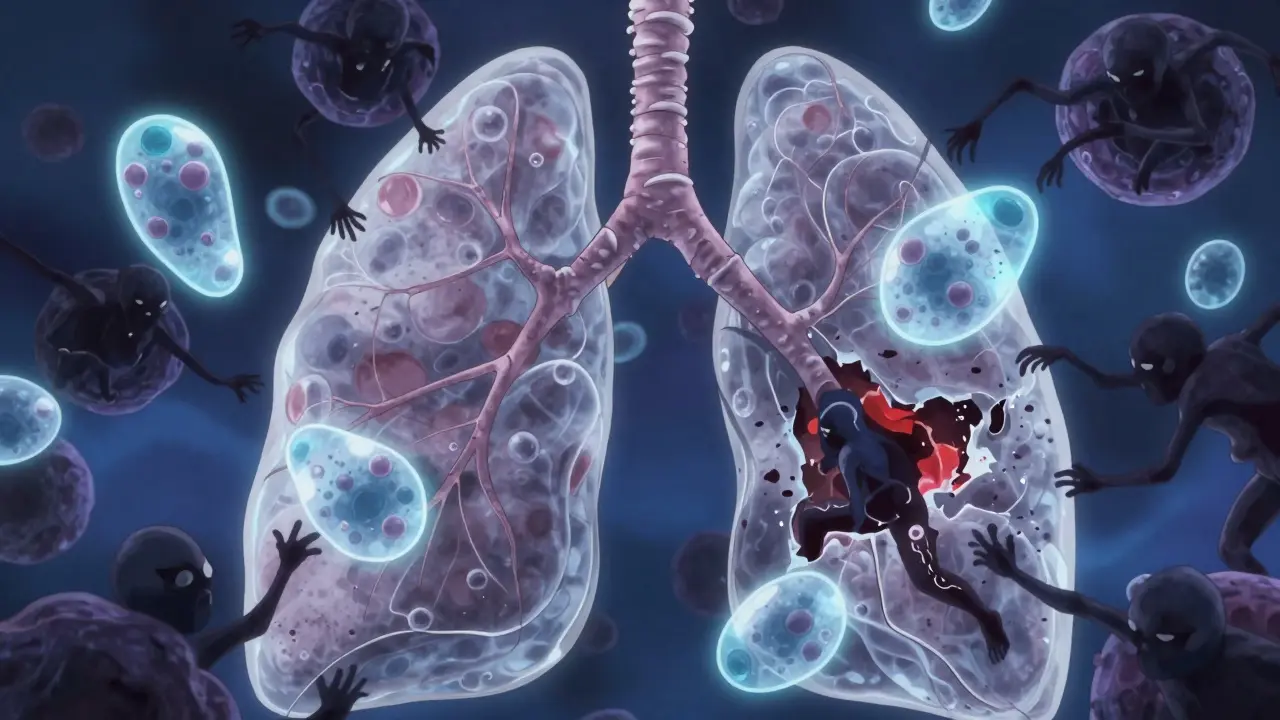
In a healthy person, alpha-1 antitrypsin neutralizes neutrophil elastase, keeping your lung walls intact. In someone with Alpha-1 Antitrypsin Deficiency (AATD), the liver either doesn't make enough of this protein or makes a version that gets stuck inside the liver cells instead of traveling to the lungs. Without that shield, neutrophil elastase tears apart the alveoli-the tiny air sacs where oxygen exchange happens. Over time, this leads to permanent lung damage known as emphysema.
The root cause lies in the SERPINA1 gene, the gene located on chromosome 14 that provides instructions for making alpha-1 antitrypsin protein. Most people have two normal copies of this gene, labeled "M." However, mutations can create defective versions, most commonly the "Z" and "S" alleles. The Z allele is particularly problematic because the resulting protein folds incorrectly, clumping together inside liver cells rather than flowing through the bloodstream.
Who Is at Risk? Genotypes Explained
You inherit one copy of the SERPINA1 gene from each parent. This creates different combinations, or genotypes, which determine your risk level:
- MM genotype: Normal function. Serum levels are 100-200 mg/dL. No increased risk.
- MZ genotype: Carrier status. One normal gene, one Z gene. Serum levels may be slightly reduced (60-80% of normal). Generally low risk for lung disease unless exposed to heavy smoking or occupational hazards.
- SZ genotype: Moderate deficiency. Higher risk for lung issues, especially with environmental exposures.
- ZZ genotype: Severe deficiency. Serum levels drop to 11-17 mg/dL (only 15-20% of normal). This group faces the highest risk for both early-onset emphysema and liver cirrhosis.
If you have the ZZ genotype, you are born with significantly lower protection. About 1 in 2,000 to 1 in 5,000 people globally carry this severe form. However, many more people-up to 25 million Americans-are carriers of at least one deficient allele, meaning they could pass the gene to their children even if they never develop symptoms themselves.
Symptoms: How Does It Feel?
The symptoms of AATD often mimic other common conditions, which is why diagnosis takes so long. On average, patients wait eight years and see three different doctors before getting the correct answer. Here’s what to watch for:
Lung Symptoms
Shortness of breath during mild activity is usually the first sign. You might notice wheezing, a chronic cough, or frequent respiratory infections. Unlike typical COPD, which affects the upper parts of the lungs first, AATD-related emphysema often starts in the lower lobes (basilar predominance). This means you might feel breathless even when standing still, not just during exertion.
Liver Symptoms
Because misfolded proteins accumulate in the liver, some people develop liver disease alongside lung issues. Signs include fatigue, jaundice (yellowing of skin/eyes), abdominal swelling, or unexplained elevation of liver enzymes on blood tests. In rare cases, this can progress to cirrhosis or hepatocellular carcinoma.
Skin Issues
A small percentage of patients experience panniculitis, a painful skin condition characterized by inflamed lumps under the skin caused by abnormal fat breakdown. This occurs because the lack of alpha-1 antitrypsin allows enzymes to attack fatty tissue.
Diagnosis: Getting Tested
If you suspect AATD, ask your doctor for a serum alpha-1 antitrypsin level test. This simple blood draw measures how much protein is circulating in your blood. If levels fall below 11 μM (approximately 50 mg/dL), further testing is needed.
The next step is genotyping, a DNA test that identifies specific mutations in the SERPINA1 gene to confirm the exact variant present. This confirms whether you have the M, S, or Z alleles. Phenotyping (isoelectric focusing) is an older method that separates protein variants based on electrical charge, but genotyping is faster and more precise today.
Guidelines from the American Thoracic Society recommend testing anyone diagnosed with COPD under age 45, those with asthma that doesn’t respond to inhalers, individuals with unexplained liver disease, or anyone with a family history of AATD.
| Feature | Typical Smoking-Related COPD | Alpha-1 Antitrypsin Deficiency (AATD) |
|---|---|---|
| Onset Age | Usually after 60 | Often before 45 |
| Primary Cause | Smoking/environmental toxins | Genetic mutation (SERPINA1) |
| Lung Damage Pattern | Upper lobes (apical) | Lower lobes (basilar) |
| Family History | Less relevant | Strong indicator |
| Treatment Focus | Symptom management | Augmentation therapy + symptom management |

Treatment Options: Managing the Disease
There is no cure for AATD yet, but treatments can slow progression and improve quality of life. The approach depends on whether you have lung disease, liver disease, or both.
Augmentation Therapy
For patients with significant lung involvement, the standard treatment is augmentation therapy, intravenous infusion of purified human alpha-1 antitrypsin to raise serum levels above the protective threshold. Products like Prolastin-C, Zemaira, and Aralast NP are approved by the FDA. You receive these infusions weekly, typically at home or in a clinic, aiming to keep serum levels above 11 μM.
In 2022, the FDA approved Kedrabin, the first subcutaneous formulation of alpha-1 antitrypsin, allowing self-administration under the skin rather than into veins. This offers greater convenience and reduces vein access issues.
Lifestyle Changes
Quitting smoking is non-negotiable. Smoking accelerates lung destruction in AATD patients up to six times faster than in the general population. Avoiding secondhand smoke, occupational dusts, and chemical fumes is equally critical. Regular exercise helps maintain muscle strength and lung efficiency.
Liver Management
Currently, there are no proven therapies to reverse liver damage in AATD. Monitoring involves regular ultrasound and blood tests. In advanced cases, liver transplantation may be necessary. Researchers are investigating RNA interference therapies and small molecule correctors to prevent protein polymerization in the liver, but these remain experimental.
Living With AATD: Practical Advice
Diagnosing AATD can feel overwhelming, but knowledge is power. Join support groups like the Alpha-1 Foundation to connect with others who understand the daily challenges. Many patients report feeling relieved once they finally have a name for their condition.
Consider genetic counseling for yourself and your family. Since AATD is inherited in an autosomal codominant pattern, siblings and children should be tested. Early detection allows for proactive monitoring and earlier intervention if symptoms arise.
Stay vigilant about insurance coverage. Augmentation therapy costs $70,000-$100,000 annually, and prior authorization hurdles are common. Work closely with your pulmonologist to document medical necessity clearly.
Is Alpha-1 Antitrypsin Deficiency contagious?
No, it is not contagious. It is a genetic condition passed down through families via the SERPINA1 gene. You cannot catch it from someone else.
Can I live a normal life with Alpha-1 Antitrypsin Deficiency?
Yes, many people do. With proper management-including quitting smoking, avoiding lung irritants, and undergoing augmentation therapy if prescribed-you can slow disease progression and maintain a good quality of life.
How expensive is augmentation therapy?
It costs between $70,000 and $100,000 per year. Most insurance plans cover it if medical criteria are met, though prior authorization processes can be lengthy and require detailed documentation from your doctor.
Should my children be tested?
If you have AATD, yes. Since it is genetic, your children have a chance of inheriting the defective gene. Testing allows for early monitoring and preventive care, such as strict avoidance of smoking and pollutants.
Are there new treatments coming soon?
Research is active. New subcutaneous formulations like Kedrabin offer easier administration. Scientists are also developing drugs that target the underlying mechanism in the liver, potentially treating both lung and liver manifestations in the future.