Health July 13, 2026
How Medicare Extra Help Cuts Generic Prescription Costs in 2026
Imagine paying $4.90 for a medication that used to cost you $30 or more. For millions of seniors, this isn't a dream-it's the reality of Medicare Extra Help, officially known as the Part D Low-Income Subsidy (LIS). If you are on a fixed income and worried about rising drug prices, this federal program is designed specifically to keep your medications affordable. In 2026, the stakes are higher than ever, with standard Part D deductibles climbing and brand-name drugs becoming increasingly expensive. But if you qualify for Extra Help, those hurdles disappear.
This guide breaks down exactly how Extra Help works for generic prescriptions, who qualifies under the current rules, and how to navigate the application process without getting lost in bureaucracy. We’ll look at real numbers, common pitfalls, and steps you can take today to secure your benefits.
What Is Medicare Extra Help?
Medicare Extra Help is a federal program run by the Social Security Administration (SSA) and the Centers for Medicare & Medicaid Services (CMS). Its job is simple: help people with limited income and resources pay for their Medicare Part D prescription drug coverage. Before the Medicare Prescription Drug, Improvement, and Modernization Act of 2003 created this safety net, many low-income seniors had to choose between buying food and buying medicine. Today, the program provides an estimated average annual value of over $5,900 per person, according to data from the National Council on Aging.
The subsidy doesn't just lower one fee; it tackles multiple costs at once. It covers your monthly Part D premium, wipes out the deductible, and caps what you pay at the pharmacy counter. For generic drugs-the most common type of prescription for chronic conditions like high blood pressure or diabetes-this means predictable, minimal expenses. You don't have to worry about hitting a "donut hole" or facing surprise bills because Extra Help beneficiaries stay covered throughout the year.
Eligibility Rules for 2026: Income and Resources
Qualifying for Extra Help depends on two main factors: your income and your countable resources. The SSA reviews these figures annually, so the limits change slightly each year. As of the 2025-2026 cycle, here are the thresholds you need to know:
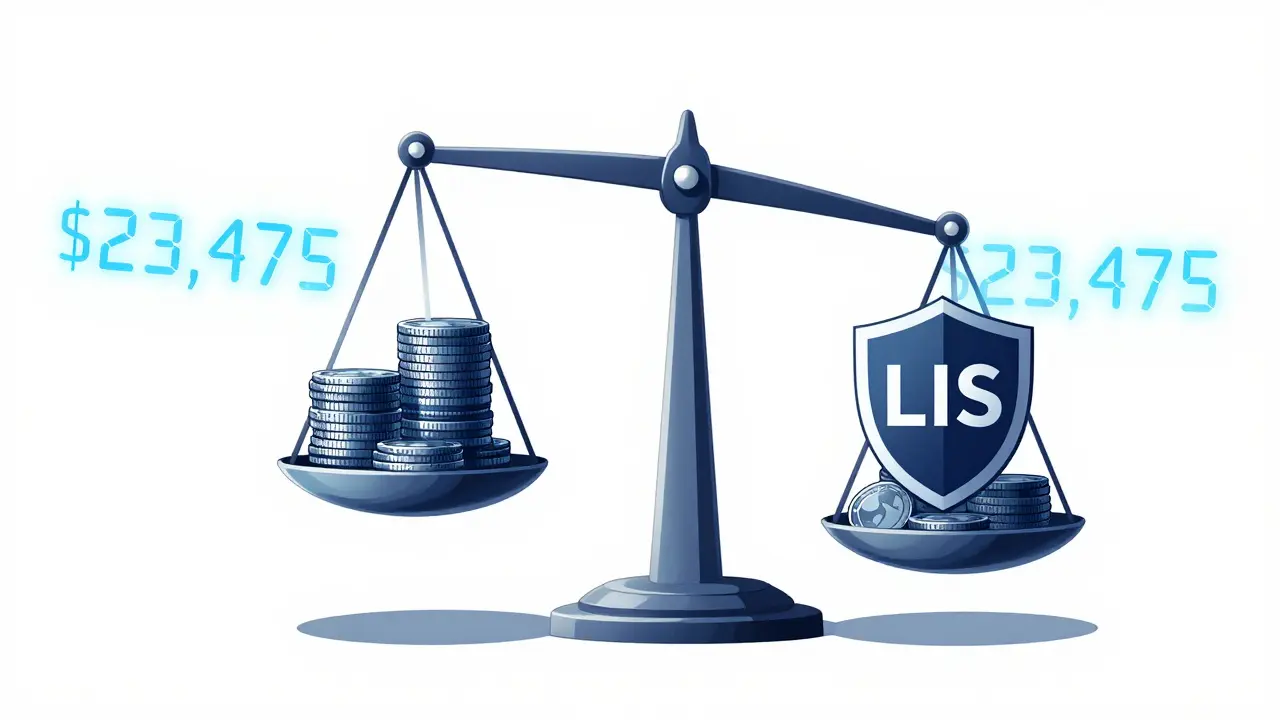
- Individuals: Annual income up to $23,475 and resources up to $17,600.
- Married Couples Living Together: Annual income up to $31,725 and resources up to $35,130.
It’s crucial to understand what counts as "income" versus "resources." Income includes wages, Social Security benefits, veterans' benefits, pensions, and worker’s compensation. However, certain payments do not count, such as housing assistance or medical treatment funds. Resources refer to assets you own, including bank accounts, stocks, bonds, mutual funds, IRAs, and cash. Your primary home and personal belongings are excluded. There is also a $1,500 allowance per person for burial expenses that you can set aside without affecting your resource limit.
If you receive Supplemental Security Income (SSI), Medicaid, or a Medicare Savings Program, you are automatically eligible for Extra Help. You don’t need to apply separately; the system should enroll you automatically. If you aren't receiving these benefits but still fall within the income and resource limits, you must apply directly through the SSA.
Cost Breakdown: Generics vs. Standard Part D
Let’s talk numbers. Without Extra Help, standard Medicare Part D plans in 2026 typically require you to pay a deductible-often around $595-before any coverage kicks in. After that, you usually pay 25% coinsurance for generic drugs during the initial coverage phase. So, if your generic pill costs $50, you’d pay $12.50 after meeting the deductible. Add in the monthly premium, which averages $30-$40 depending on the plan, and the total cost adds up quickly.
With Extra Help, the math changes dramatically:
| Cost Component | Standard Part D | With Extra Help (LIS) |
|---|---|---|
| Monthly Premium | $30 - $40+ (varies by plan) | $0 |
| Deductible | Up to $595 | $0 |
| Copay per Generic Rx | ~25% of drug cost (e.g., $12.50 on $50 drug) | Max $4.90 |
| Coverage Gap (Donut Hole) | You pay 25% of brand/generic costs | No gap; continuous coverage |
For someone filling four generic prescriptions a month, the difference is stark. Under standard Part D, you might spend hundreds of dollars annually just on premiums and deductives, plus variable copays. With Extra Help, your maximum out-of-pocket for generics is capped at $4.90 per fill. If you qualify for both Medicare and Medicaid with income below 100% of the Federal Poverty Level, your copay drops even further to just $1.60. This predictability allows you to budget accurately and avoid skipping doses due to cost concerns.
How to Apply for Extra Help
Applying for Extra Help is straightforward if you know where to go. The entire process is managed by the Social Security Administration. Here are your options:
- Online: Visit ssa.gov/extrahelp. The online application is available 24/7 and guides you through the required fields step-by-step.
- By Phone: Call the SSA national number at 1-800-772-1213. Representatives can walk you through the eligibility criteria and start the application over the phone.
- In Person: Locate your nearest Social Security office using the office locator tool on the SSA website. Bring documentation of your income and assets, such as tax returns, bank statements, and proof of Social Security benefits.
The decision usually takes three to six weeks. During this time, continue taking your medications as prescribed. If you are approved, your benefits typically begin the first of the month following your approval date. One pro tip: if you live in a state with robust State Health Insurance Assistance Programs (SHIPs), contact them for free, unbiased help. SHIP counselors are trained to assist with complex applications and can explain local nuances that might affect your eligibility.
Maintaining Your Benefits: The Annual Review
Getting Extra Help is only half the battle; keeping it requires staying on top of the annual review. Each August, the SSA sends a renewal form to all current recipients. You must return this form within 30 days to maintain your eligibility for the upcoming year. Failure to respond results in automatic termination of benefits effective January 1st of the next year.
This annual check ensures your income and resources haven't changed significantly. If you’ve received a raise, inherited money, or sold assets, report it honestly. Misreporting can lead to penalties or loss of benefits. Conversely, if your financial situation worsens, you may qualify for enhanced benefits with even lower copays. Keep a calendar reminder for August so you never miss this critical deadline.

Common Challenges and How to Overcome Them
Despite its benefits, Extra Help has some friction points. Many users report confusion about the "cliff effect"-where earning just $1 over the limit disqualifies you entirely. This rigid threshold leaves many near-poor seniors struggling without assistance. If you find yourself slightly above the limit, explore other options like manufacturer patient assistance programs or state-specific pharmaceutical aid initiatives. Some states offer supplementary support that can bridge the gap.
Another challenge is understanding formularies. Even with Extra Help, you must use a Part D plan that covers your specific generic drugs. Not all plans cover every medication, and networks vary by region. Use the Plan Finder tool on Medicare.gov to compare plans based on your exact list of prescriptions. Remember, Extra Help beneficiaries have a Special Enrollment Period (SEP) that allows them to switch Part D plans once per month. This flexibility lets you optimize your coverage if a better plan becomes available or if your doctor changes your prescription.
Finally, beware of scams. No legitimate organization will call demanding immediate payment for Extra Help enrollment. The SSA never charges fees for processing applications. If you receive unsolicited calls asking for your Social Security number or credit card details, hang up and report it to the SSA’s Office of the Inspector General.
Future Outlook for Extra Help
The landscape for Medicare drug coverage continues to evolve. Recent legislative efforts aim to expand access and reduce costs further. For instance, provisions from the Inflation Reduction Act cap insulin costs at $35 per month for all Part D beneficiaries, which complements Extra Help’s low copays. Additionally, proposals to raise income thresholds could bring relief to more seniors in the coming years. While policy changes take time, the core structure of Extra Help remains a vital lifeline for millions. Staying informed about updates from CMS and the SSA ensures you maximize every dollar of benefit available to you.
Is Medicare Extra Help the same as Medicaid?
No, they are different programs. Medicaid is a joint federal-state health insurance program for low-income individuals of all ages. Medicare Extra Help (LIS) is a federal subsidy specifically for Medicare Part D prescription drug costs. However, if you qualify for Medicaid, you are automatically enrolled in Extra Help.
Can I get Extra Help if I have no income?
Yes. Having zero income makes you highly likely to qualify, provided your countable resources (like bank accounts) are below the limit ($17,600 for individuals in 2025). Zero income falls well within the income threshold.
Does Extra Help cover brand-name drugs?
Yes, but the copay is higher. In 2025, the copay for brand-name drugs was capped at $12.15. For generic drugs, the cap is $4.90. Always check your specific Part D plan’s formulary to see which tier your drug falls into.
What happens if I lose my Extra Help benefits?
If you lose eligibility due to increased income or resources, you will start paying standard Part D premiums and copays. You can reapply if your financial situation improves later. Contact the SSA immediately if you suspect an error in your determination.
Do I need a lawyer to apply for Extra Help?
No. The application process is designed for self-filing via online, phone, or in-person methods. Free assistance is available through State Health Insurance Assistance Programs (SHIPs) and local Area Agencies on Aging. Lawyers are unnecessary unless you are appealing a denied claim.