
Health June 23, 2026
How to Safely Use Short-Term Medications After Surgery: A Patient's Guide
Leaving the hospital after surgery feels like a victory. You’ve made it through the procedure, and now comes the real work: recovery. But there’s a hidden danger in that transition. The medications you take at home-often prescribed for just a few days or weeks-are where things can go wrong. Short-term postoperative medication use involves managing drugs like painkillers, antibiotics, and blood thinners during the critical initial healing phase. Mistakes here aren’t just inconvenient; they can lead to serious complications like infections, bleeding, or even life-threatening reactions.
You might think that because the doctor wrote the prescription, you’re safe. But the reality is different. Studies show that medication errors are common right after discharge. According to data from the Institute for Safe Medication Practices (ISMP), perioperative medication errors account for a significant portion of serious incidents reported annually. The stress of recovery, confusing instructions, and overlapping prescriptions create a perfect storm for mistakes. This guide breaks down exactly how to handle these short-term meds safely, so you can focus on healing instead of worrying.
Understanding Your Post-Surgery Meds
Before you touch a pill bottle, you need to know what you’re taking and why. Post-surgery medications generally fall into three main categories. Knowing which category your drug belongs to helps you understand its risks and importance.
- Pain Management: These include opioids (like oxycodone or hydrocodone) and non-opioid options (like acetaminophen or ibuprofen). Opioids are powerful but carry risks of addiction, constipation, and respiratory depression. Non-opioids are safer for long-term use but may not be enough for severe pain immediately after major surgery.
- Antibiotics: Prescribed to prevent infection at the surgical site. It is crucial to finish the entire course, even if you feel better. Stopping early can allow bacteria to survive and become resistant, making future infections harder to treat.
- Blood Thinners (Anticoagulants): Drugs like heparin, enoxaparin (Lovenox), or warfarin prevent dangerous blood clots (deep vein thrombosis or pulmonary embolism) that can form when you’re less active after surgery.
Each of these serves a specific purpose. Pain meds help you move and breathe deeply, which aids healing. Antibiotics protect your incision. Blood thinners keep your circulation safe. Missing any one of them can disrupt your recovery plan.
The Golden Rule: Medication Reconciliation
The most important step you can take happens before you leave the hospital. This process is called medication reconciliation, and it means comparing every new prescription with everything else you already take.
Many patients forget to tell their surgeons about over-the-counter drugs, supplements, or herbal remedies. For example, taking aspirin or fish oil alongside a blood thinner can increase bleeding risk. Taking St. John’s Wort can interfere with how your body processes pain medications. Always bring a complete list of your current meds to your pre-op appointment and again at discharge.
Ask your doctor or pharmacist this simple question: "Does this new medication interact with anything I’m already taking?" If they say yes, ask for an alternative. Never assume it’s fine just because you bought it without a prescription.
Safely Managing Pain Medications
Pain control is often the biggest concern for patients. However, opioid misuse is a growing issue. Here is how to stay safe while managing pain effectively.
Follow the "Lowest Effective Dose" Principle
Don’t take more than prescribed. If you’re still in pain after the recommended dose, wait the specified time before taking another. Overdosing can slow your breathing to dangerous levels. Keep a log of when you take each pill. This helps you avoid accidental double-dosing, especially if you’re tired or distracted.
Combine with Non-Opioid Options
Your doctor may recommend alternating opioids with acetaminophen or ibuprofen. This approach, known as multimodal analgesia, allows you to use less opioid while keeping pain under control. Just ensure you don’t exceed the daily limit of acetaminophen (usually 3,000-4,000 mg per day) to protect your liver.
Store and Dispose Properly
Opioids should be stored in a locked box or a place children and pets cannot access. When you’re done with them, do not flush them unless instructed by local authorities. Many pharmacies offer take-back programs. In the UK, you can return unused medicines to your local pharmacy for safe disposal. Leaving loose pills in a drawer invites theft or accidental ingestion.
Antibiotics: Finish the Course
It’s tempting to stop taking antibiotics once the wound looks clean and the pain subsides. Don’t. Bacteria can linger even when symptoms disappear. Stopping early gives the strongest bacteria a chance to multiply and develop resistance.
Take antibiotics exactly as directed. Some must be taken with food to avoid stomach upset; others require an empty stomach for proper absorption. Check the label or ask your pharmacist. Also, watch for side effects like diarrhea, rash, or yeast infections. If you experience severe diarrhea, contact your doctor immediately, as it could be a sign of C. diff, a serious intestinal infection.
Blood Thinners: Watch for Bleeding
If you’re prescribed blood thinners, vigilance is key. These drugs reduce your blood’s ability to clot, which is good for preventing DVT but risky if you get cut or bruised.
- Avoid activities that cause trauma or heavy lifting.
- Use an electric razor instead of a blade.
- Use a soft-bristled toothbrush.
- Watch for signs of internal bleeding: unusual bruising, nosebleeds that won’t stop, blood in urine or stool, or severe headaches.
If you’re on injectable blood thinners like Lovenox, learn the proper injection technique. Rotate injection sites (abdomen, thighs) to prevent tissue damage. Ask a nurse to demonstrate before you leave the hospital.
Communication: Your Best Safety Tool
Medication safety isn’t just about following rules; it’s about asking questions. The World Health Organization notes that clear communication can reduce adverse drug events by up to 67%. Here’s how to communicate effectively with your care team.
Use the "Read-Back" Method
When a nurse or pharmacist gives you verbal instructions, repeat them back. For example: "So, I take one pill twice a day with food, correct?" This catches misunderstandings before they happen.
Know When to Call
Don’t wait until your next appointment if something feels wrong. Call your surgeon or primary care provider if you experience:
- Severe pain not relieved by medication.
- Signs of infection: fever, redness, swelling, or pus at the incision site.
- Allergic reactions: hives, itching, swelling of the face/lips, or difficulty breathing.
- Nausea or vomiting that prevents you from keeping meds down.

Practical Tips for Home Recovery
Setting up your home environment can make medication management easier and safer.
- Create a Routine: Take meds at the same times each day. Link them to daily habits, like breakfast or bedtime.
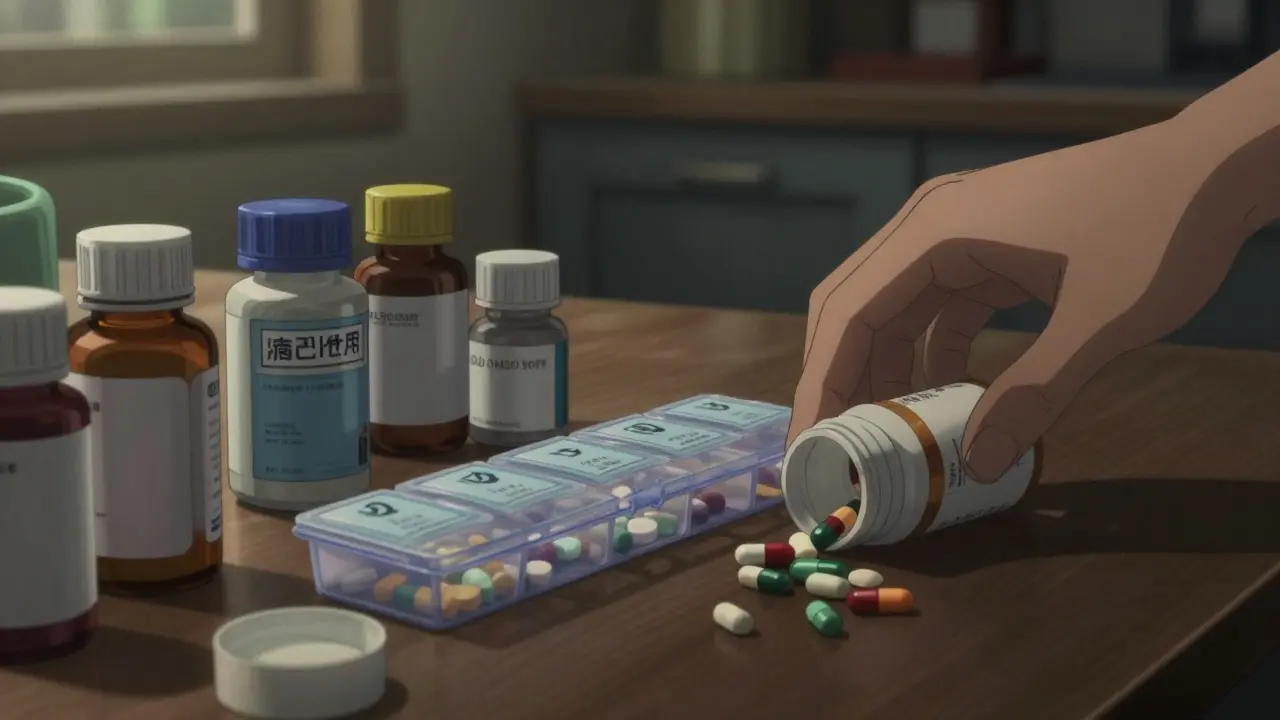
- Use a Pill Organizer: A weekly pill box helps you visualize whether you’ve taken your dose. It’s especially useful if you’re on multiple medications.
- Keep a Log: Write down the name, dose, and time of each medication. Include any side effects. Bring this log to follow-up appointments.
- Limit Distractions: Don’t take meds while watching TV or talking on the phone. Focus on the task to avoid errors.
- Involve a Caregiver: If possible, have someone else check your meds with you. A second pair of eyes can catch mistakes.
Red Flags: When to Seek Immediate Help
Some side effects are normal, but others signal emergencies. Know the difference.
| Medication Type | Normal/Mild Side Effect | Emergency Sign (Call 999) |
|---|---|---|
| Opioids | Drowsiness, constipation, mild nausea | Slow/shallow breathing, unresponsiveness, blue lips/fingernails |
| Antibiotics | Mild stomach upset, slight diarrhea | Severe watery diarrhea, rash, swelling, trouble breathing |
| Blood Thinners | Minor bruising, small nosebleeds | Heavy bleeding, blood in vomit/stool, severe headache, confusion |
If you suspect an overdose, call emergency services immediately. Do not wait for symptoms to worsen. Time is critical in reversing opioid overdoses with naloxone (Narcan).
Final Thoughts on Safety
Recovering from surgery is a partnership between you and your healthcare team. By understanding your medications, communicating clearly, and staying vigilant, you significantly reduce the risk of complications. Remember, short-term doesn’t mean low-risk. Treat every pill with respect, and prioritize your safety above all else. Your health is worth the extra effort.
Can I drink alcohol while taking post-surgery medications?
Generally, no. Alcohol can interact dangerously with pain medications, especially opioids, increasing the risk of respiratory depression and sedation. It can also irritate your stomach lining, worsening nausea caused by antibiotics or NSAIDs. Always consult your doctor before consuming alcohol during recovery.
What should I do if I miss a dose of my medication?
It depends on the medication. For pain relievers, take the missed dose as soon as you remember, unless it’s almost time for the next dose. Never double up. For antibiotics, take the missed dose immediately if you remember within a few hours. If it’s close to the next dose, skip the missed one and continue your schedule. For blood thinners, follow the specific instructions provided by your doctor, as timing is critical for effectiveness.
How long should I keep leftover pain medication?
You should not keep leftover opioid pain medication longer than necessary. Once you no longer need it, dispose of it safely. In the UK, take unused medicines to your local pharmacy for disposal. Keeping them at home increases the risk of misuse by family members, guests, or children. Only retain non-opioid pain relievers if advised by your doctor for future flare-ups.
Is it safe to take over-the-counter meds with prescribed ones?
Not always. Many OTC drugs contain ingredients that overlap with prescriptions. For example, many cold medicines contain acetaminophen, which could lead to an overdose if you’re also taking Tylenol for pain. Always check labels and ask your pharmacist before combining OTC and prescription meds.
Who should I contact if I have questions about my meds after discharge?
Your first point of contact should be the prescribing doctor or surgeon’s office. They have your full medical history and surgical details. If it’s after hours and you have urgent concerns, contact your GP or out-of-hours service. For non-urgent questions about how to take a med, your local pharmacist is an excellent resource.