Health July 7, 2026
State Laws on Generic Drug Substitution: A Guide to Regulations
Imagine you walk into a pharmacy in New York with a prescription for a brand-name heart medication. The pharmacist hands you a generic version without asking. You drive across the border to New Jersey for your next refill, and suddenly, the process changes completely-you have to explicitly say "yes" before they can switch the drug. This isn't a glitch in the system; it is the reality of living in a country where state laws dictate how generic drugs are substituted.
If you take regular medication, this patchwork of regulations affects your wallet, your health outcomes, and your relationship with your pharmacist. While the federal government sets the baseline for what makes a drug "safe," individual states decide if a pharmacist *must* swap out expensive brand names for cheaper generics or if they need your permission first. Understanding these rules helps you navigate potential confusion at the counter and ensures you get the care you expect.
The Foundation: Federal Rules vs. State Power
To understand why every state has different rules, we have to look back at 1984. That year, Congress passed the Drug Price Competition and Patent Term Restoration Act, also known as the Hatch-Waxman Act. This law created the pathway for generic drugs to enter the market by allowing companies to prove their products were therapeutically equivalent to brand-name drugs without repeating costly clinical trials.
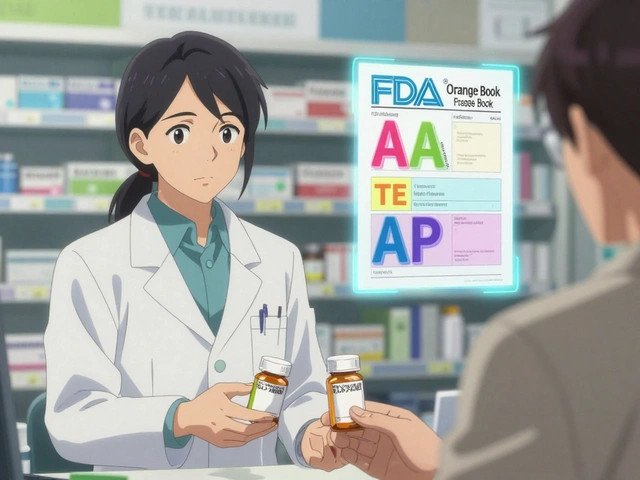
The Food and Drug Administration (FDA) manages this through the Orange Book, officially titled Approved Drug Products with Therapeutic Equivalence Evaluations. If a generic drug gets an "A" rating in this book, the FDA considers it interchangeable with the brand name. However, the Hatch-Waxman Act did not force pharmacists to use these generics. It left that decision to the states.
By the late 1980s, all 50 states and Washington, D.C., had written their own laws governing substitution. The goal was always the same: balance cost savings for patients and insurers with patient safety. But the methods vary wildly. Today, generic drugs account for over 92% of prescriptions filled in the U.S., saving billions annually. Yet, the legal framework behind that statistic is anything but uniform.
Mandatory vs. Permissive: Who Makes the Call?
The biggest difference between states comes down to one question: Does the pharmacist have the right-or the obligation-to substitute a generic drug? States generally fall into two camps: mandatory and permissive.
| Authority Type | Definition | Patient Experience | Example States |
|---|---|---|---|
| Mandatory | Pharmacists must substitute the lowest-cost generic unless the prescriber forbids it. | You receive the generic automatically. No questions asked. | Texas, California, Florida |
| Permissive | Pharmacists may substitute, but often require patient consent or follow specific protocols. | You might be asked for permission, or the pharmacist uses discretion based on local rules. | New York, Massachusetts, Hawaii |
In mandatory states, which make up about 22 jurisdictions as of recent studies, the pharmacist acts as a gatekeeper for cost containment. If you write "dispense as written" (DAW) on the prescription, they cannot touch it. Otherwise, they swap it. In permissive states, the pharmacist has more discretion, or the law requires them to check with you first. This creates a strange dynamic for people who live near state lines. A patient moving from a mandatory state to a permissive one might suddenly find themselves having conversations about drug brands they never had before.
The Consent Puzzle: Presumed vs. Explicit
Even within permissive states, the way consent is handled differs. This is where things get tricky for consumers. There are two main models:
- Presumed Consent: The law assumes you want the cheaper generic unless you speak up and say no. About 32 states use this model. The burden is on you to object.
- Explicit Consent: The pharmacist must ask you directly if you agree to the substitution before filling the prescription. Roughly 18 states require this affirmative approval.
Why does this matter? Because most people don't know the difference between their brand-name pill and the generic until they see it in the bag. In explicit consent states, you get a moment to pause and ask, "Is this exactly the same?" In presumed consent states, the transaction happens silently. If you have a sensitive condition, that lack of notification can feel like a loss of control.
Notification requirements add another layer. According to a 2021 study published in JAMA Internal Medicine, 41 states require pharmacists to notify patients after substitution occurs. This usually means a sticker on the bottle or a verbal note at the counter. But "notify" doesn't always mean "explain." Many patients receive the generic without understanding why the packaging looks different or why the color changed.
Narrow Therapeutic Index Drugs: The Safety Exception
Not all generics are treated equally. Some medications have a "narrow therapeutic index" (NTI). These are drugs where a tiny difference in dosage can lead to serious harm or treatment failure. Think of warfarin (a blood thinner), levothyroxine (for thyroid issues), or certain antiepileptic drugs.
While the FDA's Orange Book lists these drugs, many states maintain their own separate lists of NTI drugs that restrict substitution. For example, Kentucky specifically lists digitalis glycosides and antiepileptics as restricted. Hawaii goes even further, requiring both practitioner and patient consent for substituting antiepileptic drugs.
This is a critical safety net. In Minnesota, there were documented cases where warfarin substitution led to adverse events despite the drugs being rated as therapeutically equivalent by the FDA. Patients on NTI drugs often need consistent bioavailability-the amount of drug that reaches your bloodstream. Switching manufacturers can sometimes shift this balance slightly. If you are on one of these high-risk medications, you should always ask your pharmacist about the manufacturer and consider requesting a "dispense as written" order from your doctor.
Biosimilars: The New Frontier
Generic substitution isn't just about small-molecule pills anymore. Biologics-complex drugs made from living organisms-are now subject to substitution laws too. These are called biosimilars, which are highly similar to an existing FDA-approved biologic reference product.
As of 2023, 49 states and D.C. have implemented specific laws for biosimilar substitution. However, the rules are still evolving. The FDA introduced an "interchangeable" designation in 2020, which allows pharmacists to substitute biosimilars without the prescriber's intervention, provided certain criteria are met. But states interpret this differently.
Florida, for instance, requires community pharmacies to establish a formulary to ensure substitutions won't threaten patient safety. Iowa advises using the Orange Book for equivalency decisions. The complexity here is higher because biologics are harder to manufacture identically than chemical compounds. A slight variation in protein structure could theoretically trigger an immune response. Until national standards fully harmonize, patients receiving injectable biologics should stay informed about their state's specific stance on interchangeability.

Liability and Legal Protections for Pharmacists
Who is responsible if something goes wrong after a substitution? This is a major concern for pharmacists, and state laws provide varying levels of protection. In 37 states, pharmacists have immunity from civil or criminal liability when they follow substitution protocols correctly. Mississippi, for example, explicitly shields pharmacists under Section 73-21-121 of its Board of Pharmacy regulations.
This immunity encourages pharmacists to perform their duty to save money without fear of lawsuits, as long as they stick to the rules. However, if a pharmacist substitutes a drug against a doctor's explicit "DAW" instruction, that protection vanishes. This creates a clear boundary: the prescriber holds the ultimate medical authority, while the pharmacist holds the operational authority to optimize costs.
Economic Impact and Patient Savings
Let's talk numbers. Why do these laws exist? Money. Generic substitution saves the healthcare system an enormous amount. From 2009 to 2019, generic drugs saved Americans an estimated $1.7 trillion. For state Medicaid programs alone, mandatory substitution laws generate approximately $1.2 billion in annual savings across studied states.
For the individual patient, this translates to lower copays. Insurance plans often tier drugs, placing brand names in higher cost categories. By substituting a generic, you might drop from a $50 copay to a $10 one. States with mandatory substitution laws see higher generic fill rates-averaging 94.1% compared to 88.3% in permissive states. That 6% gap represents millions of prescriptions where cost savings were missed due to regulatory hesitation.
However, the economic benefit comes with administrative costs. Pharmacists spend an average of 12.7 minutes per prescription verifying substitution eligibility. Chain pharmacies dealing with cross-state transactions face additional hurdles. Technology is helping, with 83% of pharmacy management systems now using automatic verification tools to reduce errors. But the human element remains crucial, especially when handling patient refusals, which occur in about 7% of potential substitution opportunities.
What Should You Do As a Patient?
You don't need to memorize your state's pharmacy code, but knowing your rights empowers you. Here is a practical checklist for navigating generic substitution:
- Know Your Medication: Are you on a narrow therapeutic index drug? If yes, ask your doctor about maintaining consistency with the same manufacturer.
- Understand Your State's Law: Is your state mandatory or permissive? Do you need to opt-out, or do you need to opt-in? A quick search for "[Your State] generic substitution law" can clarify this.
- Communicate Clearly: If you prefer the brand name for any reason, tell your pharmacist. They can call your doctor to request a "Dispense As Written" order. Be prepared that your insurance may not cover the full cost of the brand.
- Watch for Side Effects: Even with therapeutically equivalent drugs, some people notice differences in fillers or dyes. If you feel different after a switch, report it to your doctor immediately. Don't assume it's "just in your head."
- Check the Label: Look for the NDC (National Drug Code) number on your bottle. If you want to track the manufacturer, this number identifies the specific product. You can look up changes online if you suspect a switch occurred.
The landscape of generic substitution is complex, but it is designed to work in your favor-financially and medically. By staying informed, you turn a confusing regulatory patchwork into a tool for better health management.
Can a pharmacist refuse to give me a generic drug?
In most states, pharmacists are encouraged or required to substitute generics to save costs. However, they can refuse to substitute if the prescribing doctor marked the prescription "Dispense As Written" (DAW) or if the patient explicitly requests the brand name and agrees to pay any price difference. Additionally, if the generic is out of stock or if the drug is on a state-specific list of restricted narrow therapeutic index drugs, the pharmacist may choose not to substitute.
Are generic drugs exactly the same as brand-name drugs?
Generics must contain the same active ingredient, dose, strength, and route of administration as the brand-name drug. They must also meet the same standards for quality, stability, and performance. However, inactive ingredients (like colors, flavors, or fillers) can differ. For most people, this makes no difference. For those with allergies to specific dyes or fillers, or those taking narrow therapeutic index drugs, these differences can occasionally matter.
What is a Narrow Therapeutic Index (NTI) drug?
An NTI drug is a medication where a small change in blood concentration can lead to treatment failure or serious toxicity. Examples include warfarin (blood thinner), levothyroxine (thyroid hormone), and phenytoin (seizure medication). Because of the risk, many states have stricter rules about substituting generics for these drugs, and doctors often recommend sticking with one manufacturer to ensure consistent results.
Do I need to sign a consent form for generic substitution?
It depends on your state. In states with "explicit consent" laws, you may need to verbally agree or sign a form before the pharmacist substitutes a generic. In states with "presumed consent," the substitution happens automatically unless you object. Some states require a one-time signed waiver upon opening a pharmacy profile, while others require consent for every prescription. Check your state's board of pharmacy website for specifics.
How do biosimilars differ from traditional generics?
Traditional generics are copies of small-molecule chemical drugs, which are easy to replicate exactly. Biosimilars are copies of biologics, which are large, complex molecules made from living cells. Because they are complex, biosimilars are "highly similar" rather than identical to the reference product. Substitution laws for biosimilars are newer and vary significantly by state, often requiring an "interchangeable" designation from the FDA before a pharmacist can swap them without doctor approval.
What happens if I move to a different state?
If you move to a state with different substitution laws, your pharmacy experience may change. For example, if you move from a mandatory substitution state to a permissive one, you might start getting asked for consent before every generic fill. It is a good idea to inform your new pharmacist about any sensitivities you have to specific manufacturers or inactive ingredients, especially if you are on chronic medications.
Can my doctor stop generic substitution?
Yes. Doctors can write "Dispense As Written" (DAW) or "Brand Medically Necessary" on the prescription. This legally binds the pharmacist to dispense the exact brand name prescribed. However, insurance companies may not cover the full cost of the brand, so you might face higher out-of-pocket expenses. Always discuss the financial impact with your doctor before requesting a brand-only prescription.
Why do some states prohibit generic substitution?
Very few states prohibit substitution entirely. Most allow it but with restrictions. Oklahoma, for instance, has historically had strict rules requiring prescriber or purchaser authorization. Restrictions are usually driven by concerns over patient safety, particularly for narrow therapeutic index drugs, or political pressure from pharmaceutical industry lobbying groups. However, the trend nationally is toward allowing substitution to control rising healthcare costs.